
The label copy comes back from the brand with one ingredient deleted and the rest reordered. Botanical extract, it says, and nothing else. What the specification actually contains is an extract, a carrier at somewhere between a fifth and a half of its weight, and a residue of whatever solvent was used to get the compounds out of the plant in the first place. Only one of those three is on the label, and on a technicality it is the only one that has to be.
That gap is where a surprising number of projects fail late, and nobody lies about it: the mixture simply never gets written down.
What the price per kilo covers
A dried botanical extract is three things stacked in one bag, and the specification describes only the first of them.
The first is the fraction that was extracted, which is what the specification is about and what the buyer is paying for. The second is the carrier, which exists so the material can be dried and handled. The third is the residue of the solvent, which is what is left after the dryer has done its work and which never goes all the way to zero.
Each of the three has its own set of numbers, its own limits in the destination market, and its own way of showing up in the finished product six months later. A purchase order that specifies only the first is buying two things it has not described.
Why a dryer needs a carrier at all
A liquid extract coming off the concentrator is typically a thick syrup at 20 to 40% solids. Spray it into a hot chamber without anything else in it and the droplets skin over before the water inside can leave, which gives you a sticky, thermoplastic powder that welds itself to the chamber wall and sets into a lump in the collection vessel. That is what a sugar-rich syrup does in a drying tower, batch after batch.
The fix is to add a solid that raises the glass transition temperature of the droplet, so the particle stays glassy while the water leaves. Maltodextrin is the usual choice because it is cheap, bland, food-grade and available in a range of hydrolysis levels. Gum arabic is used where a cleaner label is wanted and the budget allows. Inulin and other fibres appear in products that want the carrier to count as something.
None of these are inert in the way the word suggests. A carrier brings its own moisture, its own particle size, its own reducing sugar content and its own behaviour in a hot, humid room. Choosing one is a formulation decision that has been delegated to the dryer.
Maltodextrin is not one material
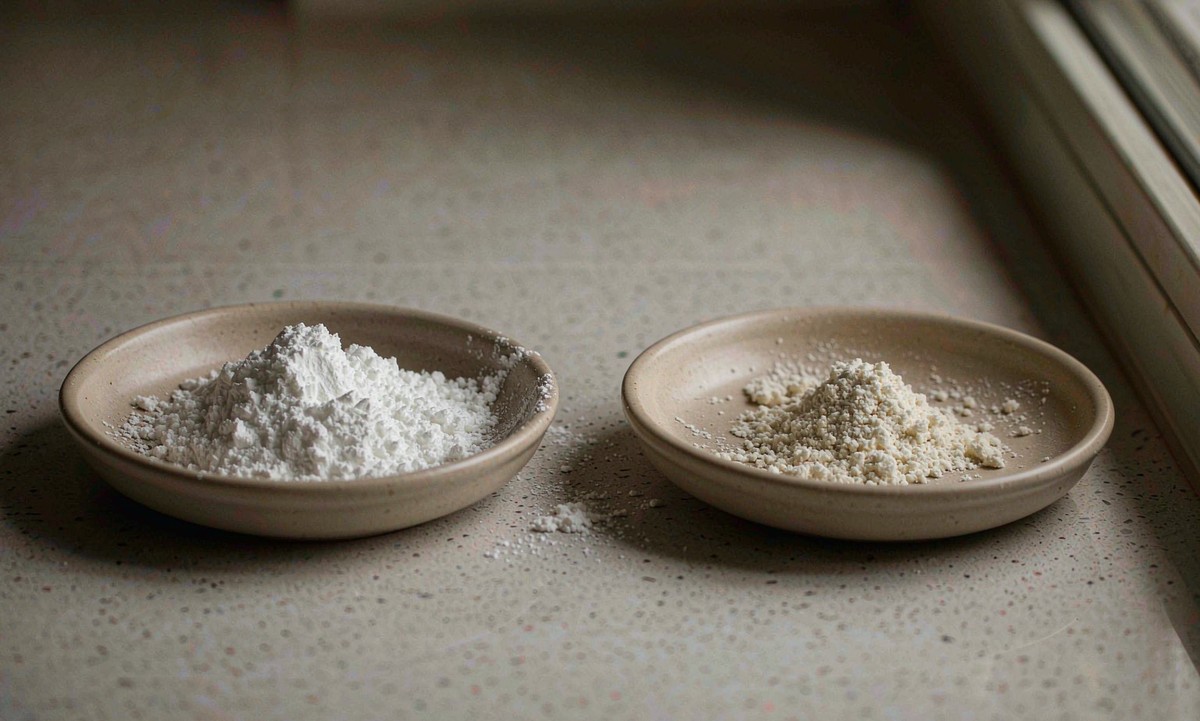
Maltodextrin is a family, and the number that separates its members is the dextrose equivalent, a measure of how far the starch has been broken down. A low-DE maltodextrin is closer to starch, a high-DE one is closer to glucose syrup, and the two behave differently at every step.
Low-DE material is less hygroscopic, less sweet and less prone to browning. High-DE material dissolves faster, carries more free glucose and picks up water from the air more eagerly. In a sachet that will sit in a warehouse in a humid climate for eighteen months, that difference decides whether the powder pours or has to be cut open.
The DE also lands on the label, indirectly. Maltodextrin is a carbohydrate and counts towards the carbohydrate figure, which matters to any product doing net-carb arithmetic. The sugar definition usually leaves it out, because that definition covers mono- and disaccharides and a low-DE maltodextrin is mostly longer chains. A high-DE material sits closer to the line. A brand that has built its panel around a carbohydrate target can find that target moved by a carrier decision made at the supplier's dryer.
Silicon dioxide and tricalcium phosphate do a different job
The second group of carriers does a different job: making the finished powder flow.
Silicon dioxide at a fraction of a percent breaks the bridges between particles that cause caking, and tricalcium phosphate does something similar while also adding a small amount of calcium. Both are used at low levels, both appear on the ingredient list, and both are what a buyer is feeling when a sample pours cleanly from a spatula instead of clumping in the bag.
The distinction matters because these two are usually additive to the maltodextrin figure, not a replacement for it. A powder described as extract plus carrier can be carrying a drying agent and a flow agent, and the two percentages add up inside the same kilogram.
Which solvent class you are in
Every extraction uses a solvent, and every solvent leaves something behind. The framework that governs how much is acceptable is the same one used for pharmaceutical ingredients, and it sorts solvents into three groups by how much harm they can do.
Class 1 solvents are the ones to avoid. Benzene, carbon tetrachloride, 1,2-dichloroethane. They are not permitted as extraction solvents, and their presence is treated as contamination rather than as a process residue. The limits are in the low single-digit parts per million.
Class 2 solvents are the ones that are used but limited. Hexane sits here, with a permitted daily exposure of 2.9 mg per day, which corresponds to 290 ppm in a product taken at 10 g a day. Methanol is 30 mg a day, dichloromethane 6, toluene 8.9.
Class 3 solvents are the low-toxicity ones, limited by good manufacturing practice rather than by a toxicological threshold. Ethanol, acetone, ethyl acetate and isopropanol all sit here, with a general limit of 50 mg a day, or 5,000 ppm on the same basis.
Ethanol and water are where most botanical extraction lives, which is why most certificates never mention solvents at all. The material is extracted with a food-grade solvent, the dryer removes it, and the residue is below any limit that would be worth printing. The conversation changes when the plant is a resin, a root rich in oil, or a material that only gives up its compounds to something harsher.
The ppm figure is calculated on a dose nobody checks
Those concentration limits are not absolute, which is the part almost every specification review misses. They are derived from a permitted daily exposure divided by an assumed daily intake of product, and the assumption is 10 g.
Ten grams a day is a reasonable capsule or tablet habit. That assumption collapses for a drink powder, where a single serving can be 10 g and two servings is 20 g. It collapses again for a shot, a gummy at six pieces a day, or a teaspoon of a loose blend stirred into hot water.
The arithmetic is simple and the direction is not in the buyer's favour. If a product is consumed at 20 g a day, then a residue that would pass at 290 ppm in a 10 g dose needs to be under 145 ppm to deliver the same daily exposure. The limit on the certificate has not changed. The exposure has doubled.
This is why a residual solvent result should be read against the dose of the finished product rather than against the printed number. A certificate that says hexane not detected is fine. A certificate that says hexane 200 ppm, pass, is fine for a capsule and questionable for a drink.

What a residual solvent report should say
A usable report names five things, and a report missing any of them cannot be checked.
- The solvent. Not total volatiles, the specific compound, because each has its own limit.
- The method. Usually headspace gas chromatography, and the detection technique matters at low levels.
- The result in ppm, with the limit of detection. Not detected means below the method's detection limit, which may be 5 ppm or 50 ppm, and the difference is the whole question.
- The limit it is being compared against. Class, PDE, and the dose assumption used to convert.
- The batch. A solvent result belongs to a lot, and a lot number is what makes it traceable.
The phrase not detected is the one that causes the most confusion, because it sounds like zero and is not. A method with a detection limit of 50 ppm will report not detected for a material carrying 40 ppm. That may be perfectly acceptable, but the buyer who reads it as zero has been told something the laboratory did not say.
Carriers that come back later
A carrier decision made at the dryer turns into a problem in the finished product at a specific moment, and it is usually the moment after the artwork has been signed off.
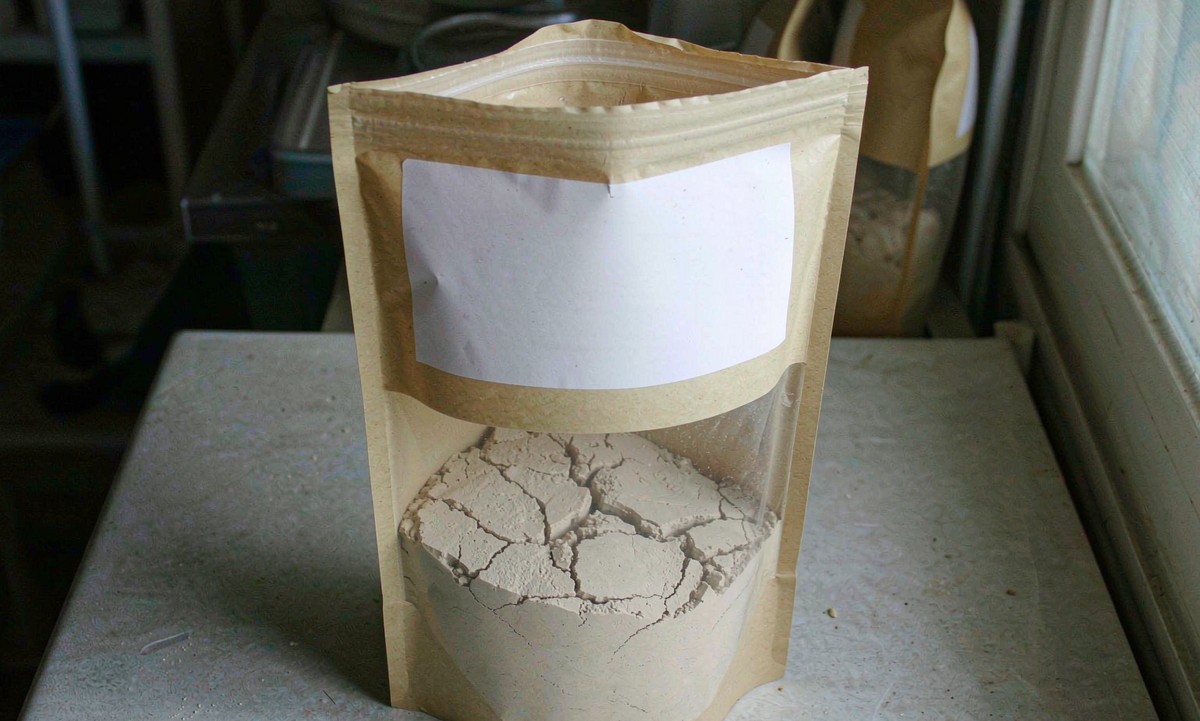
The first is caking. A hygroscopic powder in a sachet with a modest moisture barrier will pull water through the film over a summer, and what was free-flowing becomes a brick. The fix is either a lower-DE carrier, a better film, or a desiccant, and all three cost money that was not in the original quotation.
The second is browning. Maltodextrin with residual reducing sugars, plus an extract rich in amino acids, plus heat and moisture, is a Maillard reaction waiting for a reason. It shows up as a colour shift in a product that was supposed to be pale, and it is worse in a drink powder than in a capsule because the water is already there.
The third is clarity. A clear beverage cannot carry an insoluble carrier, and a spray-dried powder with a high maltodextrin load will haze a drink that was meant to be transparent. The material that works in a capsule is often wrong for a bottle, and this is decided by the carrier rather than by the extract.
The fourth is compressibility. Some carriers compress well and some do not, and a tablet formula that worked with one supplier's material can pick and cap with another's, at the same declared specification.
What to write in the purchase order
The lines that prevent all of the above are short.
- Carrier type and percentage. A number, not the phrase spray dried.
- Solvent used, and the class it falls into. Named, even when the answer is ethanol and water.
- Residual solvent limit, expressed against the finished dose. ppm in the powder, converted to the daily intake of the product.
- Loss on drying and bulk density. The two physical numbers that predict whether the powder will flow in your plant.
- The market the product is going to. Because the carrier that is acceptable in one is not in another.
- Whether the carrier needs its own certification. An organic programme has a rule about non-organic ingredients in the recipe, and a carrier is an ingredient.
A supplier who answers all six is describing a material. A supplier who answers the first and skips the rest is describing a category, and the difference only becomes visible in the second production run.
The botanical extract production lines page shows where the carrier enters the process and what the dryer is doing when it does, and the functional gummies pages cover what happens to a hygroscopic powder once it is inside a gel. For a specification that needs checking against a real line, the contact page reaches the people who run it.
Ding Shaohua, Foreign Trade Manager, takes enquiries for this line. The same person answers on WhatsApp, TikTok, LinkedIn and Facebook.
FAQ
Does maltodextrin count as sugar on the label?
Usually not as sugar, but always as carbohydrate. The regulatory definition of sugar covers monosaccharides and disaccharides, and a low-DE maltodextrin is largely longer chains that fall outside it. A high-DE maltodextrin carries more free glucose and sits much closer to the line. Either way it adds to the carbohydrate figure, which is the number that matters for net-carb and low-carb positioning, and it adds to the weight that the extract percentage is calculated against.
Can you buy a botanical extract with no carrier at all?
Yes, and they exist in three forms. A drum-dried or vacuum-dried solid is the extract alone, milled to a powder, and it is harder to handle, slower to dissolve and more expensive. A liquid extract is the concentrate before drying, which is convenient for a drink but awkward for a capsule. A material dried on a very light carrier, sometimes just enough silicon dioxide to keep it from welding, sits in between. The right answer depends on the dosage form, not on a preference for a shorter ingredient list.
What level of residual solvent is too high?
There is no single number, because the limit depends on the solvent and on how much product is consumed. Hexane carries a permitted daily exposure of 2.9 mg, which is 290 ppm at a 10 g daily dose. Ethanol, acetone and ethyl acetate carry 50 mg, which is 5,000 ppm on the same basis. The number that matters for a specific product is the permitted daily exposure divided by that product's actual daily intake, and for a drink powder that figure can be half the printed limit.
Can an organic product use a conventional carrier?
Only within the rules of the certification, and the rules are tighter than most brands expect. Organic regulations set a ceiling on the proportion of non-organic agricultural ingredients in a processed product, and a carrier counts as an agricultural ingredient when it is derived from starch. A conventional maltodextrin therefore consumes part of that allowance, and in some products there is no room for it. The question belongs at the quotation stage, because a carrier change late in a project can mean a new specification, a new sample and a new certificate.