
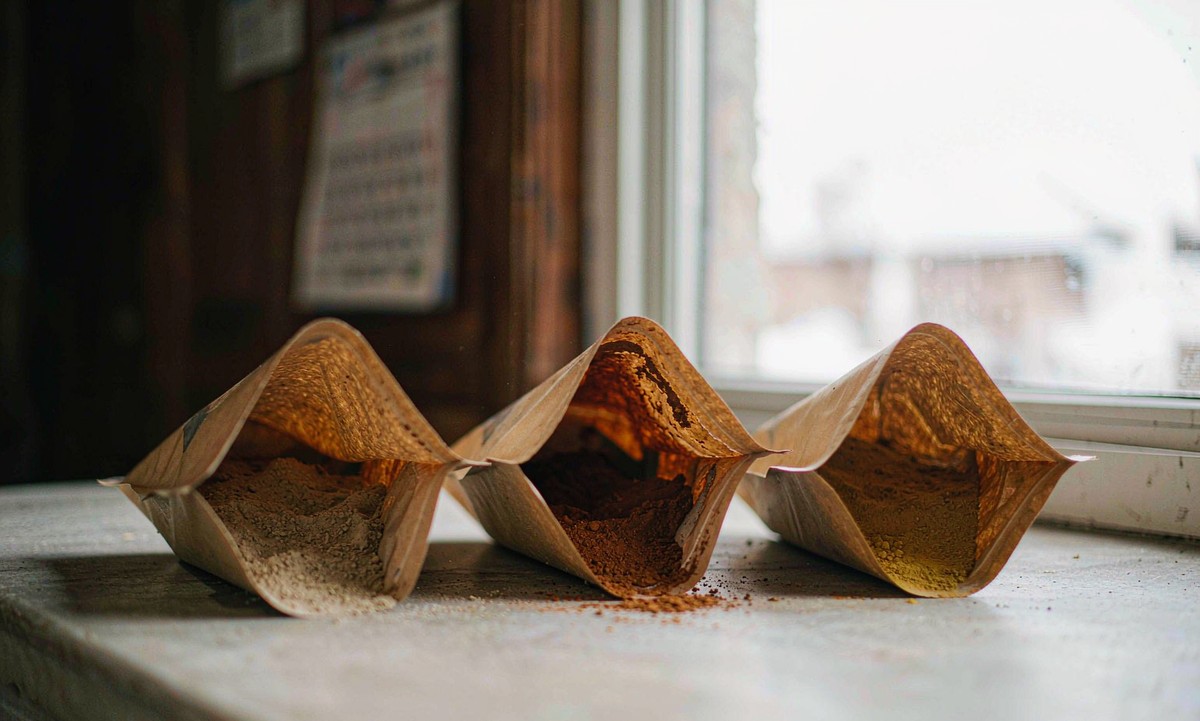
The email is one line long. Ginkgo biloba extract, 24%, 25 kg, please quote. Three replies come back the same afternoon and the prices sit 40% apart, and the buyer reads them looking for the difference, because on the page there is none. All three say 24%. All three say 25 kg. One of them will arrive as a fine pale powder that flows like flour, one as a slightly sticky granule that cakes in the bag, and one as something that has to be chipped out of the drum with a spatula.
The 40% is not a markup and it is not a negotiation opening. It is the price of four decisions that the line of text left open, and three of them are invisible at the moment of quotation.
Only one of the three numbers is a strength
A specification line carries a ratio, an assay and a carrier, and buyers routinely read all three as if they were the same kind of number. They are not even the same kind of unit.
The ratio is kilograms in against kilograms out. Ten to one means ten kilos of dried plant went in and one kilo of powder came out. It is a yield, and it describes the process rather than the product. A 10:1 extract of anything can be strong or nearly inert, because the number says how much was thrown away, not how much was kept.
The assay is a percentage by weight of a named compound, measured by a named method. Four percent ursolic acid, 24% flavone glycosides, 0.3% withanolides. It describes the product and says nothing about the process, and two extracts with identical assays can have come from wildly different amounts of leaf.
The carrier is what the powder is diluted with. It usually appears nowhere on the first line, and it is the third number that decides what a kilogram really contains.
What a ratio leaves out
Ten to one has a plain meaning that is easy to lose in a quotation: ten parts of dried herb became one part of extract. What it does not say is which ten parts, in what condition, extracted with what.
Take one lot of ginkgo leaf and run it three ways. Water at 90 °C for two hours, filtered and spray dried, gives a tan powder that smells of hay. The same leaf with 60% ethanol pulls a different set of compounds and gives a darker, stickier extract. The same leaf extracted hot, concentrated further and dried to a solid block gives something that has to be milled before it can be weighed. All three can be labelled 10:1, and their flavone glycoside content can differ by a factor of several.
This is why the pharmaceutical convention writes the ratio with its solvent attached. A drug-to-extract ratio is meaningless without the extraction solvent, because the solvent is the thing that decides which compounds come out. The reference ginkgo extract used in most clinical work is described as a ratio of 35 to 67 to one, made with an acetone-water mixture, and the ratio is one part of a specification that also names two assays and one impurity limit. Strip the solvent out and the number stops describing anything.
When a supplier writes 10:1 and nothing else, the useful reply is a question about the solvent and the starting material. A ratio with no solvent is a yield with no context.
Assay is a second measurement, not a conversion
A buyer who has understood the ratio often makes the next mistake, which is to treat the assay as a conversion factor. It is not. There is no arithmetic that turns 10:1 into 4%.
The assay is a separate laboratory result on a named compound. In a standardized extract, that compound is called a marker, and the marker does two jobs at once. It gives the buyer a number that can be checked batch after batch, and it gives the plant a target to hit at the end of the line. What it does not do is prove that the marker is the thing that matters. Ursolic acid in rosemary is easy to measure and may or may not be the fraction a formulator cares about; the point of the number is that it is repeatable, not that it is causal.
This is the honest way to read a standardized extract: the marker is a handle, and the handle is only useful if it is attached to something. A 4% figure on a rosemary extract tells you the batch was made to a target. It tells you nothing about how much rosemary was used to get there, and it tells you nothing about the other 96%.
An extract can therefore be both 10:1 and 4%, and one of those figures can be excellent while the other is meaningless. A 10:1 rosemary extract at 4% ursolic acid is a plausible product. A 10:1 rosemary extract at 0.4% is also a plausible product, made from poorer leaf or extracted more gently, and it will quote at a very different price for reasons that have nothing to do with anyone's margin.
The method hides inside the number
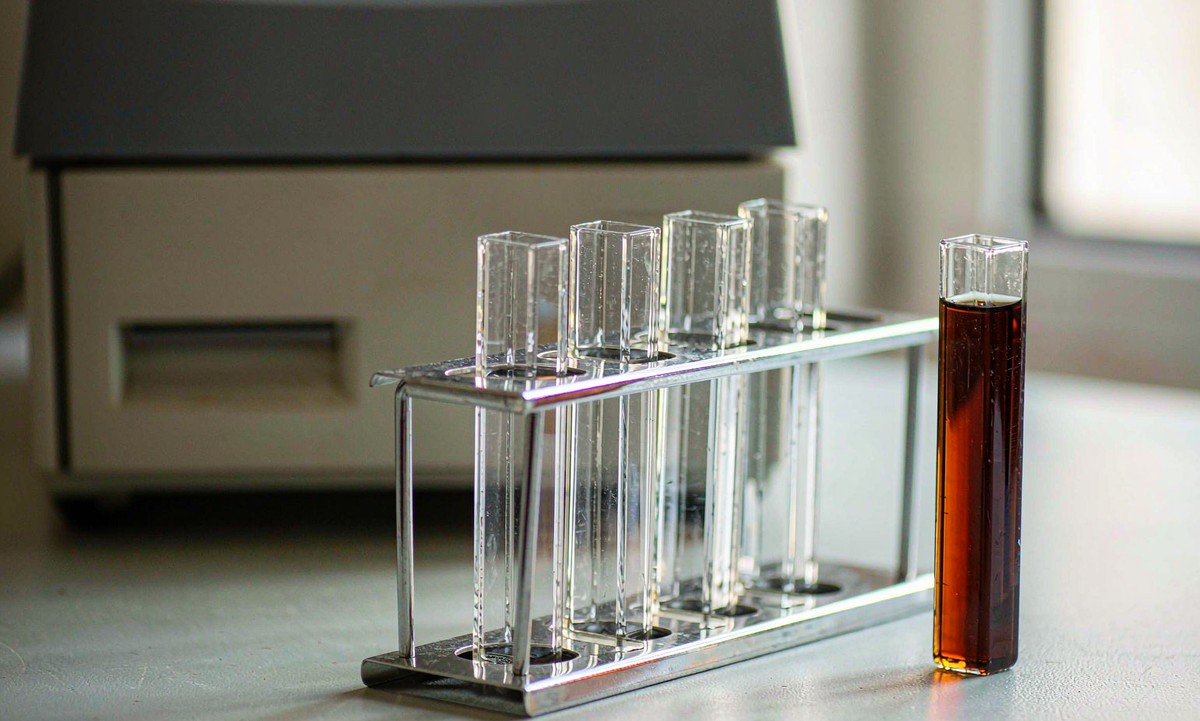
Here is where most specifications quietly stop being comparable. Two certificates can both read 24% and be measuring different things.
Total flavonoids by colorimetric assay is the classic example. The method reacts everything in the sample that absorbs at the chosen wavelength and reports the result as a single percentage, calibrated against a reference compound. It is fast, it is cheap, and it is generous. It counts the flavonoids you wanted, the flavonoids you did not, and anything else that happens to react.
The same nominal figure measured after acid hydrolysis is a different measurement again, because hydrolysis strips the sugar chains off and reports the aglycone cores. And a single-compound HPLC result is a third thing entirely, because it counts one molecule and ignores the rest.
Ginkgo is the clearest case in the trade because its specification has two assays that behave in opposite ways. The flavone glycoside figure is measured by UV after acid hydrolysis, which is exactly the kind of method that can be fed from outside. The terpene lactone figure cannot be, because ginkgolides and bilobalide have no useful ultraviolet absorption and have to be run on HPLC with evaporative light scattering or mass detection. One of those numbers is easy to reach from a poor starting material. The other is not.
That asymmetry explains a pattern that has been documented for two decades: ginkgo extract adulterated with rutin or quercetin, both cheap flavonol sources, passes the 24% flavone glycoside target while the actual ginkgo content is a fraction of what the label implies. The terpene lactone figure is the one that resists this, which is why the complete specification for that extract is written as three numbers rather than one: 22 to 27% flavone glycosides, 5 to 7% terpene lactones, and ginkgolic acids below 5 ppm.
A certificate that says 24% and stops there is not wrong. It is incomplete, and incompleteness is what a 40% price spread lives in.
Carrier is inside the assay number
Spray drying a liquid extract produces a powder that is hygroscopic and sticky, so the dryer needs something to carry it. Maltodextrin is the usual choice, sometimes silicon dioxide for flow, sometimes tricalcium phosphate. The carrier is a real ingredient, present at a real percentage, and it is doing a real job.
It is also inside the arithmetic. If a supplier takes a 10:1 liquid extract and spray dries it with 40% maltodextrin, then one gram of the resulting powder contains 0.6 g of extract and 0.4 g of carrier. On the same basis as the original, that powder now behaves like a 16.7:1 material, because you have to eat 1.67 g of it to get the extract that used to be in 1 g.
Nobody is cheating when this happens. Spray drying without a carrier is difficult, and the alternative, a drum-dried or vacuum-dried solid, is a harder material to handle, slower to dissolve and more expensive to make. The problem is only that the specification line so often says spray dried powder and says nothing about the percentage, which leaves the buyer comparing a 60% extract with a 100% extract at the same nominal ratio.
The fix is one line in the specification: carrier type and percentage. A supplier who can answer it precisely is a supplier who knows their own process.
Five hundred milligrams is a mould, not a scoop
The reason any of this matters is that a specification has to survive contact with a dosage form.
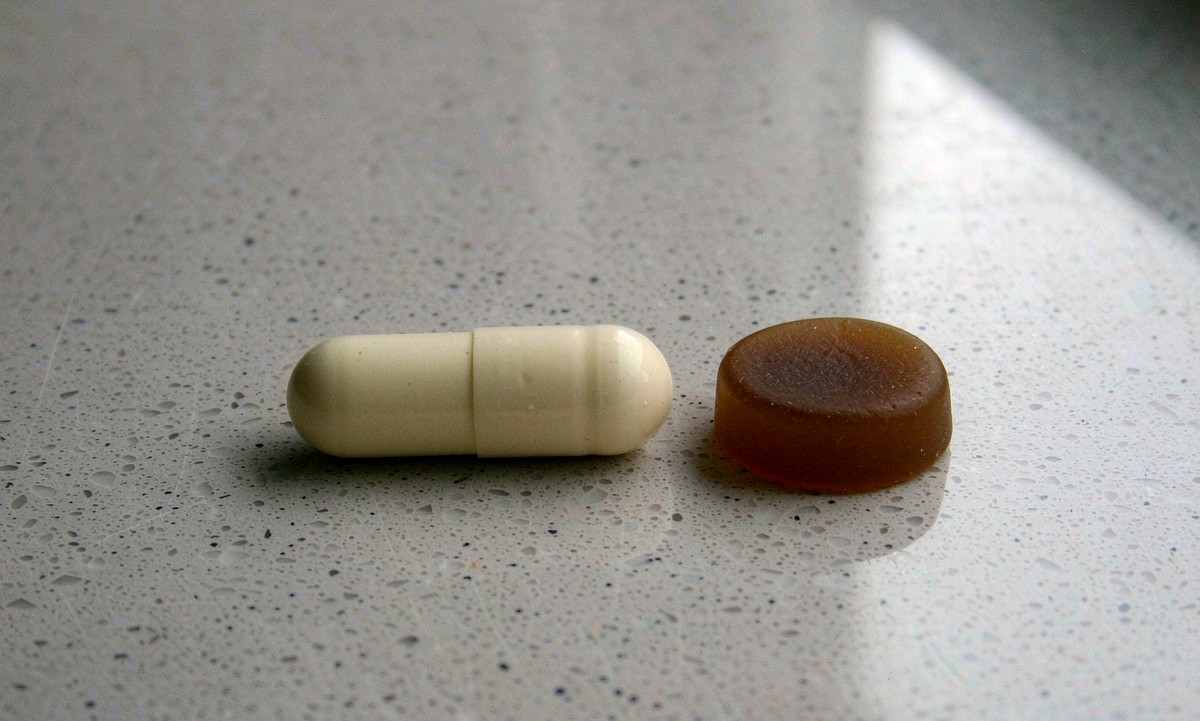
A two-piece capsule in the common size holds roughly half a gram of powder, depending on bulk density. Two of them a day is a gram. If the extract is a 24% material, a gram carries 240 mg of the measured fraction, which is the range most clinical work on that extract sits in. The arithmetic works, and it works because the capsule is a nearly pure delivery system: it holds powder and nothing else.
A gummy does not work that way. A 2.5 g piece at 3% extract carries 75 mg, and 3% is already at the point where the extract starts to taste of itself and to colour the piece. To reach 500 mg in one gummy you would need 20% extract by weight, and a gel network carrying a fifth of its mass as a hygroscopic powder does not set into anything a customer would recognise as a gummy. It sets into something closer to a lozenge, or it does not set at all.
So the direction of the conversation matters. A buyer who starts from a ratio will end up with a powder and a problem. A buyer who starts from the milligrams the finished product can deliver, and works backwards, arrives at the concentration the extract needs to be, and then at the process that can make it. That backwards calculation is the one that decides whether a project is a capsule, a sachet, a gummy or a drink.
The figure that never appears on a certificate
Every batch analysis is a snapshot of one batch, and batches differ. Two lots can both pass at 24% and differ in the ratio of the individual glycosides inside that 24%, in colour, in solubility, in how they flow through a hopper.
For a brand this shows up late, as a shade difference between two production runs photographed side by side, or as a tablet that compresses well in March and picks in September. For the factory it shows up as a re-validation nobody budgeted for.
The document that answers this is not a single certificate but a stack of them. Three to five consecutive lots, same specification, plotted on the same axes, tells a buyer more about a supplier than any single result. It shows whether the process is controlled or whether the certificate is a lucky draw.
What to send instead of a product name
A quotation request that produces a usable answer contains these lines, and most of them are not about price.
- The botanical name and the plant part. Leaf is not root, and root is not rhizome, and the assay follows the part.
- The ratio with its solvent, or the assay with its method. One or the other as the lead number, not both as decoration.
- The marker, if the extract is standardized. A named compound, not a category.
- Carrier type and percentage. The line that decides what a kilogram contains.
- The dose the finished product must deliver. Milligrams per serving, not per kilogram of powder.
- The dosage form and its constraints. A capsule, a sachet, a gummy and a bottle of drink each impose a different ceiling on how much powder can go in.
- The destination market. Residue limits, permitted solvents and labelling differ, and they change what the certificate has to show.
Send those and the reply is a specification with a method attached. Send a botanical name and a percentage and the reply is three prices and a guess, which is where most sourcing conversations begin and too many of them end.
The botanical extract production lines page describes how a specification is set before the first drum is filled, and the dietary supplement pages cover what each dosage form can physically carry. When the calculation above has produced a number and the question is whether a line can hit it, the contact page reaches the people who run the extraction.
Ding Shaohua, Foreign Trade Manager, takes enquiries for this line. The same person answers on WhatsApp, TikTok, LinkedIn and Facebook.
FAQ
Is a 20:1 extract stronger than a 10:1 extract?
Not necessarily, and often not. The ratio describes yield, so a 20:1 material has had more material removed per kilo of extract, which usually means a more concentrated product but does not guarantee one. A 20:1 made from mediocre leaf with a hot, harsh extraction can assay lower than a 10:1 made from good leaf with a gentle one. The ratio is only comparable between two extracts of the same plant part, made with the same solvent, to the same assay. Outside those conditions it is a marketing number.
Why can two suppliers quote the same 24% at prices 40% apart?
Because the 24% is not the only variable. The starting material differs, the solvent differs, the carrier percentage differs, and the method behind the figure differs. One quote may be for an extract at 100% concentration, another for a spray-dried powder carrying 40% maltodextrin. One may be measured by a colorimetric method that counts more than the target compound, another by HPLC that counts only it. The price difference is usually real, and it is usually explained by lines that are missing from both quotations.
Is a standardized extract better than a whole herb powder?
They answer different questions. A whole herb powder is the plant, dried and milled, and its content varies with season and source in a way no specification can pin down. A standardized extract is a manufactured material with a target that can be tested batch after batch. For a product that needs a repeatable dose in a small volume, the standardized extract is usually the only workable route. For a product where the whole plant is the point, the powder may be more honest. The mistake is treating one as a superior version of the other rather than as a different material.
Does the carrier have to be declared on the label?
Yes, in both the US and the EU. A carrier is an ingredient, not a processing aid, because it remains in the finished product at a measurable level. Maltodextrin in a spray-dried extract appears in the ingredient list and contributes to the carbohydrate figure. This is worth knowing at the quotation stage rather than at the artwork stage, because a specification that carries 40% maltodextrin puts an ingredient on the label that a brand may not have planned to declare.