
The certificate says 4%. The finished gummy, pulled from the packing line and tested the same afternoon, comes back at 3.2%. Six weeks later the same batch, from the same bottle, reads 2.9%. Nobody has done anything wrong, and nothing in the paperwork is false. The certificate described a bag of powder sitting in a foil liner at 25 °C, and the product is not that bag.
This is the gap that costs brands the most and gets discussed the least, because it happens after everyone has signed off and it shows up as a testing failure rather than as a decision.
A certificate describes a bag, not a product
Every assay on a certificate of analysis carries an implied set of conditions, and they are almost never printed. The powder was held in a sealed container, away from light, at ambient temperature, for a period short enough that nothing had time to move. Under those conditions the number is true and reproducible.
Open the bag and the conditions change immediately. The powder meets air, which brings oxygen and moisture. It meets a mixer, which brings shear and a little heat. It meets the rest of the formula, which brings water, acid, metal ions and other reactive compounds. Then it meets the process, which for a gummy means a kettle above 100 °C, and for a drink means a pasteuriser.
What matters to a brand is the assay measured at the end of the declared shelf life, in the final package, on a product that has been through all of that.
Four things that eat a botanical from the inside
Degradation in a finished product runs through a small number of channels, and most failures are one of them.
Water activity is the first, and the most underrated. Water mobilises everything: it dissolves reactants, it plasticises the matrix so molecules can find each other, and it feeds the microorganisms that produce the enzymes. A powder at 3% moisture is stable for reasons that vanish at 8%.
Heat is the second. Botanical compounds are generally less heat-stable than the sugar or gelatin matrix carrying them, so the process that sets the product is often the process that damages the active. The damage is not always visible as a loss during the run. It can be a loss of the precursor form, which degrades further over the following weeks.
pH is the third, and it works both ways. Some compounds are stable only in acid, some only near neutral, and the finished product has one pH for all of them. A formula carrying three botanicals with different pH optima is a compromise before it is a product.
Oxygen and light are the fourth, and they travel together. Photo-oxidation needs both, and a clear bottle on a lit shelf supplies both. An opaque pouch removes the light and leaves the oxygen in the headspace, which is why nitrogen flushing exists.
The metal ion nobody puts in the formula
There is a fifth channel that deserves its own paragraph because it comes in through the ingredients rather than through the environment.
Transition metals catalyse oxidation at concentrations far below anything that would appear on a specification. Iron, copper and manganese at parts per million will accelerate the degradation of anthocyanins, catechins and ascorbic acid by orders of magnitude compared with the same formula without them.
They arrive in the water, in the mineral premix, in the colour, and in the extract itself, because a plant is a living thing that concentrates metals from soil. A formula that tests stable in one plant and fails in another may be the same formula with a different water supply.
The practical consequence is that a stability failure is sometimes solved by chelating or by changing a mineral source rather than by changing the botanical.
What each family of compounds does
The chemistry is not uniform, and knowing which family is in the drum tells you which failure to expect.
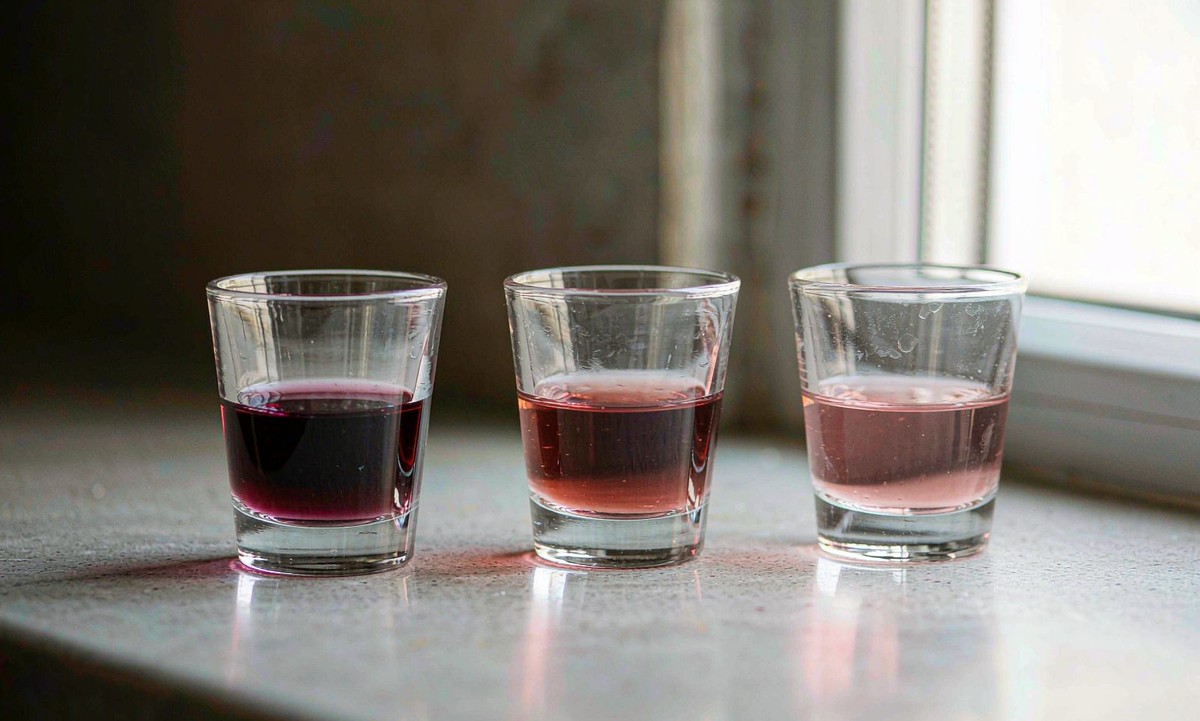
Anthocyanins are the clearest case. They exist in different structural forms depending on pH, and the coloured form dominates only in acid. In the pH 2.5 to 3 range they are relatively stable. Above pH 4 the colour fades toward colourless, and above pH 5 it shifts again. They also complex with metal ions, which changes the shade rather than the intensity, so a product can lose its intended colour while its assay stays on target.
Catechins, including the ones that make green tea extract interesting, oxidise readily at neutral and alkaline pH and are strongly catalysed by metal ions. In an acidic drink they survive; in a neutral one they brown.
Carotenoids are attacked by oxygen and light, and they are the reason a label claiming a natural colour sometimes has to explain why the product went pale in the bottle.
Polyphenols in general are vulnerable to enzymatic browning if the raw material was not adequately blanched, because polyphenol oxidase survives drying. A product that darkens over weeks may not be degrading its actives at all. It may be finishing a reaction that started in the field.
The gummy is the harshest common format
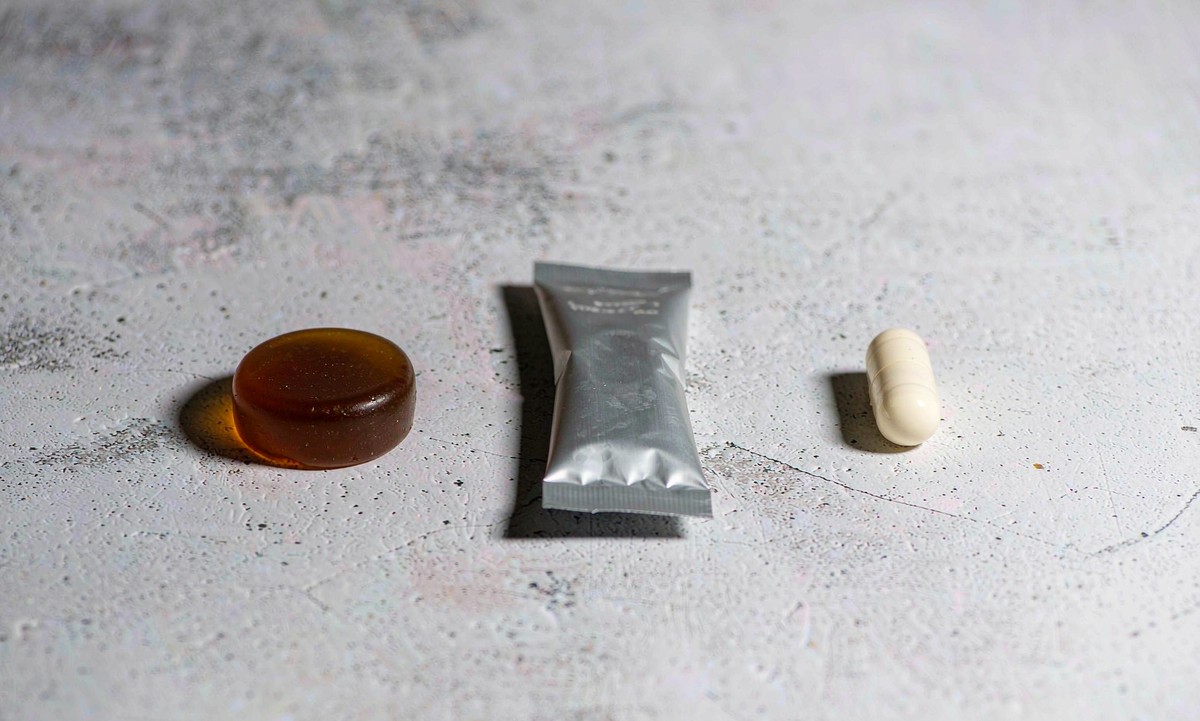
Of the formats a botanical can go into, the gummy is the least forgiving, and it is unforgiving for reasons a buyer rarely sees in a specification.
The cook runs above 100 °C to drive the solids up, and anything heat-labile added before that point has been through a pasteurisation it did not need. The finished piece sits at a water activity high enough to support chemistry but low enough to look dry. And the gel network holds the powder in intimate contact with water for the whole shelf life, which is the opposite of what a sealed foil bag does.
This is why heat-sensitive extracts are added late, after the cook and often after the vacuum step, and why the point of addition is a process decision that belongs in the specification rather than in the batch record. An extract added at the wrong point makes a different product with a lower assay, and the saving on the invoice does not cover it.
A sachet fails differently. The powder is dry, so the chemistry is slow, but the film is thin, so moisture migrates in over months. The result is caking, browning and a slow decline in whatever is sensitive to water activity.
A capsule is a surface problem. The powder has a large surface area exposed to the headspace, and the shell is sensitive to humidity, becoming brittle in dry conditions and soft in wet ones. A botanical that is fine in a tablet can plasticise a capsule shell.
A drink is the hardest of all for a different reason. Water is present from the start, the pH is fixed for the whole formula, and the process includes a heat step that is designed to kill microorganisms and does not distinguish between them and the actives.
The same formula in two climates
A stability study is run at a stated condition, and the study is only as good as the match between that condition and the market.
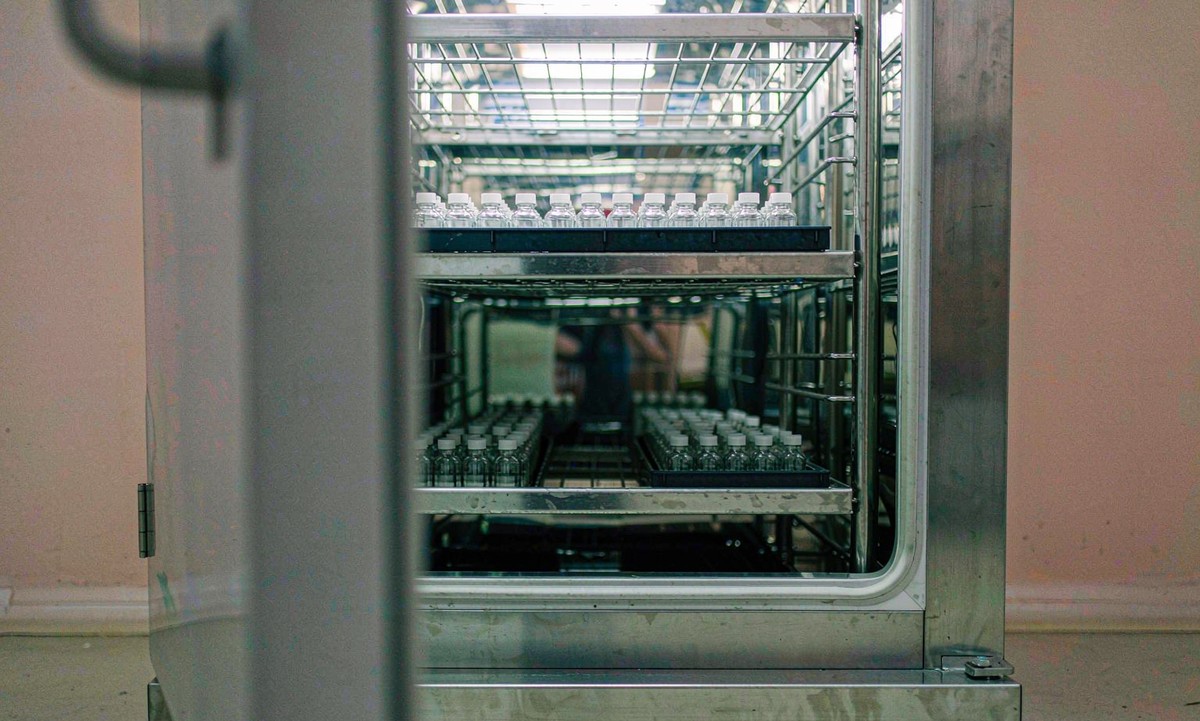
A product developed against a temperate brief and shipped to a tropical one meets a different environment at every step. A container on a dock in summer reaches temperatures well above ambient, and a warehouse without climate control holds that heat for hours a day. The product that passed eighteen months at 25 °C has not been tested for eighteen months at 35 °C, and in the range where these reactions run, a ten degree rise can roughly double the rate.
Testing everything at 40 °C would be an overreaction. The practical answer is to name the destination market in the brief, because the same formula can be adequately stable in one market and unfit in another, and the difference arrives as a customer complaint rather than as a test result.
How to find out before committing
Only the finished product answers this question: in its final package, at more than one time point. Nothing measured on the raw material does.
Accelerated conditions, typically 40 °C at 75% relative humidity, compress months into weeks and are the standard first pass. They are good at ranking two formulas against each other and at exposing a formula that is clearly unfit. They are weaker at predicting a calendar date, because the degradation route at 40 °C is not always the route at 25 °C, and a product that passes accelerated may still fail on a real shelf in a hot market.
The number that supports a shelf life claim is a real-time study at the intended storage condition, running for the length of the claim. It is slow and it cannot be short-cut, which is why the sensible sequence is accelerated first to eliminate bad options, then real-time on the one that survives.
What to put in the specification so the number holds
The clause that prevents most of this is a change in what the number means.
- Assay at end of shelf life, not at release. A target expressed at expiry forces the formula and the process to be designed for the loss rather than discovering it.
- Point of addition, for heat-sensitive extracts. After the cook, after the vacuum, at a stated temperature.
- Water activity and moisture range for the finished piece. The two numbers that predict how fast everything else moves.
- The packaging, named. Film, bottle, blister, with the barrier properties that were tested.
- The stability protocol, agreed before the first batch. Conditions, time points, and which tests are run at each.
- The metal ion sources, listed. Water, mineral premix, colour, and the extract itself.
An overage is the other option, and it deserves a cautious sentence. Adding extra extract to compensate for loss is common practice and it has a legal dimension, because a product that declares a quantity must contain it, and an overage that is not justified by data is a declaration problem waiting for an inspector. An overage supported by a stability study is a decision. An overage invented to cover an unknown loss is a guess with a label on it.
The functional gummies pages describe where a heat-sensitive ingredient enters the gel, the dietary supplement pages cover the stability profile of the other formats, and the botanical extract production lines page shows where the drying step sits. When a formula needs to be tested rather than assumed, the contact page reaches the people who run the trials.
Ding Shaohua, Foreign Trade Manager, takes enquiries for this line. The same person answers on WhatsApp, TikTok, LinkedIn and Facebook.
FAQ
Can an overage solve the degradation problem?
It can compensate for a loss that has been measured, and it cannot compensate for one that has not. The difference matters legally as well as technically: a declared quantity has to be present at the end of shelf life, and an overage without a stability study behind it is a declaration risk. Where an overage is used, it should be calculated from real end-of-shelf-life data, not from a rule of thumb, and it should be disclosed to the brand rather than absorbed into the formula.
Does a three-month accelerated test prove a two-year shelf life?
It supports a provisional claim and it does not prove one. Accelerated conditions are excellent for ranking formulas and for catching a clearly unfit one. They are weaker at predicting a calendar, because the degradation pathway at elevated temperature is not always the pathway at ambient, and a product that passes at 40 °C can still fail in a hot climate where the real storage temperature drifts above the assumption. A two-year claim on a real shelf still needs real-time data on that shelf.
Why is the finished product lower than the raw material, when nothing was added that reacts?
Because the raw material was never exposed to the conditions the finished product lives in. Water activity, heat from the process, pH of the matrix, oxygen in the headspace and trace metals from the water or the premix all accelerate reactions that were negligible in a sealed bag. In a gummy the exposure is continuous for the whole shelf life, because the gel holds the powder in contact with water. The loss is not a mistake in the powder. It is the powder meeting a product.
Does encapsulation or coating protect an extract in a gummy?
It helps, and it is not a solution on its own. A lipid or starch coating can slow the contact between the extract and the matrix, and it can reduce the exposure to heat during the cook if the particle survives it. What it does not do is remove the water, and water activity remains the dominant variable over eighteen months. Encapsulation is worth doing where the chemistry is surface-driven. It is not a substitute for choosing a format the extract can survive.