
A creatine gummy needs room for the active as well as the ingredients that make it a gummy. Increasing the target amount changes the powder load, the serving weight and often the texture. Stability adds another question because creatine can convert to creatinine under some conditions. Both the amount at release and the amount retained during storage are relevant to the finished product.
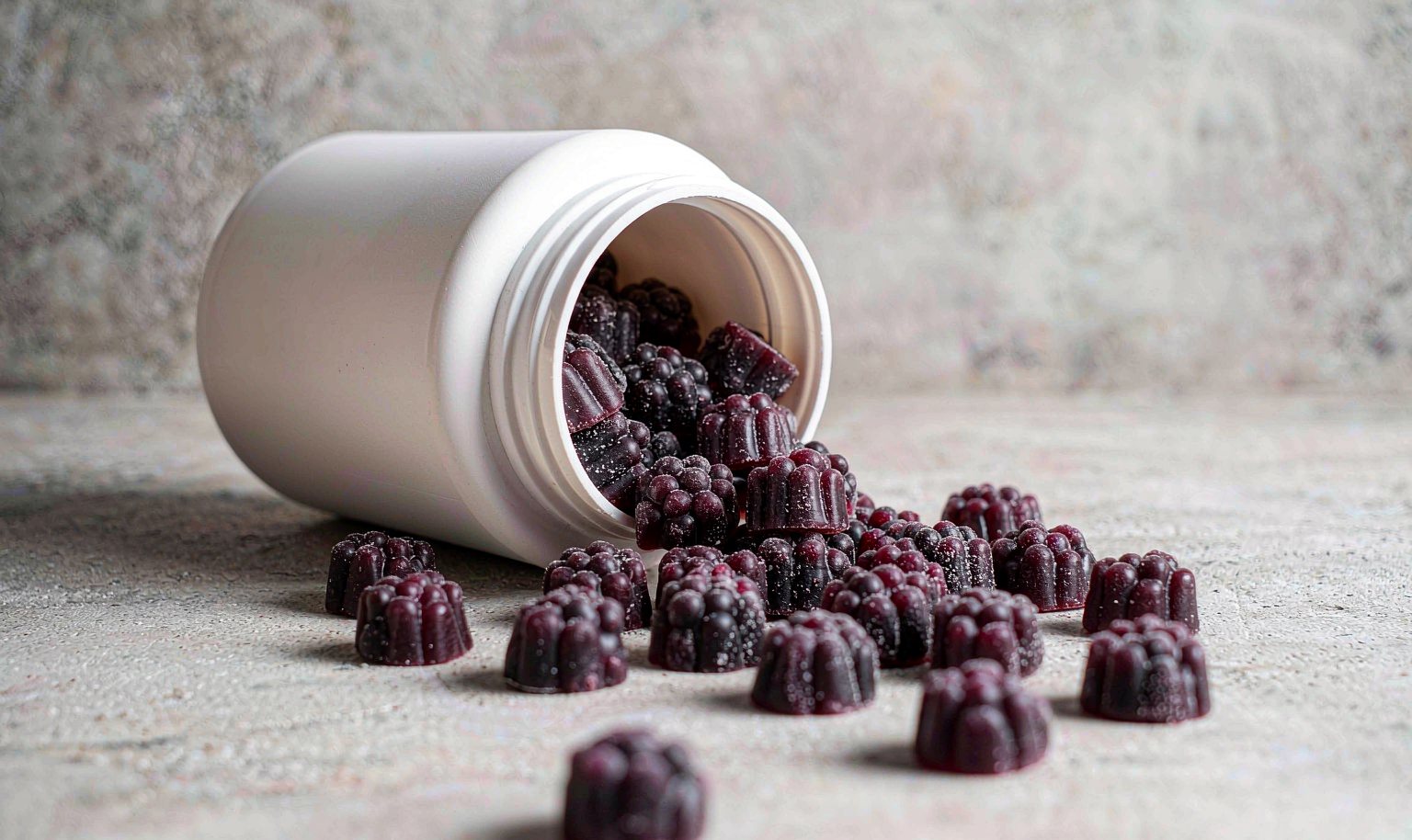
Weight per piece and per serving
In a hypothetical two-piece serving weighing 8 g in total, 3 g of creatine monohydrate would be 37.5% of the mass before other formulation adjustments. That is a substantial powder load. It is different from putting 3 g into a single 3 g piece, which would leave no mass for the gel or other ingredients. These are mass-balance examples rather than established specifications for a Wan Hua Cao product.
A label may refer to creatine monohydrate weight or the creatine it supplies. Those bases also differ. The raw-material assay, serving size and finished-product method can keep the calculation consistent. There is no universal per-piece capacity that applies to every gummy or chew.
What storage studies show
A 2009 creatine stability study examined glycerol and pH 4 buffer model systems at different temperatures and water activities. It supports considering those variables during development, but its results do not predict a particular gummy’s shelf life. The actual matrix, process and package can change the outcome.
A finished-product method can distinguish creatine from creatinine rather than treating related nitrogen-containing compounds as interchangeable. A low result on its own does not establish whether the cause was under-addition, sampling, the analytical method or degradation. A batch record and suitable testing provide more context than a market allegation about unnamed products.
Packaging and transport
Storage evidence is most relevant when it uses the intended pack. A sealed pouch and a bottle opened repeatedly can expose a gummy to different conditions. The transport route, humidity and expected use after opening give context to the packaging specification and the stability programme.
A sample brief at Wan Hua Cao
Gummy development at Wan Hua Cao includes taste and ingredient-proportion work. For a creatine brief, serving weight and the ingredient’s reporting basis sit beside the target amount. The gummy page shows the format background, while the powder range offers another format to discuss when a larger serving is central to the idea.
FAQ
Is a pectin creatine gummy possible?
The feasibility depends on the material, amount and process. A particular pectin system still needs its own sample and stability assessment; pectin alone does not establish success or failure.
Does an accelerated result establish the entire shelf life?
It provides evidence under the tested conditions. The interpretation depends on the degradation model and the relationship to the intended storage conditions, with real-time observations adding further information.
Final Thoughts
The useful comparison between creatine gummies begins with the same serving basis and a method that measures the intended compound. The sample then adds texture and handling information. Keeping those pieces together makes it easier to discuss a realistic formulation without treating a powder specification, a laboratory model or another product’s label as proof of the finished gummy.
Ding Shaohua, Foreign Trade Manager, takes the enquiries that arrive this way. The same person answers on WhatsApp, TikTok, LinkedIn and Facebook, and the sample questions usually arrive by WhatsApp first.
All News