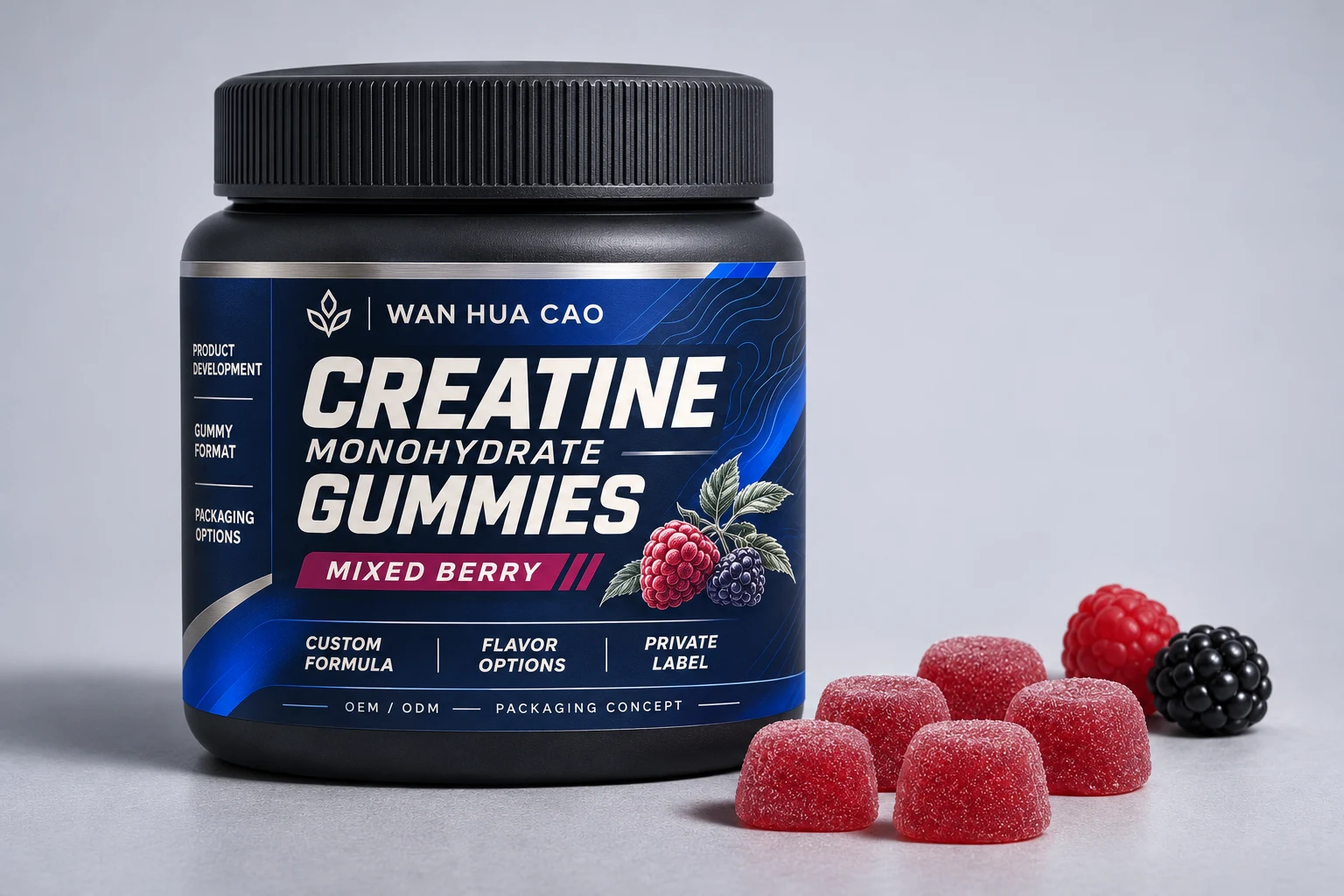
The same 5 g of creatine monohydrate can become different product formats when divided across four gummies or six. The ingredient carried by each piece, total serving weight and servings per bottle all change with that choice.
These details run through creatine gummy formulation, flavour sampling and packaging design. In a contract manufacturing or private label project, the serving specification also connects with the production plan for the full batch.
The active ingredient and gummy base share the same weight allowance
Consider a hypothetical formulation containing 5 g of creatine monohydrate across four gummies, each weighing 4 g. The serving weighs 16 g, and creatine monohydrate accounts for 31.25% of that mass. The remaining weight accommodates the gelling base, sweeteners and flavour system.
If the serving changes to six gummies, still at 4 g per piece, the target creatine monohydrate loading falls to about 20.83%, while total serving weight rises to 24 g.
Fewer pieces make the serving more compact and increase the ingredient proportion in each gummy. More pieces leave more room for the base, while making the serving heavier. These are different development trade-offs; the resulting texture still has to be evaluated in samples.
A creatine gummy for women that uses a smaller piece while retaining the original serving target also redistributes weight between piece size, ingredient loading and pieces per serving.
Developing texture at the intended ingredient loading
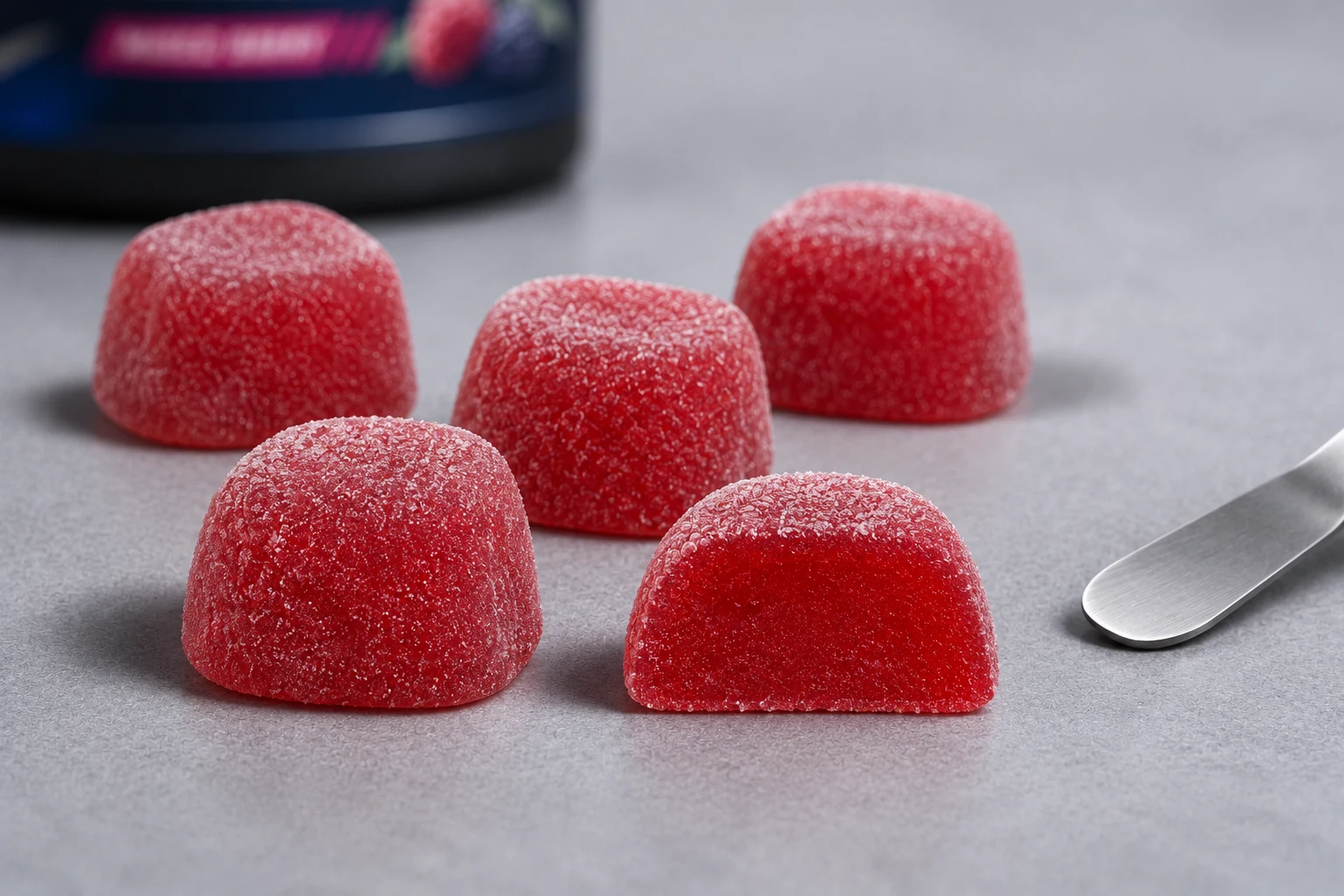
Grittiness, firmness and aftertaste are differences that can be observed during sampling. Feedback becomes more relevant as the creatine loading in the flavour sample approaches the intended formulation.
The texture of a lower-loading sample does not directly represent the finished product at the target loading. Revised samples can each be tied to a defined formula version, making changes at the same piece weight easier to compare.
Sugar-free creatine gummies and vegan gummies introduce further choices for the base. The former involves the sweetener system; the latter involves the gelling agent and the origin of other ingredients. These requirements sit alongside creatine loading in the development brief.
Our gummy OEM/ODM services cover formulation, shape, flavour and packaging development, with free sampling. The sample stage brings these requirements into one proposed product before the production version is agreed. Explore our gummy manufacturing services.
How a one-ton minimum connects with retail packaging
Our gummy projects have a minimum order of 1 metric ton.
For a project designed at 4 g per piece, one metric ton of finished gummies would theoretically contain about 250,000 pieces. At 60 gummies per bottle, that is approximately 4,166 full bottles. Sampling, rejects and other production allowances affect the delivered quantity. This is a calculation using an assumed piece weight, not a measured yield for a particular creatine gummy.
In this 60-count example, four gummies per serving gives 15 servings per bottle; six gives 10. The same pack count can therefore represent different serving specifications and numbers of servings.
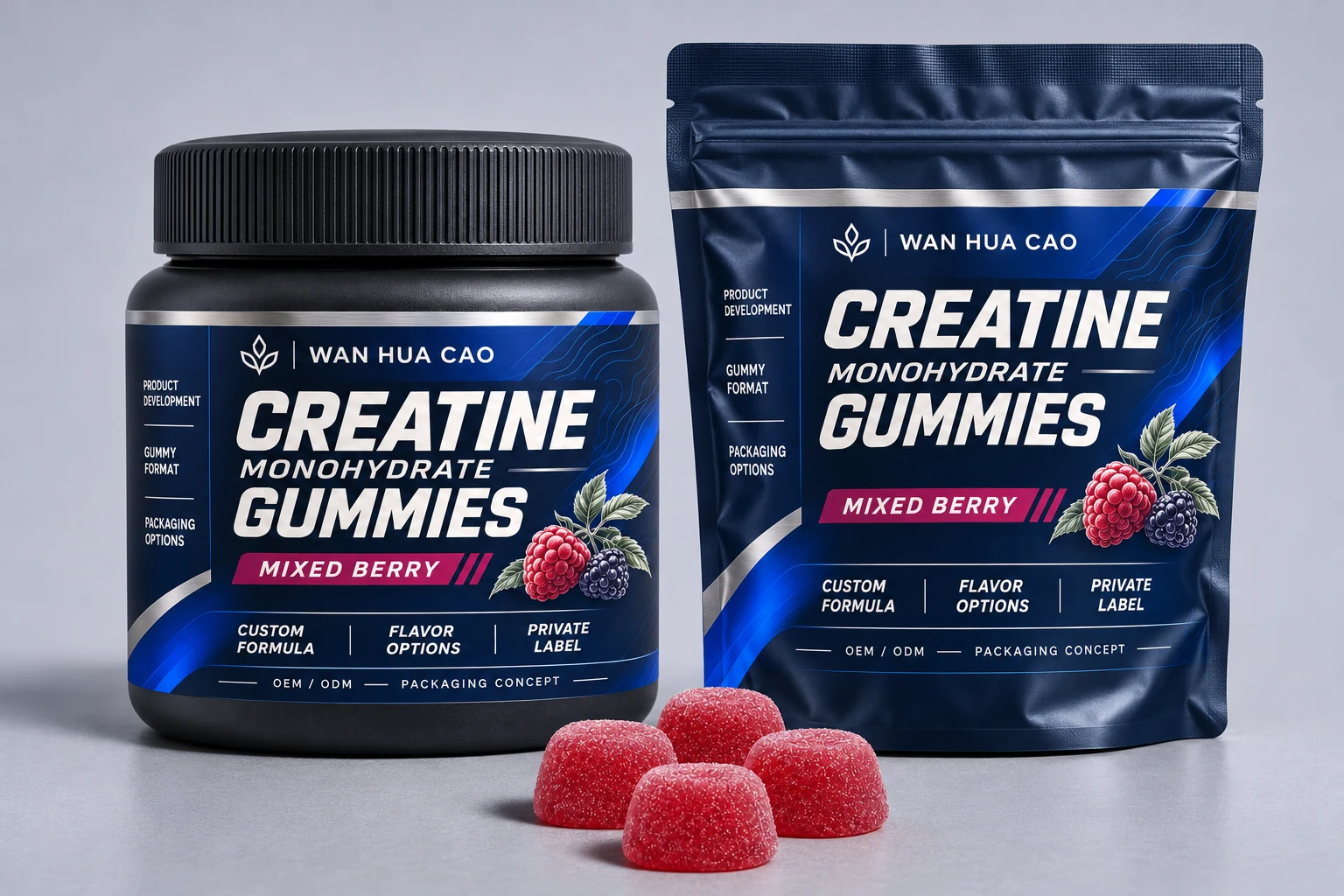
Our gummy projects offer bottle, pouch and custom packaging options. Agreeing the formula and retail unit together connects the batch quantity, packaging quantity and servings declared on the label.
Finished-product content and storage observations come from different stages
A creatine monohydrate raw-material report describes the ingredient before production. The processed gummy has its own finished-product test results.
Extraction from the gummy matrix, method recovery and the reporting basis affect how a content result is interpreted. Quantitative procedures such as high-performance liquid chromatography (HPLC) need to be suitable for the sample. Creatine and creatine monohydrate also have different mass bases; consistency between raw-material specifications, test reports and labels directly affects comparison.
Storage adds a time dimension. Uzzan and colleagues examined the effects of water activity and temperature on creatine stability in model systems containing glycerol and buffer. The work supports considering these variables during development, but its results cannot establish the shelf life of a commercial gummy. Read the study summary and publication details.
Once a particular formula is placed in its intended packaging, content, texture, sticking and appearance can be recorded during storage. Initial production results and subsequent samples describe that product at different points in time.
Wan Hua Cao's SGS GMP document, certificate CN23/00007035, includes gel candy production in its stated scope. It describes the manufacturing management system; the content and stability of a particular creatine gummy are addressed by that product's test records. Manufacturing and quality information.
Development arrangements for creatine gummy OEM/ODM projects
We develop and manufacture nutritional gummies and other health-food formats in Bozhou, Anhui. Gummy projects can be developed around formulation direction, piece shape, flavour and bottle or pouch packaging.
We offer a 1-metric-ton minimum order, free sampling and a lead time of 15 to 30 days after receipt of the deposit for gummy projects. The project schedule is agreed alongside the confirmed formula and packaging plan.
About Wan Hua Cao · Gummy OEM/ODM services
All News