
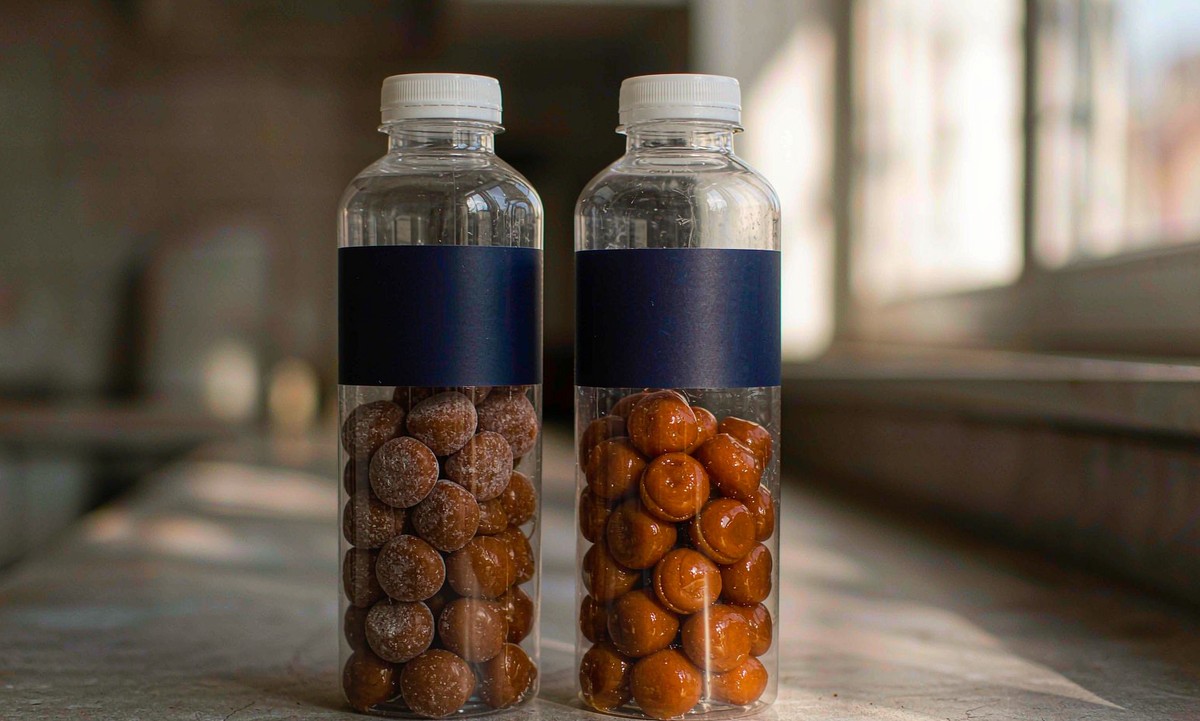
A buyer opens two bottles on the table and puts a gummy from each in his palm. Same shape, same colour, same flavour brief. One is dull and faintly frosted, the other has a hard wet-looking shine that catches the window. His question is why, and the answer has nothing to do with the recipe inside the piece. It is what happened to the surface in the last four minutes of the process.
Every gummy gets a surface treatment of some kind, because a bare gummy is a sticky object. What differs is which of three materials is used, and the three push the product in opposite directions on almost every axis a label cares about: sugar content, gloss, heat resistance, allergen and diet status. Choosing a coating is therefore not a finishing decision. It is a labelling decision that happens to be made in the packing hall.
Why a gummy needs a surface at all
A freshly cured gummy has a thin film of moisture and dissolved solids on its skin. In a bottle at 25°C that film is enough to make two pieces weld together within a few days, and once they weld they do not separate cleanly, they tear. The torn surface then dries differently from the rest and the bottle looks damaged before it has been opened.
The surface layer also mediates moisture. A gummy in a dry room loses water from its skin first, and a piece that dries unevenly goes leathery at the edge while staying soft in the middle. A coating slows that exchange and spreads it evenly. Some coatings do it by adding a barrier, some by adding a hygroscopic layer that buffers the change.
And then there is appearance. Gloss reads as fresh, dull reads as old, and buyers judge both in under a second at shelf distance. None of the three coatings is chosen for appearance alone, but appearance is what the customer sees first, which is why the coating conversation keeps drifting away from the technical questions that actually decide it.
Sugar sanding: the one that adds sugar
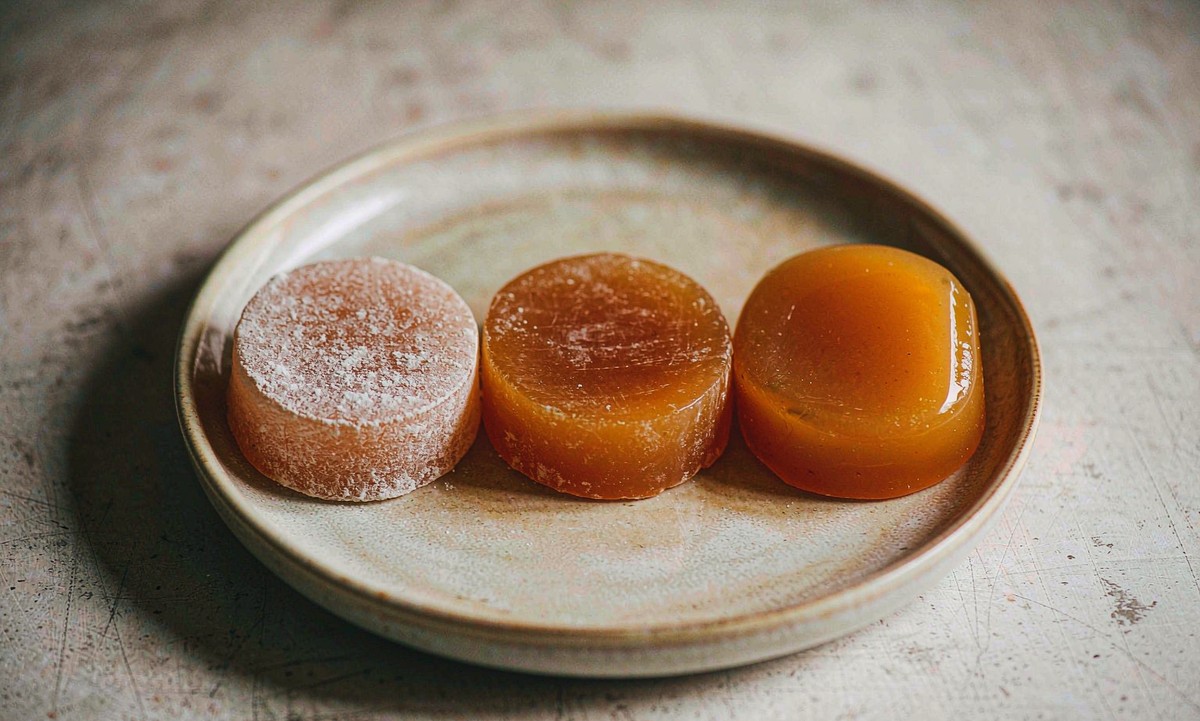
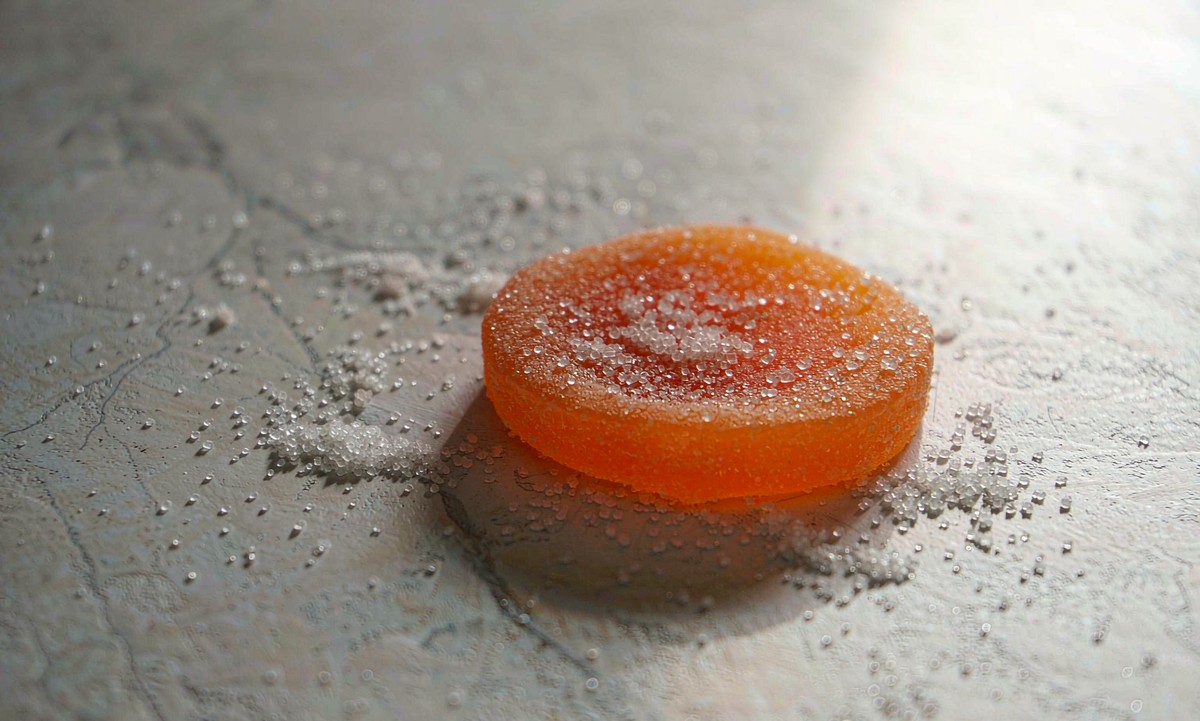
Sanding is the oldest method and the simplest to describe. The gummies tumble in a drum with fine sugar, or with a mixture of sugar and citric acid, and the crystals stick to the damp surface. The result is a soft, matte, slightly granular piece that does not stick to its neighbour, because the crystal layer keeps two surfaces from making contact.
The acid version, usually called sour sanding, does two things at once. It gives the sour hit that a cola or a sour apple product needs, and it lowers the surface pH, which incidentally makes the surface less hospitable to mould. The sugar version gives sweetness and a softer look.
What sanding costs is straightforward and often decisive. It adds sugar to the piece, typically a small percentage by weight but enough to appear on the label as an ingredient and enough to change the arithmetic of a sugar claim. A product at 0.4 g of sugar per piece can cross 0.5 g with a sanding layer, and that single change takes a sugar-free claim off the table. Sanding is also the least heat-stable of the three, because the crystal layer picks up moisture from the air and turns glassy in a humid warehouse.
For a confectionery product sold as candy, sanding is often the right answer. For a supplement gummy carrying a sugar claim, it is usually the wrong one, and the reason is on the panel rather than in the mouth.
Oil polishing: the neutral default
Oil polishing is what most functional gummies get, and it is the least visible choice on a label. The pieces tumble with a small amount of oil, which spreads into an even film, seals the surface, and gives a soft sheen rather than a hard shine.
The oil is the variable. Food-grade mineral oil is the traditional choice in the United States, where it is permitted for this use, and it is cheap, odourless and stable. Coconut oil and medium-chain triglyceride oil are the common alternatives, and both bring a taste and a melting behaviour of their own: coconut oil solidifies below about 24°C, so a bottle stored in a cool room can show a faint white haze on the pieces that disappears when the bottle warms up.
The mineral oil route carries a question in Europe that it does not carry in the United States. Mineral oil hydrocarbons have been under scrutiny in the EU for years, with attention on the saturated fraction that can accumulate in the body, and buyers in some markets now ask suppliers to confirm the oil grade and to provide a hydrocarbon profile. That is not a reason to avoid the material. It is a reason to know which grade is being used and to have the paperwork ready when the question arrives.
Oil has one more practical behaviour worth knowing before the artwork is approved. It migrates. A heavily oiled piece leaves a film on the inside of the bottle, which looks like a manufacturing defect to a consumer even when the product is perfectly good, and a bottle that has been standing on a warm shelf for a month can show oil pooled at the shoulder.
Wax polishing: gloss, heat and the vegan catch
Wax polishing gives the hard, glassy shine that a premium product usually wants. The piece is tumbled with a small amount of wax, often in a solvent or as a hot melt, and the film that forms is thin, continuous and resistant to moisture.
Three waxes do most of the work. Carnauba wax, an E903 material from the leaves of a Brazilian palm, gives the hardest film and the highest gloss, and holds up at temperatures that would soften the other two. Beeswax, E901, gives a softer, warmer sheen with a lower melting point. Candelilla wax, E902, sits between them and is plant-derived.
The catch is dietary. Beeswax is an animal product, so a wax-polished gummy is not vegan unless the wax is carnauba or candelilla. Shellac, E904, is a resin secreted by an insect and is used for the highest-gloss finishes on confectionery; it is not vegan either, and its status under some halal interpretations is contested. A brand that moved to a pectin base for a vegan claim and then accepts a shellac polish has not made a vegan product, and this specific combination is more common than it should be.
Wax also changes the texture in the mouth. The film is thin enough that most tasters do not notice it at first, but on a soft piece it can read as a slightly slippery skin, and on a very soft piece it can delay the flavour release by a fraction of a second that some people register as a waxy note.
What each one does to the label
This is where the three stop being interchangeable.
Sanding adds a sugar or an acid to the ingredient list. On a sugar-free product it is disqualifying. On a reduced-sugar product it eats into the margin the formula had left, and on a product carrying a front-of-pack sugar graphic it moves the number.
Oil adds an oil, and in the EU it may add an E number depending on which oil is used. Mineral oil is declared as such; coconut oil is declared as an allergen in some markets, which is a consideration for a product that has gone to trouble to be free of the major ones.
Wax adds an E number in Europe and a common name in the United States, and it can add a vegan or halal problem that no amount of formula work upstream will fix. Carnauba is the safe answer for a plant-based claim, beeswax is not, and shellac never is.
None of these are large lines on a panel. All of them are the kind of line that a regulatory reviewer picks up first, because they sit at the end of the ingredient list where the additives live.
Heat, humidity and the bottle
The coating interacts with where the product is going, and the interaction is not intuitive.
A sugar-sanded piece in a humid climate absorbs water through the crystal layer, and the layer turns from matte to glassy, then to a sticky film. The product does not spoil and does not look spoiled in a photograph, but it feels wrong in the hand, and that is enough for a return.
An oiled piece is the most forgiving in humidity and the least forgiving in heat, because the film softens and the pieces begin to slide against each other. In a bottle that is fine. In a pouch with a clear window, the oil can wick into the film.
A waxed piece resists both, which is why it appears on products with long ambient distribution. It is also the most expensive per piece and the one with the most label consequences, which is why it tends to appear on premium lines rather than on volume ones.
The pack matters as much as the climate. A clear PET bottle shows every surface defect and every oil film. An opaque pouch hides them and lets a cheaper coating do the job. A blister shows the piece from one side only and tolerates a dull finish that would look tired in a bottle.
Where coating fails in production
Three failures account for most coating complaints, and all three are process failures rather than material ones.
The first is over-application. More wax looks better in the drum and worse in the bottle, because a thick film cracks along the edges of the piece and the cracks read as white lines. The dose is small, typically well under a percent of the piece weight, and the operator's instinct to add a little more is the wrong instinct.
The second is uneven coverage. A drum loaded too full, or run too short, leaves some pieces glossy and some dull, and the difference is obvious in a clear bottle. It is invisible in a sample of ten pieces, which is why it survives the sample round and appears at scale.
The third is the interaction between coating and curing. A piece that is slightly too wet when it enters the drum takes up too much coating and dries to a mottled surface. A piece that is too dry takes up almost none and looks uncoated. The coating step is therefore a check on the curing step, and a coating defect is often a curing record that was not read.
Four decisions that settle it
The coating question resolves quickly once these four are answered, and each one eliminates options rather than adding them.
- Whether the product carries a sugar claim. A sugar-free or reduced-sugar product cannot take a sanding layer, which leaves oil or wax and removes the cheapest option.
- Where it will be sold and stored. A humid market pushes away from sanding, a hot one pushes away from oil, and a long ambient chain pushes towards wax with its cost.
- What the pack is. A clear bottle rewards gloss and punishes unevenness, an opaque pouch forgives both, and the choice of pack is usually made before anyone thinks about the coating.
- Whether a vegan or halal claim is carried. This one decides the wax, and it has to be decided with the base, not after it, because a pectin base with a shellac polish is a contradiction that the ingredient list will expose.
Answer those four and the functional gummy line has what it needs to specify the finish. Leave them open and the coating gets chosen by whoever is running the drum that day, which is how a product ends up with a finish that matches neither its claim nor its market. The contact page reaches the people who run that step, and a photograph of two bottles side by side, one dull and one bright, is usually enough to start the conversation.
Ding Shaohua, Foreign Trade Manager, takes enquiries for this line. The same person answers on WhatsApp, TikTok, LinkedIn and Facebook.
FAQ
Does a sugar-free gummy have to be oil polished?
Effectively yes, unless the polish is a wax. A sugar sanding layer adds sugar and would break the claim, and the alternatives that contain no sugar are oil and wax. Oil is the usual answer because it is cheaper and adds nothing to the panel beyond an oil; wax is used when the product needs a harder shine or better heat resistance.
Is carnauba wax vegan?
Yes. Carnauba comes from the leaves of a palm and is acceptable under vegan labelling schemes. Beeswax is not vegan, and shellac, which is used for the highest-gloss finishes on confectionery, is secreted by an insect and is not vegan either. A product can be fully plant-based in its formula and still fail a vegan claim at the polish.
Why do my gummies look dull after a few weeks in the bottle?
Usually moisture, not coating. The film absorbs water from the headspace and the surface scatters light differently, which reads as dull. A better moisture barrier in the pack, or a slightly drier piece at packing, holds the finish longer than a heavier coating does.
Can the polish change the taste?
At the doses used, no. What it can change is the timing: a wax film delays the first release of flavour by a fraction of a second, and on a soft piece that can read as a faintly waxy note before the fruit arrives. Sanding changes taste directly, because the crystal layer is the first thing the tongue meets, and a sour sanding layer is designed to.