
The question arrives early in most first calls, usually before the flavour has been discussed: can we put twenty-four months on the bottle. It is a reasonable question, and it misreads what the date is. Four separate processes run inside that bottle, at very different speeds depending on the formula, and the date on the label is the point at which the last of them crosses a line.
Ask a formulator that question and the answer comes back as another question: what would you accept failing first. A gummy can lose its bite, lose its colour, lose half its vitamin C or grow a white haze, and the date on the bottle is set by whichever of those arrives first. That is why two products with the same base and the same pack can carry twelve months and twenty-four, and why a programme that copies a competitor's shelf life claim without copying the competitor's packaging tends to discover the difference in the warehouse.
What the date on the bottle promises
In most markets the date is a quality statement rather than a safety one. It says that until then the product delivers what the label claims: the nutrient levels declared, the texture the brand established, the appearance the artwork shows. After that date it is not necessarily unsafe, it is no longer guaranteed.
That distinction matters at the specification stage. If the promise is about nutrient content, then the vitamin overage is the thing being tested, and the shelf life is set by the degradation curve of the least stable nutrient. If the promise is about texture and appearance, the same product could carry a longer date with no formula change at all, because the piece still looks and chews the way it did. Most brands end up promising all of it, which is why most shelf lives are set by the fastest curve rather than the average one.
Curve one: water moving
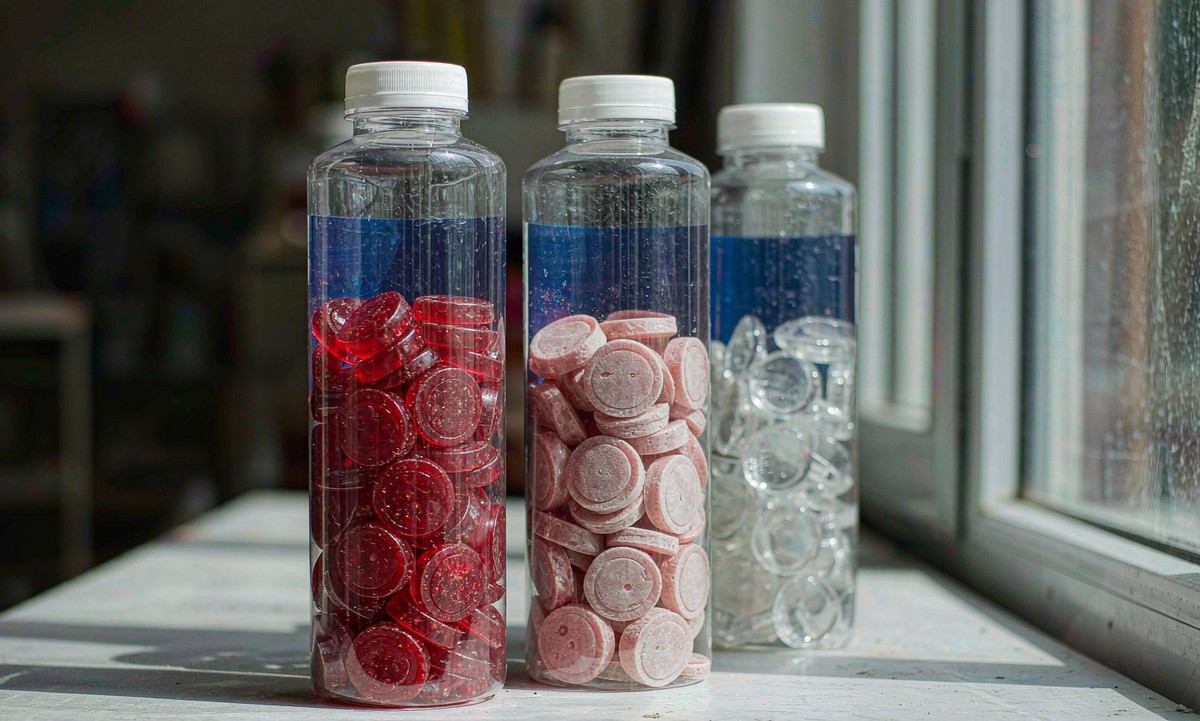
Water is the first thing to watch and the easiest to measure. A gummy is not in equilibrium with the air around it. Inside a sealed bottle, the piece and the headspace trade moisture until they settle, and the settling point depends on the headspace volume, the temperature and the barrier of the pack. Open the bottle and the equilibrium shifts towards the room.
A piece that loses water goes leathery at the edge and hard in the middle. A piece that gains water goes tacky, then soft, then structurally weak, and in the worst case the surface dissolves enough for pieces to weld. Both are visible long before anything microbial happens, and both are reversible in the sense that the data can be predicted, which makes water the curve most worth measuring from day one.
Water activity is the measurement that matters. Moisture percentage will mislead you, because the micro-organisms and the chemical reactions respond to activity. A formula at the same moisture can sit at two different activities depending on how much of the water is bound by the solids, which is exactly the variable that changes when sugar is replaced with a polyol.
Curve two: the gel network letting go
The texture of a gummy is a network, and networks age.
Gelatin is a protein and proteins hydrolyse. Over months, especially at warm temperatures and in the presence of acid, the chains shorten, the gel strength falls, and the piece that was firm at month one is soft and slightly sticky at month twelve. The change is gradual enough that a consumer rarely names it, but a side-by-side comparison of two bottles a year apart shows it immediately.
Pectin ages differently. Its methyl groups come off slowly over time, which shifts the molecule towards a lower-methoxyl behaviour and changes how it interacts with calcium. In a calcium-set system the result can be a piece that firms up rather than softens, which is its own problem: a gummy that was pleasant at three months can be short and brittle at eighteen.
Neither of these curves appears on a spec sheet and both are easy to miss in an accelerated test, because a network that is being pushed towards failure by heat may fail in a different way than one failing slowly at ambient.
Curve three: the actives
Every active ingredient has its own decay curve, and the curves are not close to each other.
Vitamin C is the classic case. It oxidises, and the rate depends on pH, on dissolved oxygen, on metal ions from the mineral premix and on light reaching the piece. A formula with iron in it and a clear bottle will lose vitamin C faster than the same formula in an opaque pack, and the difference can be large enough to change the overage.
B vitamins behave differently, some of them sensitive to heat and light, others stable. Probiotics are a separate problem again: a live organism in a soft matrix with a water activity around 0.6 is under stress from the moment it is deposited, and the count declines through storage in a way that is strongly temperature dependent. A probiotic gummy that starts at a high count and ends below the label claim at twelve months is a common outcome, and the fix is usually a higher initial dose rather than a better recipe.
The practical consequence is that a multi-active product has a shelf life set by its weakest ingredient, and the overage calculation has to be done per nutrient rather than per formula. A single blanket overage is what a factory offers when it has not done the work.
Curve four: colour and flavour
Colour drift is the failure that gets noticed in a photograph before it gets noticed in a lab.
Natural colours are the usual suspects. Anthocyanins from berry sources shift with pH and fade with heat and light. Beta-carotene oxidises. Chlorophyll-based greens are notoriously unstable. Synthetic colours are more stable but not immune, and a red that starts as a clean crimson can drift towards brown over a year at elevated temperature.
Flavour changes too, though more slowly and less visibly. Essential oils oxidise, citrus notes fade first, and the flavour that was bright at month one reads flat at month eighteen. In a gummy the effect is partly masked by the sweetness, which is why flavour drift is often reported by consumers as the product tasting old rather than tasting wrong.
Both curves are strongly influenced by packaging. A clear bottle on a lit shelf is a different environment from an opaque pouch in a carton, and the same formula can pass in one and fail in the other.
What accelerated testing can and cannot tell you
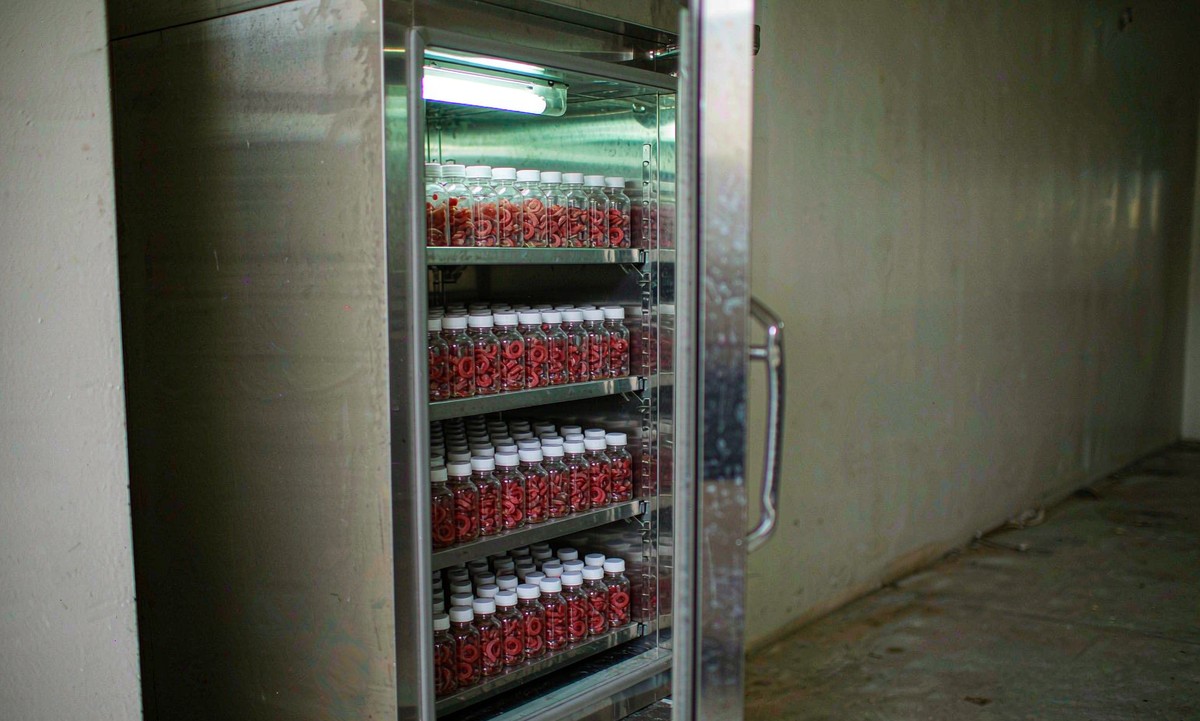
Accelerated testing puts the product at elevated temperature and humidity, typically 40°C and 75% relative humidity for six months, and measures the same indicators as a real-time study. It compresses time and it produces a ranking: this formula fails before that one, this pack is better than that one, this overage is not enough.
What it cannot do is give you a calendar. The relationship between temperature and reaction rate is roughly exponential, which is why the common rule of thumb says a 10°C rise doubles the rate, but that rule holds for chemical reactions and not for physical ones. A polyol that crystallises at 35°C does not crystallise twice as fast at 45°C. A gelatin network that melts in a hot truck does not melt on a schedule that any equation predicts. An accelerated result that extrapolates to thirty months at ambient is a claim about chemistry, and it says nothing about whether the piece will still look right after a summer in a warehouse.
That is why a real-time study runs alongside, and why a serious supplier will show both. The accelerated data supports a decision now. The real-time data supports the date on the bottle, and it accumulates at one month per month, which is the part nobody wants to hear when the launch is in six weeks.
Packaging is half the shelf life
The pack decides as much of the date as the formula does.
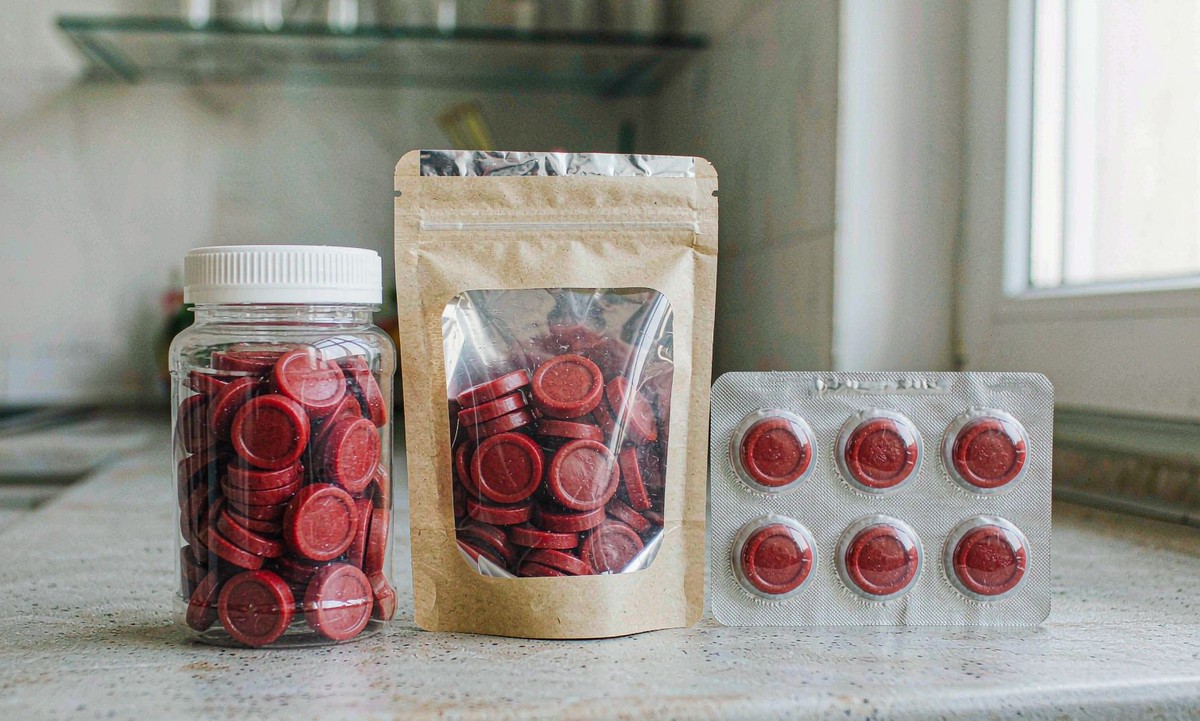
A clear PET bottle is a moderate moisture barrier and a moderate oxygen barrier, and it is transparent to light. A pouch with a metallised film is better on all three. A blister is excellent for moisture and poor for oxygen, and it exposes each piece individually. An aluminium can or a glass jar is the best barrier and the highest cost.
The choices interact with the product. A hygroscopic piece in a PET bottle needs a lower moisture target and a tighter seal, or a desiccant, or both. A piece with a sensitive colour needs an opaque pack or a carton. A probiotic needs the lowest available moisture ingress, which pushes towards a high-barrier film and often towards a nitrogen flush.
The headspace matters as much as the material. A bottle filled to the shoulder has less air to trade moisture and oxygen with than one filled halfway, and two brands using the same bottle at different fill levels have two different shelf lives on the same formula. That is a detail worth confirming in the filling specification rather than discovering in the market.
How to read a stability report
A stability report is a short document and most of its value is in the parts a buyer tends to skip.
What matters is the time points, the indicators, the criteria and the batches. Time points should include zero, and then a spread that covers the claimed life, with enough points to show a trend rather than two ends. Indicators should list the tests that correspond to the claims on the label: nutrients, water activity, texture, colour, microbial counts where relevant. Criteria should state the acceptance limit for each, because a result without a limit cannot pass or fail. And batches should be more than one, from more than one production run, because a single batch tells you about that batch.
A report that shows a start value and an end value for one batch and nothing between them does not qualify as a stability study, and it will not survive a retailer's technical review.
Five decisions a shelf life depends on
The date is an output. These are the inputs, and each one moves it.
- The claim set on the label. Nutrients declared, a live culture claim, a colour matched to artwork: each adds a curve, and the shortest curve sets the date.
- The pack and its barrier. Bottle, pouch, blister or jar, plus the fill level, since headspace is part of the barrier in practice.
- The storage conditions the product will meet in practice. A US ambient chain, a tropical distribution and a cold-chain product are three different specifications, and the label has to reflect the one the product will live through.
- The overage strategy. Per-nutrient overage costs money and buys time; a blanket overage usually costs the same money and buys less.
- Whether a real-time study exists. Not whether one is planned, whether the data exists for a comparable formula and pack, because that is the only thing that supports a date beyond what a retailer will accept on accelerated data alone.
The functional gummy line runs the stability work as part of a programme rather than as an extra, and the shelf life questions that come in most often are the ones about packaging, not about formula. A date is easy to print. Supporting it is the part that takes months, and it is worth starting before the artwork rather than after it. The contact page reaches the people who run the line.
Ding Shaohua, Foreign Trade Manager, takes enquiries for this line. The same person answers on WhatsApp, TikTok, LinkedIn and Facebook.
FAQ
Can you guarantee twenty-four months?
Not as a promise made in a first call. What can be said is what a comparable formula and pack have shown in a real-time study, and what the accelerated data suggests for a new one. A twenty-four month claim on a new formula usually means an eighteen month study with an extrapolation, and the retailer's technical team will ask which.
Does a sugar-free gummy last as long as a sugar one?
Usually not quite, because the polyols hold less water at the same moisture and the piece is more prone to surface crystallisation over time. It can be made to match with a lower moisture target and a better barrier, which is a cost rather than a limitation.
Why do probiotic gummies have a shorter shelf life?
Because a live organism in a soft, moist matrix loses viability continuously, and the loss accelerates with temperature. The label claim has to be met at the end of the shelf life rather than at the start, so the initial dose is set high enough to leave the required count after the decline.
What is the difference between best before and expiry?
Best before is a quality date: after it the product may lose texture, colour or flavour but is still safe to eat. Expiry, or use by, is a safety date and applies to products where a microbial risk develops over time. Gummies normally carry a best before date, and the wording on the pack has to match the market's rules rather than the brand's preference.