
Two certificates for the same drum of turmeric extract arrive on the same morning. One is written for a supplement label and judged against a maximum level of 3.0 mg/kg for lead; the drum sits at 2.4 and passes. The second is a retailer's specification written per day rather than per kilogram, and at a one-gram serving the same drum delivers 2.4 micrograms of lead against a limit of 0.5.
The drum reads 2.4 mg/kg in both emails. The two markets convert that figure differently.
The number has a row, not a limit
Regulation (EU) 2023/915 sets three levels for food supplements: lead at 3.0 mg/kg, cadmium at 1.0 mg/kg, mercury at 0.10 mg/kg, with a higher cadmium figure of 3.0 for products that are at least 80% dried seaweed or seaweed-derived material. There is no arsenic row for supplements at all, and no nickel row either.
The levels apply to the product as placed on the market, which is the powder in the bag, not the capsule at the end of the line. That single sentence decides where a sample has to be taken.
The row also follows the commodity rather than the plant. Dried turmeric sold as a spice is judged on one row; the same powder inside a capsule is judged on the supplement row; dried tea leaves carry no metal row, while a green tea extract in a capsule sits under 3.0 mg/kg of lead. A supplier who tests the herb has tested a product that is not the one being sold.
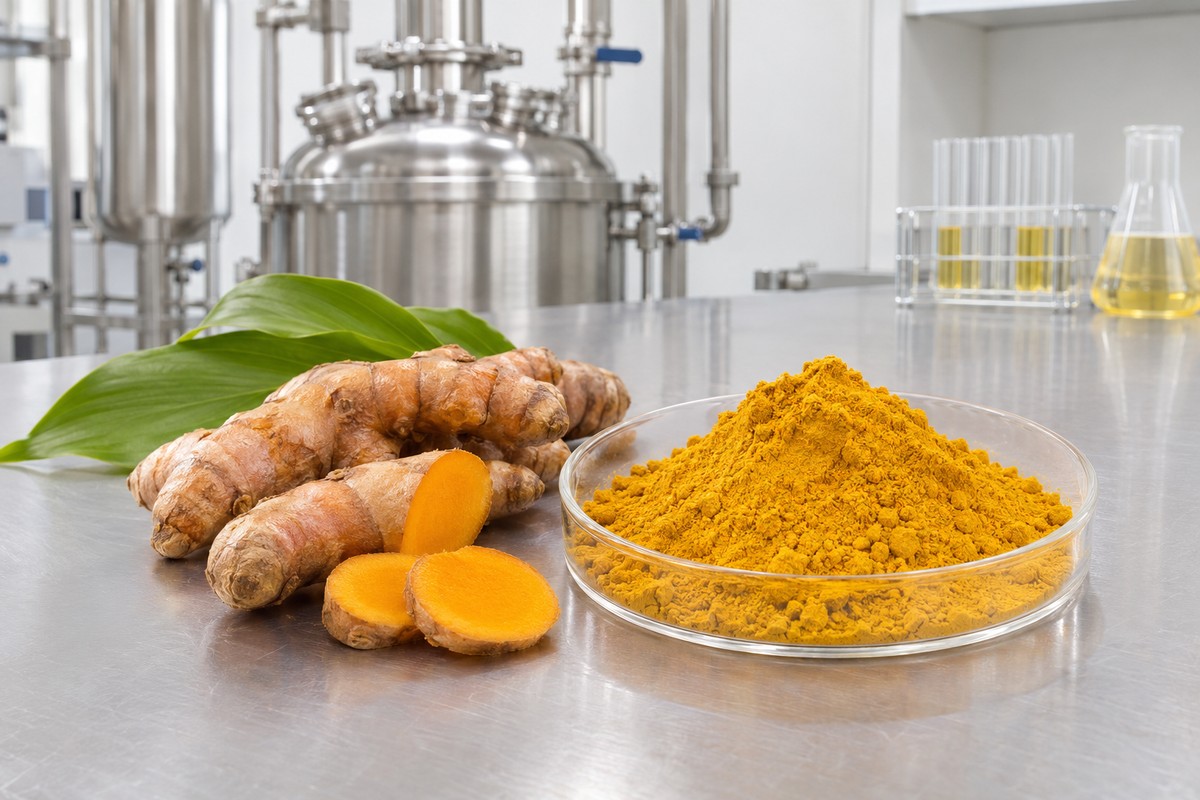
Cadmium follows the root
Cadmium enters through the root, from the soil, and stays in the tissue. Root crops and leafy crops take up more of it than fruit, older plants hold more than young ones, and some cultivars move it into the root faster than others.
Washing does not take it out, because it is not on the surface. Neither does peeling, in most cases, because the concentration is often highest in the outer layers that peeling would remove and the remainder still carries the load.
The practical consequence is that cadmium is a sourcing decision. A certificate on the finished lot is a measurement of a decision taken at planting, in a field the buyer never sees. When a supplier changes region, cultivar or harvest age to fix a cadmium result, they have changed more than a process parameter.
Lead follows the floor
Lead usually arrives from handling. Soil dust on a root that was dried on the ground, wear from a contact part, dust from a shared milling room, packaging that was stored open. In turmeric there is also the deliberate route: lead chromate has been used for decades to deepen the colour of the powder, and it is the reason a bright yellow sample deserves a test rather than a compliment.
That difference matters because the controls are different. Cadmium is managed in the field and in supplier selection. Lead is managed in the building: covered receiving, a raw-material area separate from the packing room, dust extraction at the mill, contact surfaces that are not worn, and no reuse of bags that once held something else.
What extraction does to a metal
A metal does not evaporate, and it is not created by concentration. It partitions.
Most of what a root holds is bound to cell wall material and protein, and that fraction stays with the spent marc. The soluble fraction follows the liquor. An extract therefore does not automatically carry the herb's figure multiplied by the ratio, and a 10:1 extract is not ten times worse than the dried root it came from.
An extract can therefore pass while the dried herb of the same harvest fails, because the marc kept the metals. And a low figure on an extract does not prove a clean field; it can prove a filtration step.
What moves a metal is a wash: water on the wet herb before drying, an acid wash, a resin, a filtration step, a change of solvent. What does not move it is milling, blending or spray drying. Those change the particle and the bulk density, not the element.
The test that hides it
A large share of certificates in this trade still report a line that reads heavy metals, as Pb, total, not more than 10 mg/kg. That result usually comes from a colorimetric method, sulphide precipitation or dithizone, and it answers a different question than the one being asked.
It reports a colour intensity, it sums whatever precipitates, and it has no way to see cadmium at 1 mg/kg or mercury at 0.10 mg/kg. A material can pass it comfortably and still be over a row. It also cannot tell lead from iron, which matters in a powder milled in steel equipment.
The method that answers the row is inductively coupled plasma mass spectrometry, or optical emission for higher levels, after closed-vessel digestion, the two procedures in USP general chapter 233. The number that makes it usable is the limit of quantification: a report with a quantification limit of 5 mg/kg cannot demonstrate compliance with a row of 1.0.
Sample preparation is where these reports go wrong most often. Grinding in a steel mill adds iron and can add chromium and nickel; a ceramic or agate mill costs more and contaminates less. Digestion that does not go to completion leaves the silicate-bound fraction behind, and the result comes back low and clean and wrong.
Arsenic is a different argument
Arsenic does not have a supplement row in the EU regulation, and that absence is read two ways by two kinds of buyer. One reads it as permission. The other reads it as a gap they will be asked about by a retailer, and they are usually right.
The complication is that total arsenic is not one substance. In a marine material, most of the arsenic is often present as arsenosugars and other organic forms that carry a fraction of the toxicity of the inorganic species. A total figure of 2 mg/kg in a kelp extract and a total figure of 2 mg/kg in a rice-based powder can describe very different exposure.
So a request for arsenic has to name the species. Total arsenic is measured after digestion like any other element; inorganic arsenic needs a separation step, usually liquid chromatography coupled to the same ICP-MS, and it is a different price and a different laboratory. A certificate that reports total arsenic and calls it arsenic has answered a question nobody in a regulated market is asking.
What the certificate has to carry
Six items turn a result into a document that can be filed.
- The element, named. Not a total, and not a sum expressed as lead.
- The result and the limit of quantification. A figure within a few multiples of the limit is a range with a number attached.
- The method. ICP-MS or ICP-OES with the digestion procedure, and the laboratory's accreditation.
- The basis. As sold, or on dry weight, stated explicitly, because a 4% moisture difference moves a figure near the row.
- The row, with the regulation and its version. Annex I of 2023/915 has been amended repeatedly since 2023, and a level quoted without a version cannot be checked.
- The per-day figure at the labelled dose. This is the one line that survives a change of market.
What to send instead of a request for heavy metals
A request that says "please send heavy metals" comes back as a scan with no method and no basis, and the buyer spends a week asking again.
A request that names the elements, the method, the quantification limit, the basis and the row being applied comes back as something an auditor can accept. It also tells the supplier which market the document is for, which is the only way they can send the right one.
The sample has to come from the lot being shipped. A retained sample from the pilot batch, tested eight months ago, describes a material that no longer exists.

The botanical extract production lines page shows where washing, extraction and drying sit, the identity testing article covers what happens when the material in the bag is not the material on the certificate, and the contact page reaches the people who run the analyses.
Ding Shaohua, Foreign Trade Manager, takes enquiries for this line. The same person answers on WhatsApp, TikTok, LinkedIn and Facebook.
FAQ
Can a lot that meets the EU limit still fail in the United States?
Yes, and the arithmetic is short. The EU rows are concentrations: 3.0 mg/kg of lead in the product as sold, whatever the serving size. California's Proposition 65 sets a maximum allowable dose level of 0.5 micrograms of lead per day, and the two are converted by multiplying: micrograms per day equals mg/kg times grams per day. A powder at 2.4 mg/kg passes the EU row and, at a one-gram serving, delivers 2.4 micrograms a day, which is nearly five times the California level. The same lot is compliant in one market and not in the other, and the label dose is the reason.
Does a 10:1 extract carry ten times the metal of the dried herb?
Not usually, because metals partition rather than concentrate. A large part of what the root holds is bound to cell wall and protein and leaves with the spent marc, so the extract can be lower than the herb on a mass basis even though the ratio says the opposite. The only figure that describes a shipment is the one measured on that lot, and it cannot be calculated from the herb's certificate.
Is a total heavy metals result of 10 mg/kg acceptable?
It is not a substitute for the individual elements. That test is colorimetric and semi-quantitative: it measures how much precipitate forms, not how much cadmium or mercury is present, and at 1.0 and 0.10 mg/kg the rows sit far below what it can resolve. A material that passes it can be over a row. It is a screening result, and a screening result is not a release criterion.
Can processing remove a metal if a lot is over the row?
Partly, and at a cost. A water or acid wash of the wet herb before drying, a resin step, or a filtration can move a fraction of the soluble metal, and each one costs yield and adds a validation. The cheaper control is upstream: a field with a lower cadmium background, and a building where lead dust does not settle on open material. A batch that is over its row cannot be blended down, because dilution produces a compliant analysis and a non-compliant lot.