The sample arrives in a small plastic bag with a competitor's label still on the bottle. The buyer wants the same piece, plant-based, for a European listing. On paper that is a base swap: gelatin out, pectin in, everything else unchanged. In the sample room the swap turns into a different moisture target, a different curing regime, a different melt point and a different cost line, and the piece that comes out at the end is close enough to the original that nobody outside the building notices, and different enough that the depositor had to be reset to run it.
Gelatin and pectin are usually presented as a dietary choice. They are a process choice first, and the dietary part is a consequence of it. The two materials set by different mechanisms, hold different amounts of water, and fail in different weather, and those three differences decide more about a gummy programme than the ingredient list does.
The question behind the question
Nine times out of ten, a buyer asking for pectin is asking for a vegan claim. That is a legitimate reason and a common one, and the base will follow from it. The tenth time, the buyer is asking for something else and using pectin as the word for it: a firmer bite, better heat resistance, a cleaner label, or a texture that survives a tropical warehouse.
Those requests point at different bases and sometimes at neither. A firmer bite can come from a gelatin formula with more gel strength and less water. Heat resistance usually comes from a lower moisture target and a harder set, which pectin helps with but does not guarantee. A cleaner label is about the acid, the colour and the glaze rather than the gelling agent.
The reason to separate the two questions is that a pectin base chosen for the wrong reason produces a piece that does not do what the buyer wanted, and by then the mould has been cut. Asking which problem the base is meant to solve takes one conversation and saves a sample round.
Gelatin sets on cooling, pectin sets on chemistry
Gelatin is a protein. When a hot gelatin solution cools, the protein chains begin to re-form the triple helix structure they had in collagen, and a network forms. Heat it again and the network comes apart. The whole process is physical and reversible, which is why a gelatin gummy softens on a warm day and firms up again in the evening.
Pectin is a polysaccharide and it sets through a chemical interaction rather than a thermal one. High-methoxyl pectin, the type used in conventional jams, needs sugar and acid to gel: the sugar reduces the water available to the pectin chains and the acid lowers the pH enough for them to associate. Take the sugar away and that system stops working, which is why a sugar-free pectin gummy has to move to low-methoxyl pectin cross-linked with calcium instead. That version sets without sugar but is far more sensitive to pH and to the calcium dose.
The practical consequence is a different relationship with temperature. A gelatin gummy is set by cooling, so the depositor fills warm and the piece firms up as it travels down the line. A pectin gummy begins to set while it is still hot, which tightens the window between the kettle and the mould and is the single biggest reason a pectin line runs more slowly than a gelatin line at the same piece weight.
Two water numbers, and everything that follows
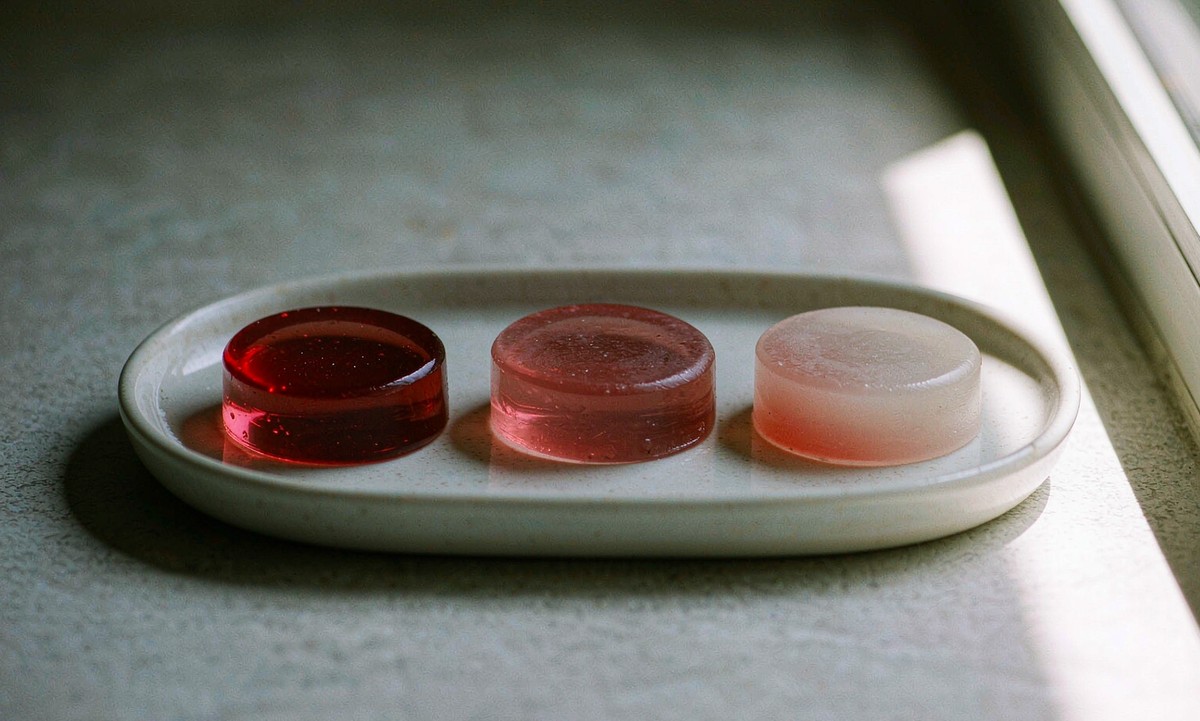
A gelatin gummy leaves the mould at roughly 12 to 16% moisture. A pectin gummy leaves at 18 to 22%. That gap is the origin of most of the differences a buyer notices later.
The gelatin piece is already close to its final solids, so its curing is mostly a matter of letting the surface dry and the structure settle. Eighteen to twenty-four hours in a controlled room is typical, and the piece is stable enough to pack soon after.
The pectin piece leaves with several points of water that have to come out slowly. Dry it too fast and the surface case-hardens while the centre stays soft, which produces the familiar defect of a gummy that feels firm on the outside and collapses on the first bite. Dry it too slowly and the surface stays tacky long enough to weld pieces together in the bottle. The curing room has to hold temperature and humidity inside a window, and the window is narrower than the one a gelatin line needs.
For the buyer, that gap translates into two questions that belong in the first meeting rather than the fifth: what does the factory do when the ambient humidity is high for a week, and what does the batch record show for the curing step. A line with logged temperature and relative humidity per batch is a quality system. A room with a dehumidifier and no records is a hope.
What each base does in a hot truck
A gelatin gummy softens at around body temperature and above. That is pleasant in the mouth and awkward in a container. A pallet that sits on a dock in August, or in the back of a delivery van with no cooling, can arrive with pieces stuck to the inside of the bottle, or with a single block where sixty pieces used to be.
Pectin gummies tolerate heat better because the network is not thermally reversible in the same way. They still soften, and they still deform under load, but they recover rather than flow, and the chance of a fused bottle is lower.
Three ways around the gelatin problem exist, and all of them cost something. Raise the gel strength and lower the moisture, which firms the piece and moves it away from the soft chew the brand may have wanted. Change the base, which is the pectin route and its own set of consequences. Or control the chain, with insulated packaging, temperature-monitored freight or a shorter distribution radius, which is a logistics cost rather than a formula one and is often the cheapest of the three for a small brand.
None of those decisions can be made without knowing where the product will be sold. A gummy sold mainly through a northern European retail chain is a different thermal brief from one sold through an online channel that ships to Florida in July.
Curing is half the process and none of the quote
A buyer comparing two quotations for the same piece weight and the same base is often comparing two different amounts of curing room.
Pectin takes longer to dry, which means more trays in the room for the same daily output, which means more floor area and more climate control per tonne. A plant with spare curing capacity can quote a pectin programme at a price that a plant running its rooms at capacity cannot match, and the difference is not in the recipe. It shows up as a lead time and as a willingness to take small orders.
This is also where a programme that looked fine in the sample round fails in production. A sample is dried in a small chamber where the operator can watch it. A production batch is dried in a room with several other batches in it, and the room's humidity is a compromise between them. If the pectin piece needs a tighter window than the room is run at, the defect rate appears at scale and not in the sample.
Colour, clarity and the look on the shelf
The two bases do not look the same, and this matters more than most specifications admit.
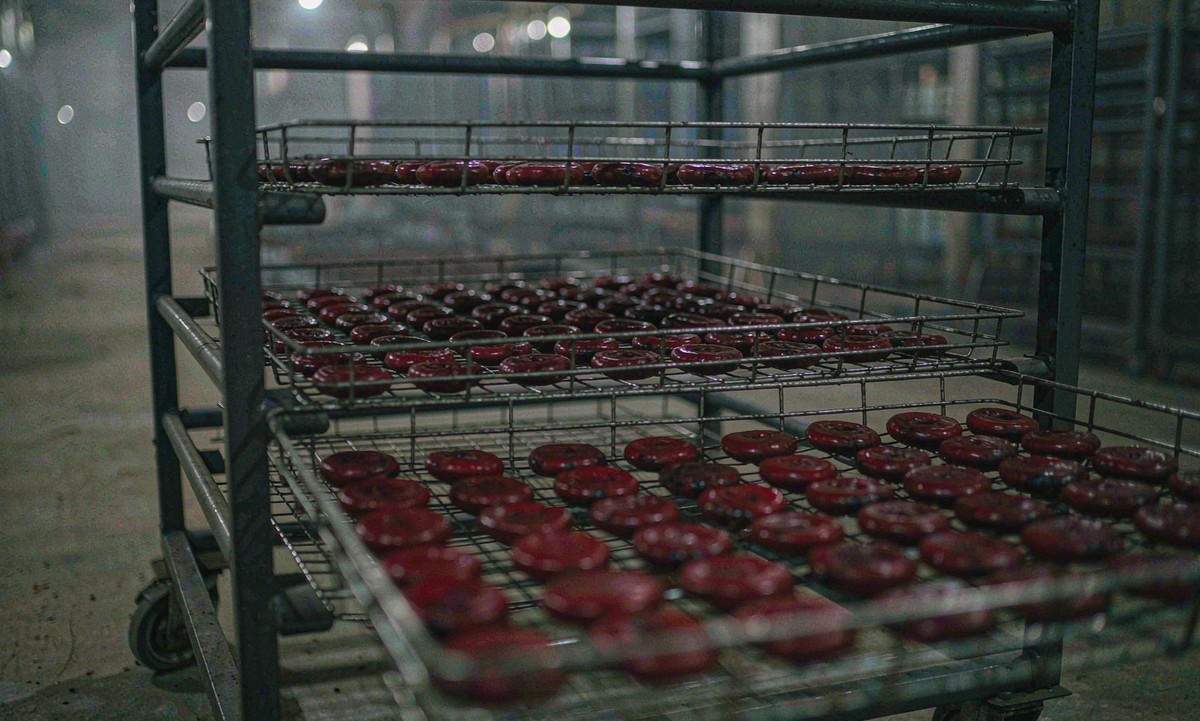
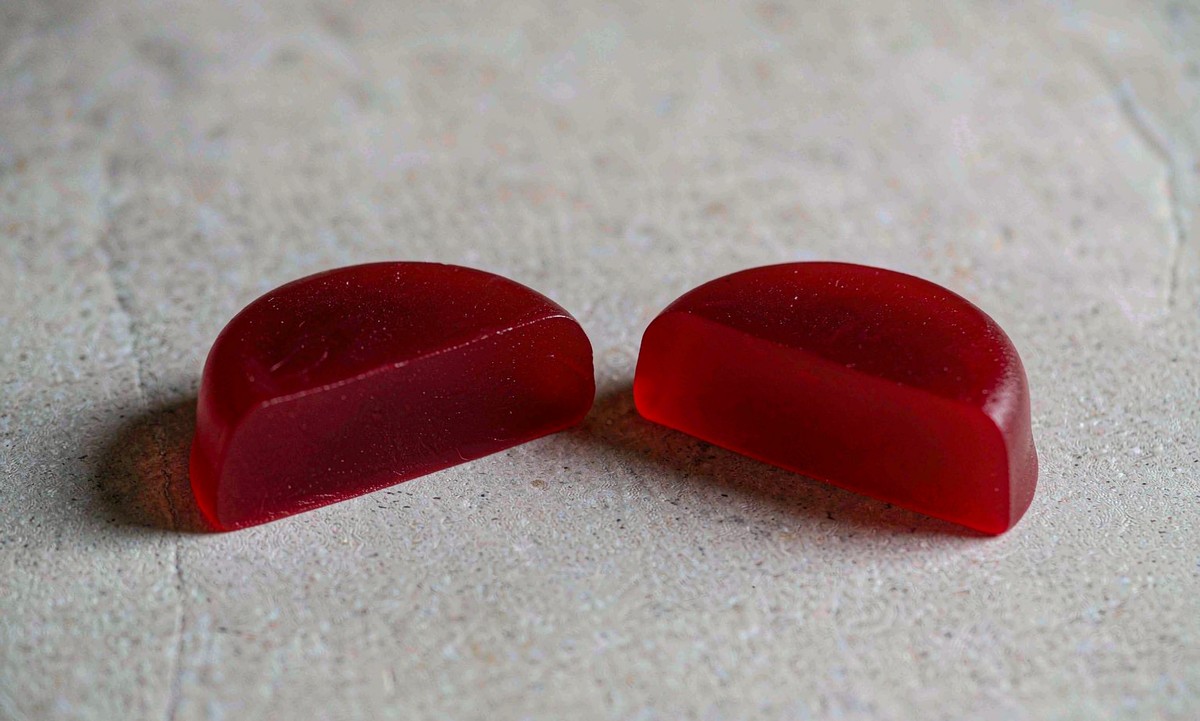
A gelatin gummy is transparent. Light passes through it, colour reads as depth, and a piece can look jewel-like in a clear bottle. A pectin gummy is translucent at best and often close to opaque, depending on the pectin type and the solids, so the colour reads as surface rather than depth.
That changes what a brand can do with colour. A dark shade in gelatin looks rich and glassy. The same shade in pectin can look flat or muddy. A pale shade in pectin looks soft and chalky in a way that suits a natural positioning, while the same shade in gelatin looks thin.
There is also the surface. Gelatin pieces take a gloss easily and hold a polish. Pectin pieces need an oil or wax coat to reach the same shine, and the coat changes the label arithmetic on a sugar-free product because it may add a sugar or a wax to the ingredient list. A brand that has built its artwork around a glossy, saturated piece and then moves to pectin for a vegan claim often discovers at the photograph stage that the product no longer looks like the rendering.
Cost per piece, not cost per kilo
Pectin costs more per kilogram than gelatin, and a formula uses less of it, so the per-kilo comparison misleads in both directions. What matters is the cost of the finished piece, and that pulls in the curing time, the energy for drying, the yield loss from rejects and the packaging.
A pectin programme usually carries a higher conversion cost: longer in the room, more handling, tighter process control, and a higher defect rate while the line is being tuned. A gelatin programme carries a lower conversion cost and a higher risk cost downstream, in the form of heat damage in transit and the returns that follow.
For a brand, the useful comparison is landed cost per bottle delivered intact, including the returns, rather than the quotation per kilogram of compound. That number is rarely on the first email and usually decides the programme.
What changing the base does to an existing formula
A base swap is not one change. It is a series of them, and each one moves the next.
The water target moves, and with it the solids, which changes the sweetness perception because the sugar-to-water ratio is different even at the same sugar percentage. The acid system moves, because pectin needs a pH window that gelatin does not, and that changes both the flavour and the preservative strategy. The colour dose moves, because a translucent base needs less colour to read the same shade. The flavour dose can move as well, since a gelatin network releases aroma differently from a pectin one. And the curing schedule moves, which changes the lead time.
What does not move is the mould, which is why a base swap looks cheap at the quotation stage. The piece weight, the shape and the bottle all stay, and only the inside of the piece changes. That is exactly the kind of change that hides its cost until the third production run.
Five programmes, and the base each one forces
The requests that arrive tend to fall into five shapes, and each one narrows the base before the flavour conversation starts.
- Vegan vitamin line in a clear bottle. Pectin, almost always, because the claim is the point and a gelatin piece cannot carry it in any market that reads the ingredient list.
- Mass-market multivitamin at a low price point. Gelatin, because the conversion cost is lower and the texture matches what the category has trained buyers to expect.
- Sugar-free soft chew. Low-methoxyl pectin with calcium, or a gelatin formula with a high polyol load, and the choice often comes down to whether a vegan claim is also wanted.
- Product for hot-climate distribution. Either base with a hard set and low moisture, and frequently isomalt in the sugar-free version, since heat resistance is a solids question more than a gelling one.
- Kosher or halal certification. Pectin removes the question entirely, while gelatin requires a certified source and a segregated line, which is a plant question rather than a formula one.
The functional gummy line runs both bases, and the answer to which one a programme needs is usually settled in the first conversation rather than the first sample. What the contract manufacturing pages describe for other dosage forms applies here too: the dose and the claim set the format, and the format sets the process. The contact page reaches the people who run the line.
Ding Shaohua, Foreign Trade Manager, takes enquiries for this line. The same person answers on WhatsApp, TikTok, LinkedIn and Facebook.
FAQ
Can a pectin gummy be made to feel like a gelatin one?
Close, not the same. Pectin can be formulated to a soft, short bite with more calcium and a higher solids load, and in a blind test many tasters place it within reach of a gelatin piece. What stays different is the way it breaks: gelatin stretches before it gives, pectin tends to cleave. That difference is small at 2 g and obvious at 4 g.
Which base lasts longer on the shelf?
Neither wins outright, because shelf life is set by water activity and packaging as much as by the base. A gelatin gummy at 14% moisture in a good barrier has a long life; a pectin gummy at 20% moisture in the same pack has a shorter one unless it is dried properly. The question to ask is what the finished water activity is, not which gelling agent is in the recipe.
Is pectin always the vegan option?
The gelling agent, yes. The rest of the formula is where a vegan claim is usually lost: shellac or wax on the surface, carmine in a red shade, gelatin in a vitamin premix, or a sugar refined through bone char. A pectin base with a shellac polish is not a vegan product, and the polish is the part most often overlooked.
Why does a pectin gummy cost more?
Because the conversion is slower. Pectin sets while hot, so the line runs at a lower rate, and the piece needs a longer and more tightly controlled cure. The material cost difference is real but smaller than the process difference, which is why a quote that looks high on the compound and low on the conversion deserves a second look.