The brief arrives as a photograph of a bottle and one line of text: same as this, but sugar free. In the sample room the second half of that sentence is the whole job, because the formula on the photograph is roughly three quarters sugar and glucose syrup by weight, and those two ingredients were not there only for sweetness. They were holding the piece up, holding water still, and keeping the surface from going white.
Take them out and the sweetener you put back gives you sweetness. It does not give you the other three, and the gap between what a polyol tastes like and what sugar does is where every sugar-free programme spends its first month.
This is not a piece about whether sugar-free is better for anyone. It is about what changes on the line when the sugar leaves, and what has to be written down before a price can be quoted.
What the brief says, and what the kettle hears
A 2.5 g gummy at 75% sugar solids carries close to 1.9 g of sugar and syrup. Remove it and the same mould has to be filled with something else, and there are only three materials that can take that volume: a polyol, a bulking fibre, or a high-intensity sweetener sitting on top of one of those two. Every sugar-free formula on the market is some arrangement of those three, which is why two products that both read sugar free can differ in texture so completely that a taster would not call them the same kind of thing.
The kettle hears the brief differently from the marketing team. Marketing hears a claim and a shelf position. The kettle hears a solids load that has dropped by half, a water activity that has risen, and a crystallisation inhibitor that has just been deleted from the recipe. Those three consequences arrive together and are fixed by different parts of the formula, which is why a sugar-free version is not a substitution. It is a new formula that happens to share a mould and a flavour.
Three jobs the sugar was doing
Sugar in a gummy is structural. Most buyers know this in the abstract and still ask for the substitute, so it is worth separating the three jobs, because they are not solved by the same ingredient.
Solids and body. Sugar and glucose syrup make up the bulk of the piece. They give it weight, they give it the resistance your teeth meet on the first bite, and they give the depositor something with enough viscosity to fill a mould cleanly and release from it. Remove them and the piece either loses height, or has to be rebuilt with hydrocolloid, which raises chewiness without raising body. A gummy that is 90% gelatin and 10% flavour is a wine gum, not a soft chew, and the mouth knows the difference even when the label does not say so.
Water activity. Sugar binds water. That is the reason a gummy at 14% moisture is shelf stable without a preservative system to speak of: the water present is not available to anything that would spoil the product. Take the sugar out and the same moisture figure now sits at a higher water activity, which changes the whole downstream picture: mould and yeast risk, colour drift, and the rate at which the piece dries out or picks up moisture from the air in a bottle.
Crystallisation control. Glucose syrup in a conventional gummy is a crystallisation inhibitor. Its longer-chain saccharides interrupt the sucrose lattice, which is why a gummy stays glassy instead of turning into a piece of candy rock. Sugar-free formulas lose that inhibitor and replace it with a polyol that in several cases crystallises more readily than sucrose ever did. Maltitol and isomalt are both enthusiastic crystallisers. The white haze that appears on a sugar-free gummy three weeks into storage is usually not mould and not fat bloom. It is the polyol coming out of solution.
Reading the polyol table as a process sheet
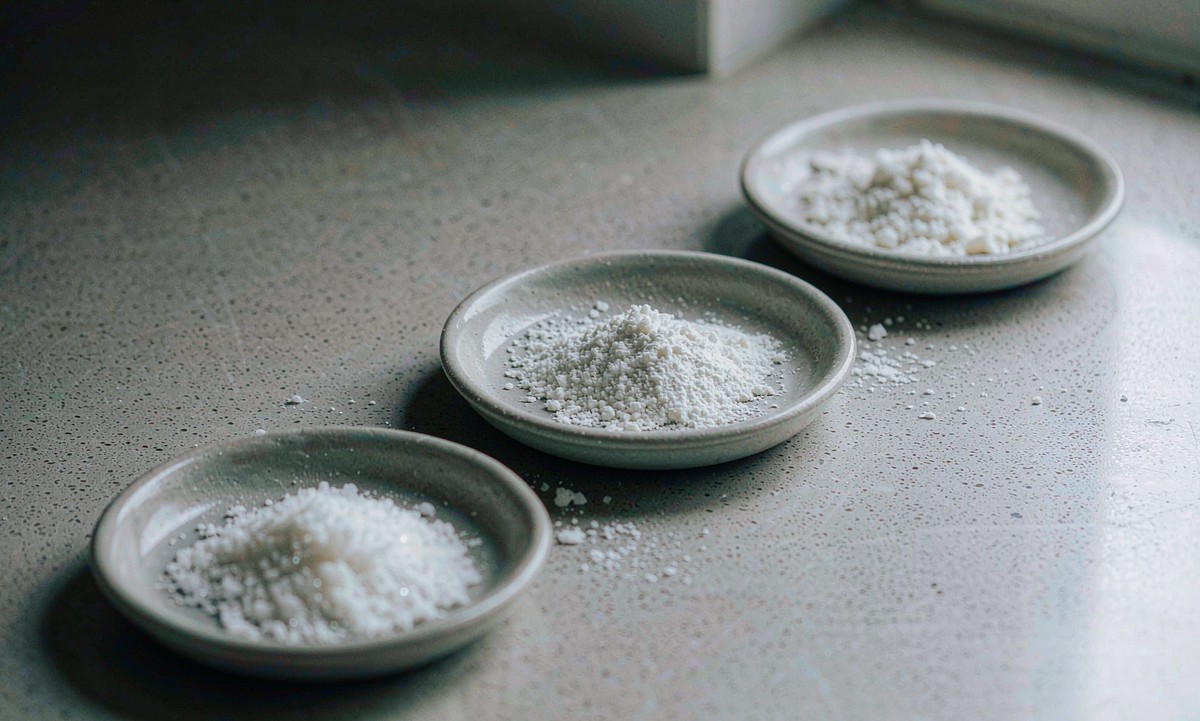
Sweetener comparison charts are written for formulators and read by buyers as if sweetness were the only column. In a gummy, sweetness is the least interesting property. What matters on the line is how much water the material holds, how readily it crystallises, what it does to the gel, and what it does to the person who eats six pieces.
- Maltitol sits closest to sucrose in sweetness and body, which is why it appears in most sugar-free gummies that taste like the original. It is also the most hygroscopic of the common choices and the one most likely to produce a laxative effect at low dose, so a formula built on maltitol tends to be dosed carefully and labelled with the polyol warning in Europe.
- Sorbitol is less sweet, holds more water, and produces a softer piece that stays tacky on the surface. It is used more often to soften a blend than as the bulk sweetener on its own.
- Isomalt is barely half as sweet as sucrose and hardly picks up moisture at all, which makes it excellent in hard candy and awkward in a soft chew, where it pushes the texture towards firm and short.
- Erythritol brings a strong cooling effect on dissolution and almost no hygroscopicity, so pieces stay dry and do not sweat in the bottle. Its solubility is low, which limits how much can go into a soft piece before the texture turns sandy, and it has the lowest laxative threshold of the group after maltitol.
- Xylitol behaves similarly on cooling and carries a similar gastrointestinal caution, with a sweetness close enough to sugar that it appears in dental-positioned products.
- Steviol glycosides, monk fruit and sucralose contribute sweetness and no bulk at all. Every gram of piece weight they displace has to come back as a polyol or a fibre, which is why a stevia-sweetened gummy still contains a bulking agent and why the front panel cannot simply say stevia.
The useful way to read that list is not sweetest to least sweet. It is which one gives the closest body, which one keeps the piece driest, and which one the target market will accept on a label. Those three answers rarely point at the same material, and the formula is the compromise between them.
Crystallisation is the failure you see three weeks later
Nothing goes wrong in the first week. The pieces come off the line glossy and even, they pass a texture check, the first twenty bottles go out to the buyer and the buyer is pleased. Then the surface begins to change.
Three appearances are worth distinguishing, because they have different causes and different fixes. A fine white dusting that wipes off is surface crystallisation, driven by a humidity swing in storage. A gritty sensation on the tongue with no visible change is crystallisation inside the piece, which usually means the polyol load is above what the system can hold. A general loss of clarity with a matte, chalky look is the early stage of the same process across the whole piece, and it does not clean up.
The controls are all upstream. A crystallisation inhibitor such as polydextrose can be added to interrupt the lattice the way glucose syrup used to. The depositor temperature has to be held closer, because polyol solutions are more sensitive to small temperature changes than sucrose at the same solids. The curing room humidity matters more than it did before, since the surface is now the first place water leaves and the first place crystals form. And the choice of polyol matters most: a blend that includes isomalt or a small share of a non-crystallising bulking agent resists the effect far better than straight maltitol.
None of that is visible on a label. All of it is visible in a bottle that has been on a shelf for two months, which is why the honest question to a factory is not whether the piece is sugar free but what it looks like in week ten.
Water activity, and the number that is not on the brief
Most soft chews sit around a water activity of 0.55 to 0.65, and that figure, not the moisture percentage, is what keeps them stable. Sugar is the reason the figure stays that low at a moisture level the texture can tolerate. Remove the sugar and the same 14% moisture produces a higher water activity, because a polyol binds less water per gram than sucrose does and several of them actively pull moisture from the air.
Two consequences follow, and both cost money if they are discovered after the artwork is printed.
The first is microbiological. A product that relied on low water activity for its stability now needs either a lower moisture target, an acidified system with a preservative that works at that pH, or a packaging format with a real moisture barrier. A stand-up pouch with a metallised film is a different proposition from a clear PET bottle, and the choice changes both the shelf life and the cost per unit.
The second is textural drift. A sugar-free piece that is slightly too moist does not go mouldy first. It goes sticky, then it welds itself to its neighbour, then the bottle arrives with a single lump inside. The fix is more curing time and a tighter humidity window, which is a capacity question rather than a formula question, and it is the reason a sugar-free programme quoted from a plant with spare curing room can be cheaper than one quoted from a plant without.
What "sugar free" is allowed to mean
The claim is defined, and the definitions are not identical across markets, which matters before the artwork is drawn.
In the United States, sugar free means less than 0.5 g of sugars per reference amount and per labelled serving, under the conditions set out for nutrient content claims. A sugar-free product that is also sold as low calorie has to stay under the calorie threshold for that claim as well, and the polyols are counted in the carbohydrate declaration with their own line on the panel, which is where a buyer discovers that sugar free and low calorie are two separate claims that do not automatically travel together.
In the European Union, the sugar-free claim is set at no more than 0.5 g of sugars per 100 g, and a product carrying sweeteners has to state that on the label next to the name of the food. Any product with more than 10% added polyols must also carry the statement that excessive consumption may produce laxative effects. Erythritol has been the subject of a specific review on exactly this point: the European Food Safety Authority re-evaluated it in 2023, set an acceptable daily intake of 0.5 g per kilogram of body weight per day based on the level below which diarrhoea was not observed, and declined to exempt it from the laxative warning. That opinion is the reason a European erythritol-heavy formula is usually dosed more conservatively than the same product for the United States.
The practical result is that a single formula can be sold in both markets while the back panel cannot, and the difference is not typographic. The polyol load, the serving size and the warning line all interact, and a serving that is compliant in one market can be non-compliant in the other with nothing changed but the number of pieces per day.
Pectin or gelatin, once the sugar is gone
The base choice becomes harder, not easier, when the sugar leaves.
A gelatin gummy relies on a protein network that sets on cooling and melts on warming. That network is stabilised by high sugar solids, which is why gelatin gummies are conventionally the sweeter, chewier type and why the same gel strength behaves differently once the solids drop. In a sugar-free gelatin piece the gelatin load usually has to rise to recover the bite, and a higher gelatin load reads as rubbery rather than chewy.
A pectin gummy sets through a different mechanism. High-methoxyl pectin needs a high soluble solids level and an acid pH to form a gel, and that solids requirement is precisely what sugar used to supply. Remove the sugar and a high-methoxyl system will not set at all, which is why sugar-free pectin products are built on low-methoxyl pectin cross-linked with calcium instead. That system sets without the sugar, but it is far more sensitive to pH and to the calcium dose, and the process window is narrower than anything a conventional pectin line runs.
Both routes end in the functional gummy line at some point, and the choice usually follows the market rather than the chemistry. A vegan claim forces pectin. A texture claim that has to match a sugar-containing competitor usually forces gelatin. A product that has to survive a hot warehouse pushes towards isomalt and a firmer set. What no buyer should accept is a base chosen after the claim, because a vegan claim on a gelatin formula is not a labelling problem, it is a different product.
Five sugar-free programmes buyers order
The requests that come in repeat, and they repeat in roughly this order.
- Maltitol with pectin, vitamin-fortified. The closest match to a conventional gummy in mouthfeel, built for a mass-market vitamin line where the sugar-free claim is a premium tier rather than the whole proposition.
- Erythritol and allulose with gelatin. Drier surface, noticeable cooling, a piece that does not sweat in a bottle, at a higher raw material cost and with a texture that some tasters read as minty even when no mint is present.
- Isomalt-dominant with gelatin, firm set. Chosen for hot-climate distribution and for a longer ambient shelf life, at the cost of the soft bite that most sugar-free buyers say they want until they taste it.
- Polydextrose and erythritol with stevia. Built so that the fibre content and the sugar-free claim can sit on the same panel, which is the only reason the polydextrose is there at all.
- Reduced sugar rather than sugar free. Thirty to fifty percent of the sucrose retained, which keeps the texture where the brand wants it and limits the label to a reduced-sugar claim, a route that more brands take after the first sugar-free sample round than before it.
What belongs on the spec sheet
The items below are the ones that come back as change orders when they are left open. None of them can be filled in by a factory alone.
- Which polyol, or which blend. A name, not a category, because maltitol and erythritol produce different pieces from the same mould at the same weight.
- Piece weight and serving size. Both are set by the claim arithmetic, and a two-piece serving changes the polyol load per serving in a way that can move the product across a warning threshold.
- Base and gel system. Gelatin, low-methoxyl pectin with calcium, or a mixed system, decided with the vegan position rather than after it.
- Target market, because the back panel differs. A US panel, an EU panel, or both, since the polyol declaration and the warning line are not the same document.
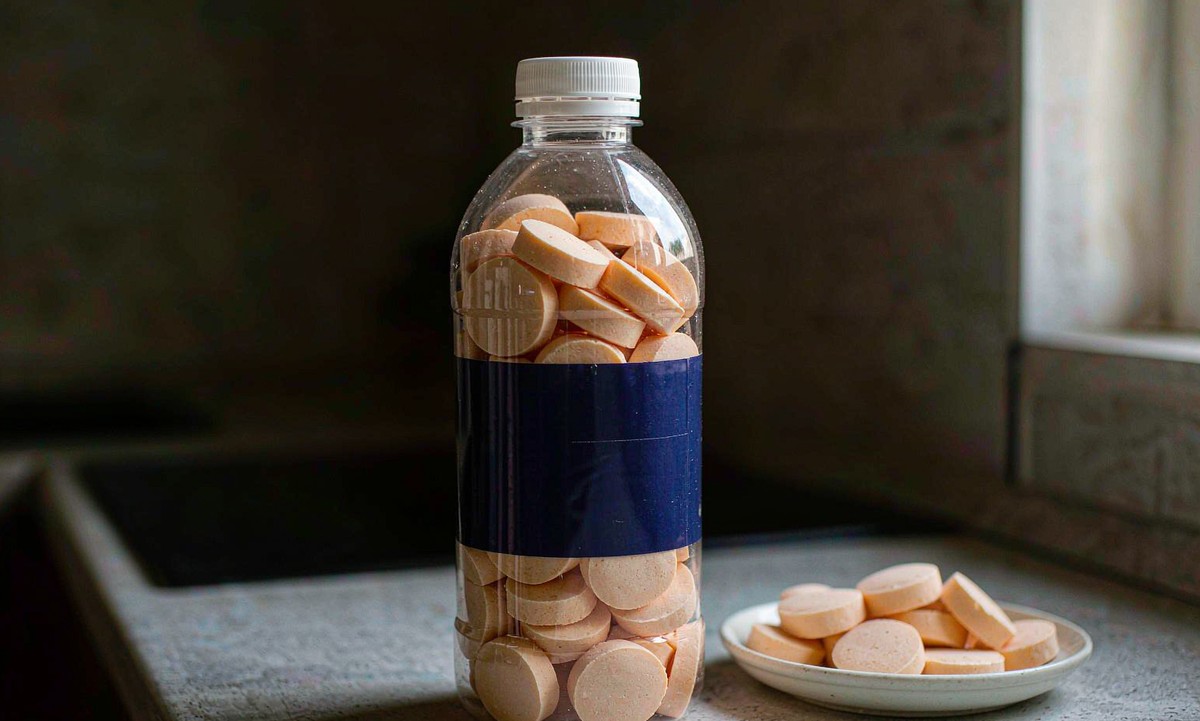
- Pack format and moisture barrier. A clear bottle, a pouch with a metallised film, or a blister, each with its own shelf life consequence for a piece that is more hygroscopic than the sugar version.
- Shelf life target and storage conditions. Eighteen months at ambient is a different curing regime from twelve, and a product distributed through a hot market is a different brief again.
Send those six and the reply is a piece weight, a base, a polyol blend, a curing window and a sample slot. Send only the phrase sugar free and the reply is a brochure, because there is no single product behind that phrase. The contact page reaches the people who run the line, and most of these conversations start with a photograph of the bottle the buyer wants to match.
Ding Shaohua, Foreign Trade Manager, takes enquiries for this line. The same person answers on WhatsApp, TikTok, LinkedIn and Facebook.
FAQ
Can a sugar-free gummy taste the same as the regular one?
Close, not identical, and the difference is easier to describe than to fix. Sweetness arrives at about the same place with maltitol. What differs is the middle of the chew, which is thinner because the solids are lower, and the finish, where erythritol leaves a cooling note and maltitol leaves a faintly syrupy one. A blind panel usually sorts the two by texture before it sorts them by taste.
Is sugar-free the same as keto-friendly?
No, and the confusion costs brands money. Ketogenic positioning is about net carbohydrate per serving, and maltitol carries a glycaemic response that most keto frameworks do not accept, even though it is legally sugar free. A formula built for a keto claim usually leans on erythritol and fibre, which is a harder piece to make and a more expensive one.
Why do sugar-free gummies upset some people's stomachs?
Because polyols are absorbed slowly and incompletely, so what is not absorbed reaches the colon and draws water with it. The effect is dose-dependent and varies widely between individuals. It is the reason the European rules require a warning above a threshold of added polyols, and the reason a formula that tastes identical at one piece can be a problem at four.
What is the difference between sugar free and no added sugar?
Sugar free is a ceiling on the sugar present in the finished product. No added sugar is a statement about what went into the recipe and permits a product that still contains a meaningful amount of sugar from its fruit or dairy ingredients. The two claims have different conditions in both the US and the EU, and a product can legitimately qualify for one and not the other.