
One lot of leaf leaves the same warehouse twice. The first consignment is packed as matcha and clears customs. The second is extracted, spray dried and shipped as a green tea powder extract, and the same laboratory reports a residue above the limit. Nobody substituted the material. The rule being applied is not the same rule, because the limit attaches to what is in the box rather than to the plant it came from.
That distinction costs more consignments than any single banned pesticide, and it is usually discovered at the border rather than in the purchase order.
A limit belongs to a commodity
Maximum residue limits are set per pesticide and per commodity, and a commodity is a legal description of a food as sold, not a botanical species. Tea leaves dried for infusion are one commodity. A powdered extract of those leaves is a different one, and in most jurisdictions it is not covered by the tea entry at all.
Where no specific entry exists, the European framework falls back on a default of 0.01 mg/kg. That default is not a statement about tea. It is what applies when the regulator has not written a number for the form you are shipping, and it is frequently the strictest number in the conversation.
The first question in a residue programme is therefore which commodity sits on the commercial invoice, because that decides which column of the regulation gets read.
The step that multiplies
Extraction is a concentration step, and a residue does not know that it is supposed to stay behind.
Ten kilos of leaf become one kilo of extract in a 10:1 material. If a residue transfers with the solvent and is stable through evaporation, its concentration in the powder rises by roughly the same factor as the solids. A leaf at 0.02 mg/kg does not become a powder at 0.02 mg/kg. It becomes something close to 0.2, and the number that was compliant on the leaf is now an order of magnitude above the limit for the powder.
The reverse is also true and is more common than suppliers admit. Some residues are destroyed by heat, some are left in the spent leaf, some are removed by the resin or the filtration. In those cases the extract really is cleaner than the leaf. Which case applies is unknown per pesticide until the process is run, and a certificate on the leaf cannot answer a question about the powder.
Process validation is the only thing that converts an assumption into a number: spike the leaf with the residues of interest, run the real process, measure the extract. A supplier who has done it can tell you which compounds are reduced and by how much. A supplier who has not will tell you the extract is fine, which is a belief rather than a measurement.
The regulation already writes a factor
This is not a theoretical worry, because European contaminant law has already had to solve it for a related class. The pyrrolizidine alkaloid limits in Regulation (EU) 2023/915 apply to tea as a dried product, and the entry carries an explicit instruction for the concentrated form: in the case of powdered tea extracts, a concentration factor of four has to be applied.
Four is not ten, and it is not a universal constant. It is the factor the regulator settled on for that class in that commodity. The principle underneath it is the one worth carrying into a pesticide conversation: when the product is a concentrate, the limit is expressed on a mass that is not the mass in your drum, and somebody has to do the arithmetic out loud.
Matcha is a different exposure
There is a second reason the leaf and the powder diverge, and it has nothing to do with concentration.
Leaf tea is steeped and the leaf is discarded. A residue that is not soluble in hot water largely stays in the spent leaf, so the cup carries a fraction of what the dry leaf carried. That fraction is why residue limits for tea have historically been set on the dried product with the infusion in mind.
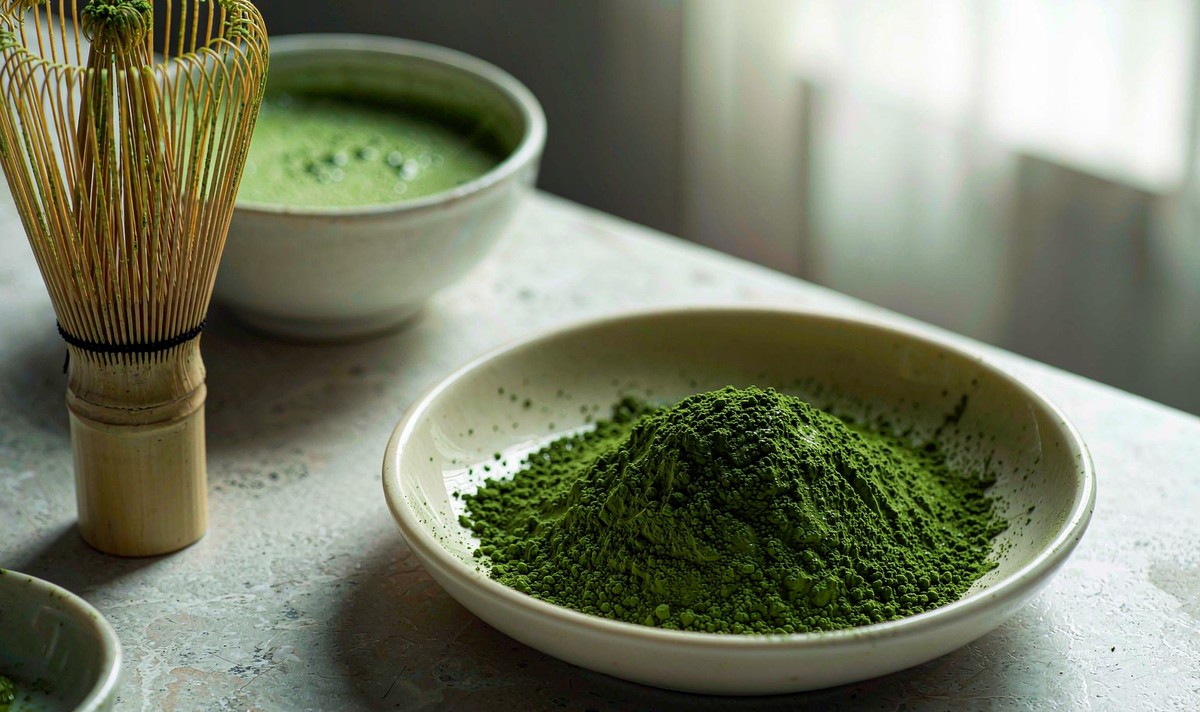
Matcha is drunk as the whole leaf in suspension. There is no spent leaf and no discard step, so the exposure route is closer to eating the material than to brewing it. The same number on the same dry leaf describes a different intake, and a buyer who compares a matcha specification with a leaf tea specification line by line is comparing two things that were never equivalent.
The residue that was never sprayed
Anthraquinone is a useful case, because nobody sprays it. It is not approved for use as a pesticide in the European Union and has not been since 2009, yet it is found in tea with a regularity that has made it one of the most notified substances in the category.
The limit is 0.02 mg/kg for tea leaves and herbal infusions, against a default of 0.01 mg/kg elsewhere, and it was fixed at that level because the analytical methods of the time could not reliably go lower. That number is a detection limit that became a legal limit.
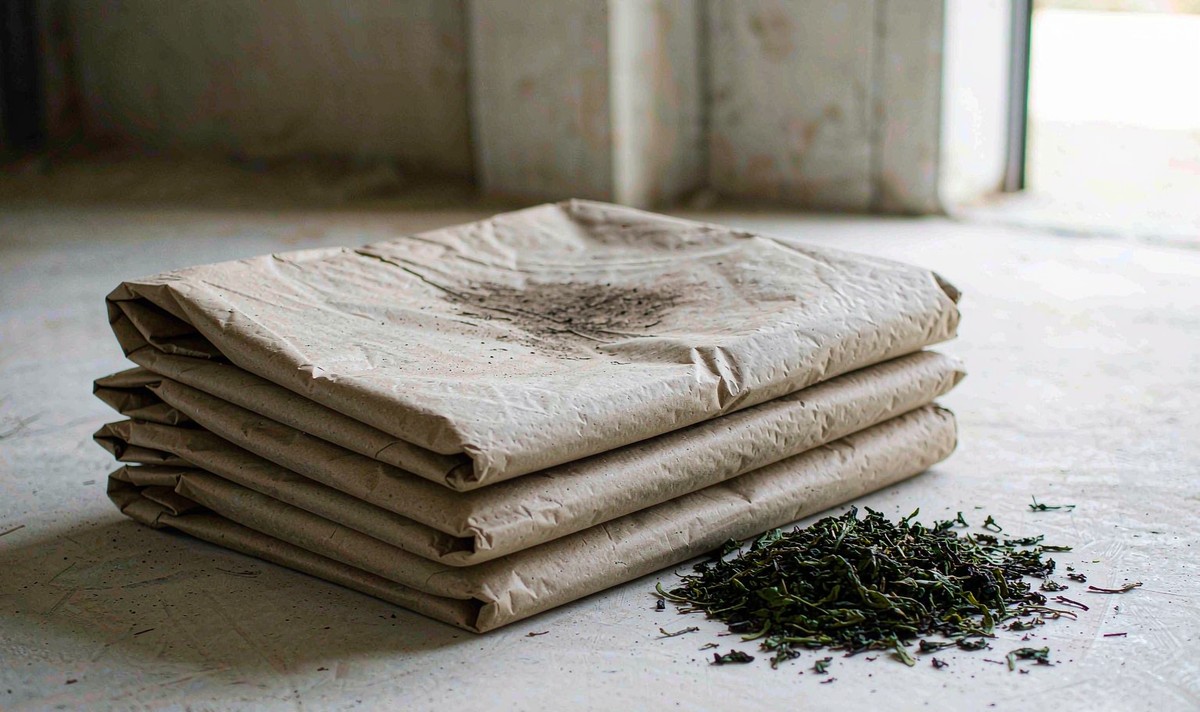
The sources are the interesting part. Anthraquinone turns up from bleached paper in packaging, from combustion gases, and from drying or smoking processes that burn fuel near the leaf. The Commission's own committee discussion noted that when the substance comes from burning rather than from spraying, it should be accompanied by other polycyclic aromatic compounds, and that a finding should be checked against those before anyone accuses a farmer.
Which means a tea can be grown without the substance, processed without the substance, and still fail on the packaging it was stored in. For an extract the risk moves upstream: the leaf may be clean, the solvent may be clean, and the material may pick up the compound during drying if the heat comes from a burner.
Three lists, one leaf
There is no international tea limit. There are national lists that disagree, and the disagreement is large enough to change which material a buyer can use.
The European framework sets several hundred entries for tea, many of them at the limit of quantification of 0.02 or 0.05 mg/kg, and applies the 0.01 default to everything it has not named. Japan runs a positive list system with its own values. China's current standard, GB 2763-2026, came into force on 1 March 2026, replacing both the 2021 standard and its 2022 supplement, and it covers 585 active substances across 10,749 limits; the tea section alone now carries 112 entries, with flonicamid and fenazaquin added in this revision.
The same active substance can sit on opposite sides of a factor of ten between two of those lists. One published comparison put imidacloprid in tea at 0.05 mg/kg in the European Union against 0.5 mg/kg in the Chinese standard, which is enough to make a compliant material non-compliant without anything changing in the field.
A testing plan therefore starts with the destination, not with the panel. A multi-residue screen run against the wrong list produces a clean certificate that is worth nothing at the border.
Which panel, and what it misses
The routine screen is a multi-residue method, and the current Chinese standards show how broad that has become: one gas chromatography tandem mass spectrometry method covers 242 pesticides, another liquid chromatography method covers 352, both revised in 2026.
A long panel is not a complete one. Glyphosate and a small number of similar compounds sit outside the common multi-residue panels because they do not behave like the rest in extraction and chromatography, and they have their own dedicated method. A certificate that says "multi-residue screen, not detected" says nothing about the one herbicide most likely to be used on the crop late in the season.
Two more gaps are worth naming. Metabolites and degradation products are sometimes regulated as part of the parent substance and sometimes separately, and a panel that reports only the parent can miss the fraction that matters. And the extraction efficiency of the method itself has to be validated for tea, because a matrix of dry leaf with high polyphenol content is not the same as a watery fruit.
What to put in the specification
The clauses that prevent the border conversation are short, and most of them are about naming things precisely.
- Destination market. Named, because the limit is set by the importer's list and not by the origin.
- Commodity form. Dried leaf, powder, or extract, with the ratio and the carrier stated.
- Panel and method. The multi-residue methods by number, plus the separate method for the compounds the panel does not cover.
- Limit of quantification. Stated per compound, because a result below a loose LOQ is not the same as a result below the legal limit.
- Process validation for the extract. Which residues were spiked, which were reduced, and by what factor.
- Packaging and drying contact materials. Because anthraquinone does not need a farmer to enter the supply chain.
A certificate answers a question about one sample. A specification with those six lines answers the question a buyer actually has, which is whether the next container will behave like this one.
The botanical extract production lines page covers where the extraction and drying steps sit, the herbal tea pages describe the leaf formats that carry a different exposure route, and the contact page reaches the people who run residue programmes on both.
Ding Shaohua, Foreign Trade Manager, takes enquiries for this line. The same person answers on WhatsApp, TikTok, LinkedIn and Facebook.
FAQ
Can a certificate for the leaf be used to clear the extract?
No. The leaf certificate describes a material at the concentration it was tested, and the extract is a different commodity at a different concentration, usually with a different legal limit. What carries over is the analytical history of the batch, which is useful for traceability and useless as proof of compliance. The extract needs its own measurement, and ideally its own process validation showing what the extraction did to each residue.
If the extract is 10:1, are residues ten times higher?
Only where the residue transfers completely and survives the process, and that is a case-by-case answer rather than a rule. A compound that partitions into the solvent and is stable through evaporation will concentrate roughly with the solids. A compound that is heat-labile, or that stays in the spent leaf, or that is adsorbed by the resin, may be lower in the extract than in the leaf. The factor has to be measured for each compound, which is what a spiking study does.
Is anthraquinone a pesticide problem or a packaging problem?
Both, and the distinction decides who can fix it. It has not been approved as a pesticide in the European Union since 2009, and the documented sources are bleached paper, combustion gases and fuel-burning dryers, so the likely origin is packaging or processing rather than the field. That also means a change of supplier will not necessarily help, while a change of sack or a change of heat source might.
Why does the same tea pass in one market and fail in another?
Because the lists are national and the values differ, sometimes by an order of magnitude for the same active substance. A material developed against one destination's limits is a material with no evidence about the other. Exporters who ship to several markets usually test to the strictest list they face and keep the raw data, which is cheaper than running a separate panel per destination and re-testing after a rejection.