
Two bottles of lion's mane gummies can carry the same three hundred grams of jelly and two completely different front panels. One says 500 mg. The other says 5,000 mg. Inside, the piece is the same size and the same colour, and a customer holding both has no way to tell which one to take.
The number on the front is an equivalent. It is calculated from the extract ratio and the milligrams in the piece. What a person swallows is the milligram figure, multiplied by how many pieces they chew. Nobody prints that second part, and it is the part that decides whether a bottle lasts a month or two.
When 500 mg and 5,000 mg are the same jelly
An extract ratio describes the process: how much dried mushroom went in to produce one part of powder. A 10:1 extract means ten kilograms of dried fruiting body yielded roughly one kilogram of powder. It says nothing about which compounds survived the extraction, and it is not a strength rating.
Labels turn that ratio into a claim. Take the milligrams of extract in the piece and multiply by the first number of the ratio. Fifty milligrams of a 10:1 extract becomes "500 mg equivalent". Five hundred milligrams of a 10:1 extract becomes "5,000 mg equivalent". Both statements are arithmetic, both are defensible, and they describe powders that behave very differently in a depositor.
Three configurations are common on shelves right now:
- 500 mg of a 2:1 extract, sold as 1,000 mg of dry mushroom per piece. This is the most common build in the United States. It is a lightly concentrated dried mushroom, not a purified extract, and the piece carries the full mass of the powder.
- 50 mg of a 10:1 extract, sold as 500 mg equivalent. Small powder load, high ratio, and a front panel that reads weaker than the first example even though it is a more concentrated material.
- 500 mg of a 10:1 extract, sold as 5,000 mg equivalent. The highest front-panel number, and the hardest to fit into a chewable piece without the texture changing.
A buyer comparing the three by the number on the front is comparing three different arithmetic choices. The ratio is the only part that tells you what the powder is.
What the trials gave people
The human work on lion's mane is small and mostly done on dried fruiting body, in grams. The two figures most often cited are 1.8 g in a single dose and across 28 days in young adults, and 3 g a day for 16 weeks in older adults with mild cognitive impairment. Reviewers describing the field put the usual supplement intake at 1 to 3 g a day.
Set that against the pieces above and the arithmetic runs itself.
- 500 mg of 2:1, one gram equivalent per piece. Two pieces reach 1.8 g, three reach 3 g. A 60-count bottle is a 20 to 30 day supply.
- 50 mg of 10:1, half a gram equivalent per piece. Four pieces reach 1.8 g, six reach 3 g. A 60-count bottle is 10 to 15 days.
- 500 mg of 10:1, five grams equivalent per piece. One piece clears the whole range. A 60-count bottle runs 100 days at 3 g a day and 167 days at 1.8 g.
The last one looks like the best product and is the hardest to make. That is not a coincidence. It is the same constraint from two directions.
The four gram budget
A four gram gummy is mostly not mushroom. In a typical piece, three grams are glucose syrup and sugar, one to two per cent is gelling agent, around 0.3 per cent is acid, and a fraction of a per cent is colour and flavour. What remains for the active is a narrow band, and the band has a ceiling.
At 500 mg of extract in a four gram piece, the powder is 12.5 per cent of the formula. That is already a heavy load for a confectionery matrix. Move to 900 mg of a 2:1 extract, the amount needed for 1.8 g equivalent in one piece, and you are at 22.5 per cent. Something has to give, and the only thing with mass to give is sugar.
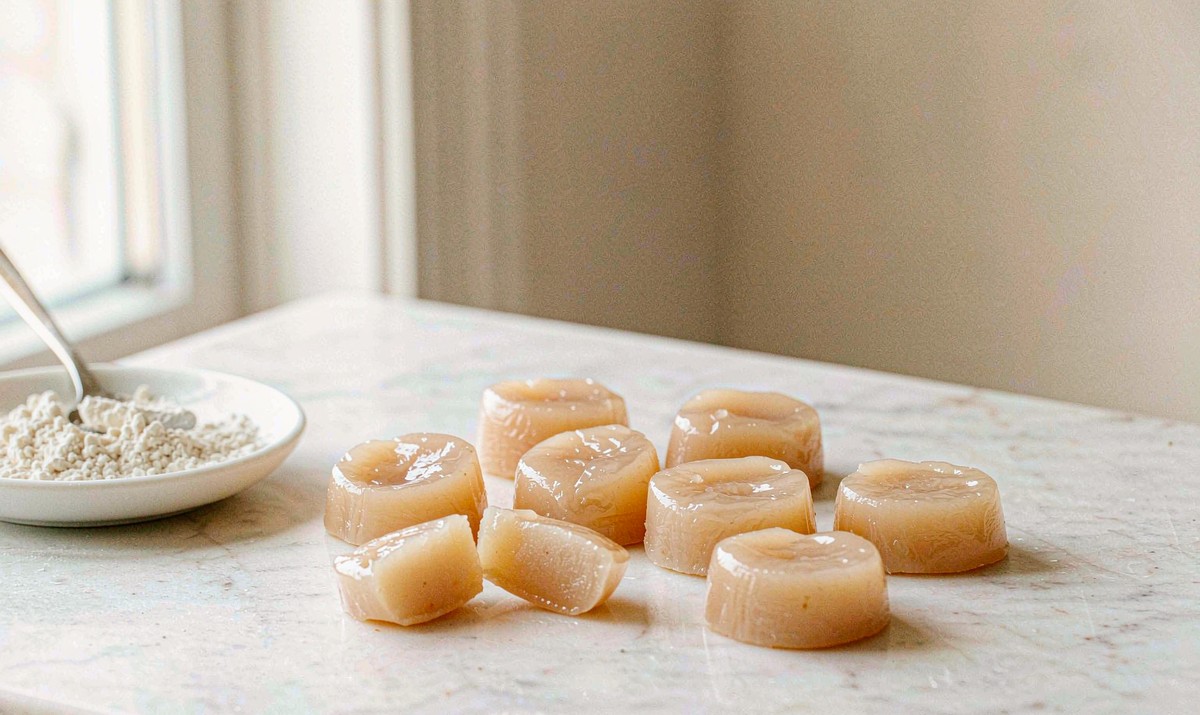
Take two grams of sugar out and the piece stops tasting like a gummy. It also stops behaving like one. The sugar is not only sweetness; it is the solids that hold water activity down and give the gel its body. A formulator who raises the extract load to hit a front-panel number trades texture, sweetness and shelf behaviour for that number, and the trade is visible to the customer in the first chew.
Which is why the highest-equivalent products on the market are usually capsules or powders, and why the gummies claiming the largest numbers tend to be the ones with the finest extract particles and the most maltodextrin. Carrier is not a trick. It is what makes a high-ratio powder flow into a depositor at all.
Carrier weight is where the ratio meets the label. Spray drying a liquid extract needs something to carry the solids, and maltodextrin is the usual choice. A 10:1 extract can be dried with little or no carrier because the solids are already concentrated. A 2:1 powder is mostly water-soluble material from the mushroom plus whatever was added to make it dry and free-flowing, and a maltodextrin fraction of 30 to 50 per cent is common in that grade. Five hundred milligrams of that powder may hold only half to two thirds of its weight as mushroom solid, while the equivalent figure stays exactly where it was, because the equivalent is calculated from the ratio and the scoop weight rather than from an assay. A specification that wants to control the gap asks for the carrier percentage and the beta-glucan result on the same certificate.
The low end has its own problem
Lowering the extract load to fit the piece trades a texture problem for a mixing one. At 50 mg in a four gram piece the active is 1.25 per cent of the batch, and at that dilution the question stops being whether the powder fits and becomes whether it is evenly spread.
A gummy has no pharmacopoeial content uniformity monograph the way a tablet does, so a factory cannot run the compendial test and file the result. What it can control are the steps that produce variation. Pre-blend the extract against part of the sugar at a known dilution, pass that pre-blend through a screen fine enough to break agglomerates, and keep the slurry moving long enough for the powder to wet out before it reaches the depositor. A lion's mane extract that has taken up water in storage wets unevenly, and an unwetted lump travels through the hopper as a lump.
The visible consequence is pieces that differ in shade, because the extract carries colour along with mass. The invisible one is a bottle where a piece holds 20 mg and its neighbour holds 80 mg. Both are checked the same way: weigh the deposits across the run, assay pieces from the start, middle and end, and look at the spread rather than the average.
What the line does with the powder
Extract arrives in 25 kg lined bags, and a batch rarely consumes a whole one. At 12.5 per cent loading a 500 kg slurry takes 62.5 kg, two and a half bags. At 1.25 per cent it takes 6.25 kg, a quarter of a bag.
That is where a moisture problem begins. An opened bag of spray-dried extract pulls water out of the room, and closing the bag again does not take the water back out. The next batch weighs the same kilograms and receives fewer dry solids, which arrives downstream as a heavier deposit and a lower assay per piece. Factories running this material keep opened bags under nitrogen or in a dry store at 40 per cent relative humidity or below, and re-check moisture before the bag goes back to the pre-weigh room. The check is cheap. A batch made from damp powder is not.
Depositing runs at 90 to 95 °C, and the piece then spends a day or more in a curing tunnel at roughly 20 to 25 °C and low humidity to reach its target water activity. A hygroscopic active slows that equilibration, because the powder holds water that has to migrate out through the gel. On a line sized for vitamin gummies, a mushroom formula can add curing time and cut throughput without a single setting on the depositor being changed.
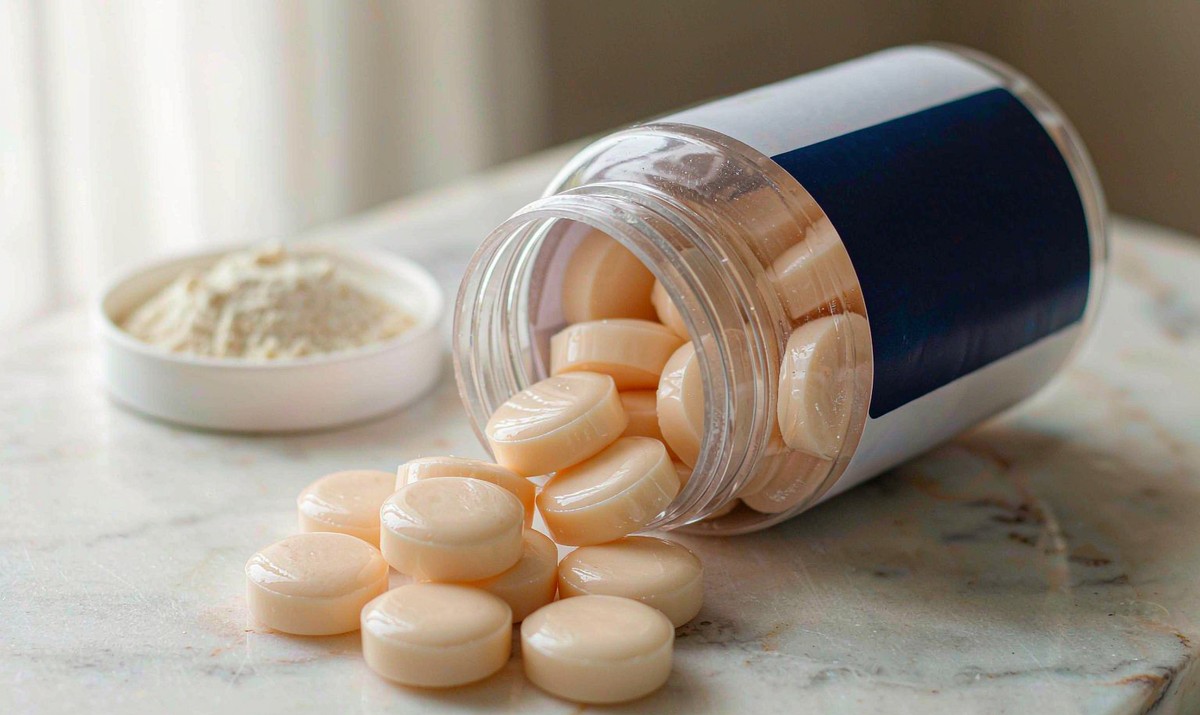
One slurry, three labels
A wholesale order, a private label order and a white label order can be the same formula in three bottles. What usually stops them running as one batch is colour. A lion's mane extract ranges from pale cream to mid brown between suppliers, and between lots from the same supplier, and a cream gummy shows that difference through clear glass. A berry-coloured piece hides it.
So the channel picks the colour, and the colour decides whether two orders can share a batch. A brand that wants a pale, natural-looking piece is buying a tighter colour specification on the extract and paying for the lots that pass it. A brand running one formula across three retail chains usually buys a darker piece, because that is what lets one batch serve all three.
What a wholesale buyer is buying
Wholesale is a different purchase from contract manufacturing. A co-packer sells capacity and a batch record. A wholesale supplier sells stock that already exists, with the shelf life already running and the title already transferred. The question a wholesale buyer has to answer before the pallet leaves is not "is this a good product" but "how many days of use are in this case".
That number is not on the label. It comes from three figures held by the seller: pieces per bottle, milligrams of extract per piece, and the extract ratio. Multiply the second and third to get grams of dry mushroom equivalent per bottle, then divide by the daily gram target to get days. A 60-count bottle at 500 mg of 2:1 is 60 g of equivalent, or 33 days at 1.8 g. The same 60-count bottle at 50 mg of 10:1 is 30 g, or 16 days.
Two cases, same carton count, same freight cost, half the usable days. Wholesale price per bottle hides this completely. Price per day of use does not.
Repacking resets the clock
A stability study is not a property of the gummy. It is a property of the gummy in a specific container, with a specific desiccant dose sized to that container's headspace, closed a particular way and stored at a stated condition.
Finished gummies sit at a water activity of roughly 0.55 to 0.70, and mould becomes possible from about 0.65. Gelatin softens and starts to stick in the bottle as it takes up moisture. Pectin holds its shape better in heat but is more sensitive to humidity and to pH drift. A lion's mane extract is hygroscopic on its own, so the margin between a stable piece and a sticky one is narrower than it is for a crystalline vitamin.
Move the same gummies into a smaller bottle and three things change together: the headspace volume, the surface area to volume ratio, and the desiccant dose relative to that headspace. Keep the original expiry date on the new bottle and you are asserting that the new configuration was tested. It usually was not.
Repacking is defensible under two conditions. Either the new container is qualified by its own study, or the original study already covered the container as sold. For a distributor splitting cases between markets, that is the line worth drawing before the first split case, not after it.
One catalogue entry decides the EU
In the European Union the legal question is not the ratio but the part of the fungus. The EU novel food catalogue, updated after a Finnish consultation in February 2025, records the fruiting body and its aqueous extract powder of *Hericium erinaceus* as not novel, including for food supplements. The same catalogue records dehydrated mycelium powder as an unauthorised novel food.
That single distinction decides which supplier a European buyer can use. Mycelium grown on grain is cheaper, faster to produce and widely sold, and it cannot legally enter a European supplement until it is authorised. A specification that names only "lion's mane extract" does not tell a buyer which side of that line the powder is on.
The same problem shows up in testing. There is no pharmacopoeial monograph that quantifies hericenones, erinacines or beta-glucans for this species in a standard way, so two laboratories can report different numbers for the same lot without either being wrong. A certificate of analysis that gives a polysaccharide figure without naming the method and the part used answers a question nobody asked. The identity question sits underneath the dose question, and it has its own treatment in our note on the three products sold under one mushroom name.
The United States answers the same question on a different axis. Lion's mane fruiting body sells as a dietary supplement under DSHEA without premarket approval, and mycelial preparations have gone through the new dietary ingredient notification route instead of a prohibition. A formula legal in one market is not automatically legal in the other, and the part of the fungus is the variable that moves.
An assay and an equivalent are also not convertible. A certificate reporting a beta-glucan percentage describes the powder in the bag. A front panel reporting 5,000 mg equivalent describes the ratio and the scoop. Neither predicts the other, and a specification asking for both is asking two separate questions.
The coffee anchor
The social side of this category arrives through a cup. #mushroomcoffee and #lionsmane travel together because the drink is how most people first meet the mushroom, and a coffee blend puts one to two grams of powder into a mug without anyone weighing it. That becomes the mental reference for a serving.
A gummy that wants to stand in for the cup has to reach the same gram figure, and the arithmetic above says what that costs. At 500 mg of 2:1, a one to two gram cup is one or two pieces. At 50 mg of 10:1, it is two to four. This is the practical reason serving sizes in this category moved from one gummy to two: the front panel kept the number it had, and the count per day went up to meet the dose the customer already believed they were getting from coffee.
For a brand, that shift is a cost decision made in the formula, not a marketing one. Doubling the daily count halves the days per bottle and doubles the extract per bottle. The retail price rarely doubles with it.
What to lock before a batch is booked
Four numbers and one document decide whether two suppliers are quoting the same product.
- Milligrams of extract per piece, not the equivalent.
- The ratio, and whether it refers to dried material.
- Fruiting body or mycelium, named in the specification, not inferred from the price.
- Pieces per serving, stated on the panel and in the quotation.
- The container and desiccant dose, written into the specification so the stability data applies to what ships.
Everything else, including the beta-glucan figure and the method behind it, hangs off those five.
Where our documents stop
Our SGS certification CN23/00007035 covers gummy and gel candy production, solid beverages, instant cereal powder and substitute tea, valid to 24 December 2026. Our SC licence SC11434160205012 covers eight dosage forms including sports nutrition supplements, valid to 25 August 2030. Pectin and gelatin gummy production runs on the lines described in our functional gummy section.
What we do not have is a clinical dossier on lion's mane, and we do not publish one. The dose figures above come from published human trials, not from our own work. Markets differ on what may be claimed, and no claim we can support here substitutes for the one your market allows.
Ding Shaohua, Foreign Trade Manager at WANHUACAO, works with brands and distributors on functional gummy programmes from brief to first shipment, in bulk and in private label, including mushroom and botanical actives. The plant operates under SGS CN23/00007035 for gel confectionery and SC11434160205012 covering eight dosage forms, sports nutrition supplements among them. Reach him on WhatsApp, TikTok, LinkedIn and Facebook.
FAQ
How much lion's mane is in a 500 mg gummy?
It depends on the ratio. Five hundred milligrams of a 2:1 extract is about one gram of dried mushroom equivalent. The same five hundred milligrams of a 10:1 extract is five grams equivalent. The milligram figure on the panel is the weight of powder in the piece, not the weight of mushroom it came from.
Can a gummy deliver three grams of lion's mane?
Not as a single four gram piece at a workable texture. Three grams of a 2:1 extract is three quarters of the piece before any sugar, gel or acid is added. The practical route to that dose is two or three pieces a day, or a capsule, or a powder.
Why do some lion's mane gummies say two gummies per serving?
Because the dose the brand wants to claim needs two pieces at the extract load the piece can carry. The front panel keeps the gram equivalent, and the serving size absorbs the difference. It changes the days per bottle, which is the number a wholesale buyer should be calculating.
Is mycelium lion's mane legal in the EU?
Dehydrated mycelium powder of *Hericium erinaceus* is recorded as an unauthorised novel food in the EU catalogue, including for food supplements. The fruiting body and its aqueous extract powder are recorded as not novel. A specification that does not name the part cannot answer the question.