
The word manufacturer can describe several arrangements in a herbal tea project. A business may blend and pack at its own site, use a separate packing partner, or coordinate suppliers for a brand. Each arrangement can work. The practical differences show up in the sample, the production record and the way a change to the blend reaches the people running the line.
The producer and the packing site
The company coordinating an order can differ from the business operating the packing site. The agreed specification can identify the blend producer, packer and point of contact for changes. Site information and applicable scope documents then connect the sample to its proposed production arrangement, including any work carried out by a partner.
What the filling line changes
A blend containing light leaves and heavier fruit pieces can separate as it moves through a hopper. Fine material can also collect around a sealing area. These are formulation and handling questions as well as equipment questions. Details such as cut size, feeder settings and the treatment of changeovers help describe the process more clearly than a line count by itself.
Hand-filled and machine-made samples
A hand-filled sample is useful for comparing the cup and the appearance of a blend. It does not show how that blend will behave at the proposed filling speed. A machine-made sample can provide a different view: variation between bags, broken material, seal condition and the blend remaining after transport. The two samples can support different stages of development without being interchangeable.
A sample record can keep the blend revision, bag material, fill weight and brewing conditions together. When one changes, the next sample has a clear comparison point. The Codex General Principles of Food Hygiene describe incoming-material, packaging and record controls that give the wider production context.
The quotation and the finished pack
Cost can include blend material, filter bag, individual envelope, carton, printing setup and packing work. A price per bag becomes more informative when the fill weight and number of bags per retail unit are stated. Printed materials and tooling can have different minimum quantities from the blend itself, which is one reason two apparently similar offers can cover different products.
Tea production at Wan Hua Cao
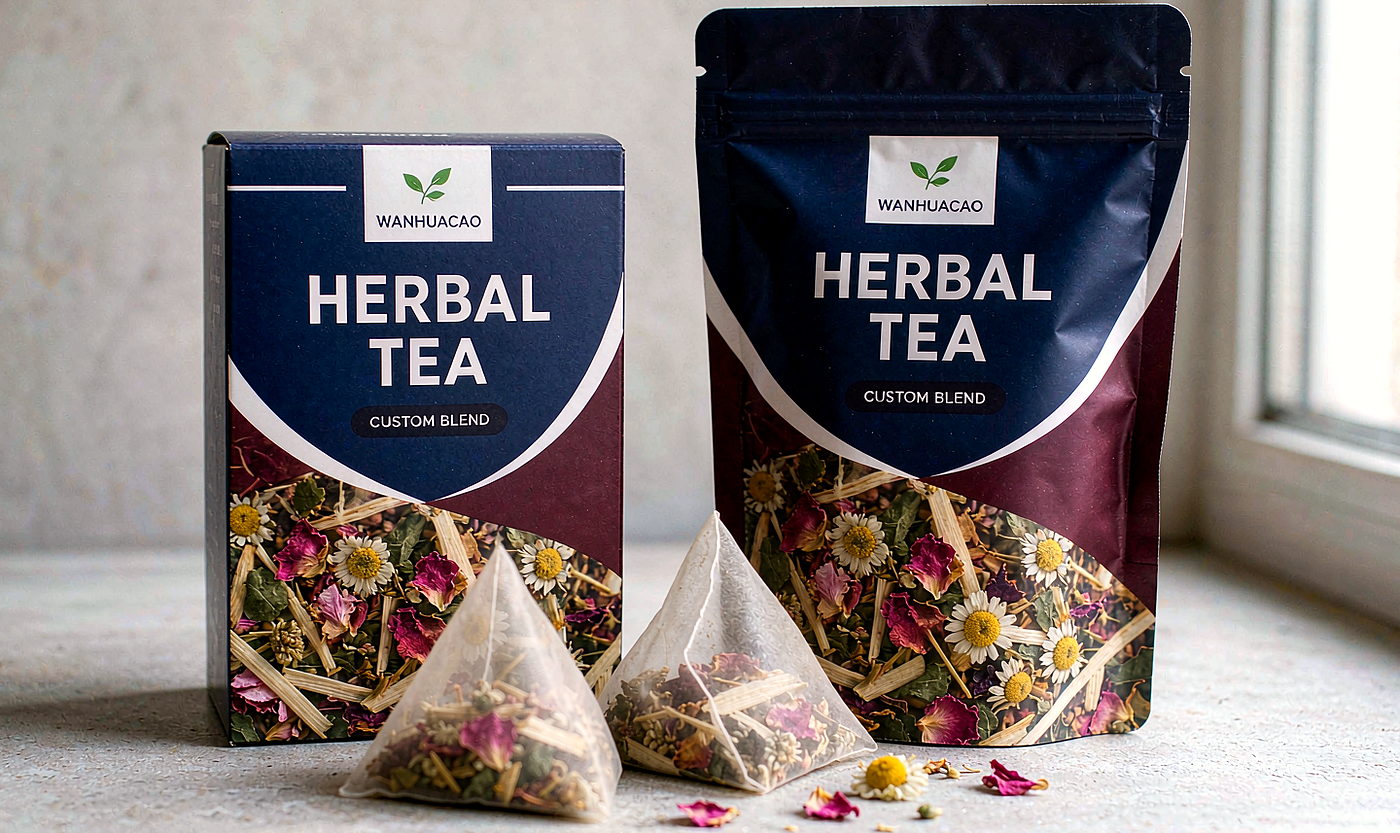
Wan Hua Cao works with tea and bagged-tea formats through OEM and ODM arrangements. Blend composition, flavour and the proposed pack give each project its own starting point. The order quantity and schedule are confirmed with those details, rather than assumed from a different product in the range.
The related herbal tea article covers ingredients, bag materials and labelling. The product page shows the range described on this site. A project conversation can start with the intended blend and pack, then become more detailed as the sample is developed.
FAQ
Is a co-packer always a weaker option?
No. A packing specialist may suit the product well. What matters to the arrangement is the agreed responsibility for blending, material approval, filling and release, rather than the title used in a directory.
Why can samples look different from the production pack?
Sample material, cut size and filling method may differ from the intended production setup. A recorded sample revision makes those differences visible and provides a basis for the next comparison.
Final Thoughts
The supplier relationship becomes easier to understand when the blend, the packing site and the sample process are described in the same terms. A quotation can then refer to a particular product instead of a broad category. There is no need for every project to use the same arrangement, provided the responsibilities and the sample being approved are clear.
Ding Shaohua, Foreign Trade Manager, takes the enquiries that arrive this way. The same person answers on WhatsApp, TikTok, LinkedIn and Facebook, and the sample questions usually arrive by WhatsApp first.
All News