
Two drums sit on the bench, both labelled 30% triterpenes. One is a fruiting body powder, the other is spore oil. Both certificates carry the same method line and the same figure, and neither number means what the buyer in the room assumes, for opposite reasons.
Nothing here requires a supplier who lied. The colour reaction has been in use since the 1960s, the reference standard was chosen because it was cheap and available, and the trade has been quoting the output ever since.
The reaction, and what it is good at
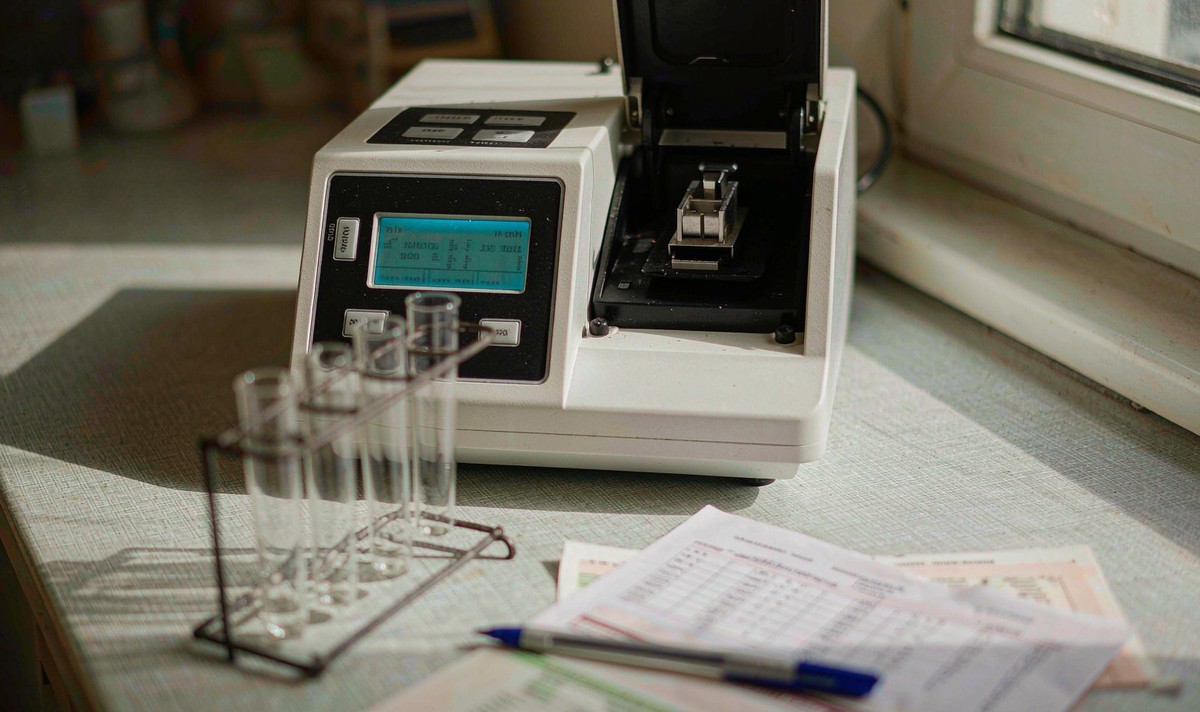
The method is vanillin in perchloric acid. Under strong acid the triterpene skeleton condenses with vanillin into a coloured product, and the depth of that colour is read on a spectrophotometer somewhere between 530 and 550 nm. It is quick, it needs no chromatography system, and on a dried fruiting body powder handled by the same technician it repeats well.
What it does not have is specificity. Any compound with a similar skeleton and the right functional groups will react with the reagent, and a fair number of compounds without a triterpene skeleton will react as well. The measurement is of things that go coloured in this acid. The label on the result says triterpenes.
The standard decides the answer
Turning an absorbance into a percentage needs a reference compound, and the choice made here shapes every figure quoted since. Oleanolic acid and ursolic acid are cheap, stable and sold at high purity. Ganoderic acid A, the triterpene that is actually abundant in Ganoderma, costs far more and is harder to keep on a bench.
Quantify the main Ganoderma acids against oleanolic acid and the results come back low by a wide margin. Work published in 2016 by Zhang and colleagues at the Shanghai academy of agricultural sciences put ganoderic acid A at roughly one thirtieth of its true content when calculated against oleanolic acid, and a second study in the same line of work reported one thirty-third.
For the compound the material is bought for, the method does not flatter the drum. It under-reports it by an order of magnitude.
Where the same number goes the other way
The other half of the problem is the spore.
Ganoderma spores carry oil, and that oil is mostly oleic acid, linoleic acid and sterols. Oleic acid and ergosterol both react with vanillin and perchloric acid, and both read high. In a material where the true triterpene content is small, the colour is coming from the oil rather than from the triterpene, and the result is a large figure attached to a material that holds very little of the thing being measured.
Published work is consistent with that. Spore powder has been reported to contain almost no triterpenes next to the fruiting body. A research group that worked through 50 kg of spore oil did not recover a triterpene from it. A method that returns 20% or 30% on such a material is not measuring what its label claims. It is measuring the oil.
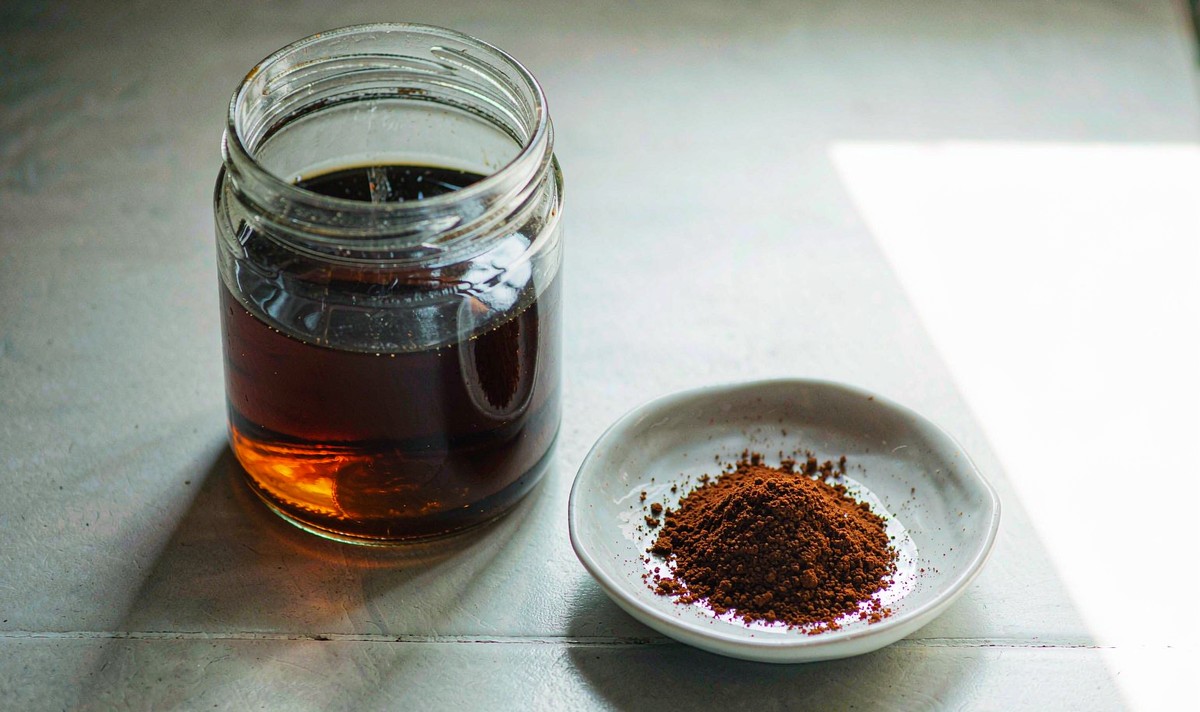
The monograph title gives it away
There is a detail in the pharmacopoeia that is easy to walk past. The entry is not titled triterpenes. It is titled triterpenes and sterols, because the reaction cannot separate the two and the people who wrote the standard knew it.
A certificate printing "total triterpenes 30%" from the same reaction is quoting half of a title as if it were a content.
The clock is a dial
The colour deepens for as long as the reaction runs. A method that names fifteen minutes in a water bath and reads immediately is reproducible in careful hands. A method that says "until colour develops" is not a method, it is an invitation, and two extra minutes in the bath is worth several percentage points.
Nobody has to change a raw material, buy a different drum or falsify a record for this to happen. The same powder, the same reagent, the same laboratory, and a longer wait.
What chromatography does instead
HPLC separates the individual triterpenes and quantifies each one against its own reference compound, which removes the specificity problem at the price of needing the standards. A pharmacopoeial method for Ganoderma takes this route with a set of ten triterpene reference compounds, each peak identified and each content summed.
Ten standards is a real barrier for a routine factory laboratory, which is why a middle path exists: quantify one marker precisely and estimate the rest with response factors, a single-marker approach. It is better than a colour reaction and weaker than a full panel. What matters to a buyer is that the certificate states which of the three was used, because the three are not interchangeable and do not produce the same number from the same drum.
The other number on the same certificate
Triterpenes are half of what a reishi certificate claims. The other half is polysaccharide, usually printed as a percentage with the same confidence and by the same logic.
That figure comes from the phenol-sulfuric acid reaction, in which concentrated acid hydrolyses the sugars and the products condense with phenol into a colour read around 490 nm. It responds to carbohydrate in general: glucose, sucrose, starch, dextrin, and whatever the material happened to be spray dried onto.
Which matters, because a spray-dried extract is often dried on a carrier. If the powder is 30% maltodextrin, the polysaccharide assay sees the maltodextrin and reports it as polysaccharide. The number rises, the material has not changed, and nothing has been falsified. The method counted every sugar in the drum.
A beta-glucan figure is a different measurement, run with an enzymatic kit that relies on the specificity of an enzyme rather than the reactivity of an acid. Two certificates for the same drum can carry 30% polysaccharide and 8% beta-glucan, and both can be accurate, because they are answering different questions.
Molecular weight, which neither number can see
There is a third property that decides what a polysaccharide does, and neither assay can report it: size.
Polysaccharides from one species arrive as a distribution of chain lengths, and that distribution shifts with extraction temperature, drying method and the age of the material. Two powders can both read 30% polysaccharide while holding chains whose average length differs by an order of magnitude, which is a different ingredient in every practical sense.
The measurement exists. Size exclusion chromatography with a suitable detector gives a molecular weight distribution, and it is the figure a formulator would actually want. It is a research instrument rather than a release test, so it rarely appears on a specification. When a supplier can produce one, it is worth more than another percentage point on an aggregate.
Both figures on the certificate are reactivity measurements presented as content. As routine tools they are the best available, and neither can tell a buyer which molecule is in the drum.
Three materials behind one name
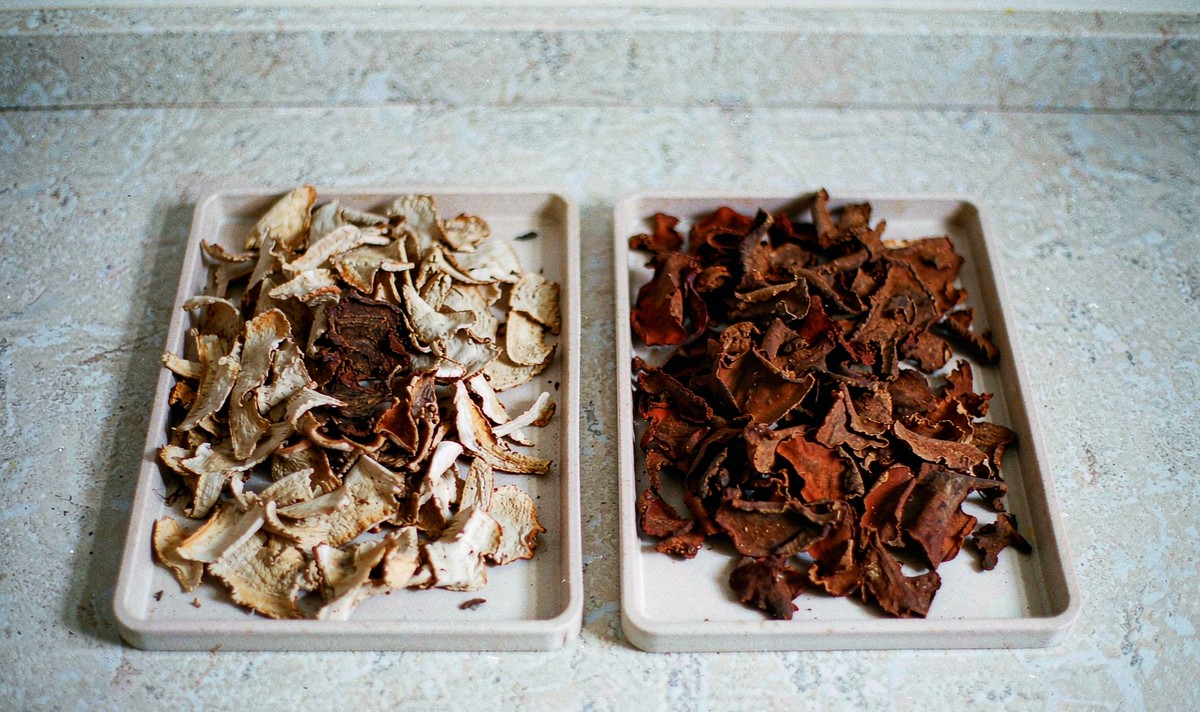
Reishi extract covers at least three raw materials, and they are not the same substance. There is the fruiting body. There is the mycelium, grown on grain or in liquid. There is the spore, with the shell intact or broken open.
Triterpenes concentrate in the fruiting body, which is why the spore material reads so differently. A specification that names the marker and the method but not the material still leaves a buyer unable to compare two offers, because one 30% can describe three different products.
Where the raw material is settled
Cultivation is upstream of every figure on the certificate. Substrate, whether the fungus grows on log or in a bag, the harvest window and the drying method all move the triterpene profile before the extractor touches the material, and comparisons between cultivation systems have found the same species producing measurably different triterpenoid patterns.
A buyer cannot audit a forest. A buyer can ask for the material definition: fruiting body, mycelium or spore, the substrate, the region, and the harvest window. Four answers that are cheap to give and hard to keep consistent across repeat orders if they were never true.
What to write instead of a percentage
The clause that ends the argument is a named molecule and a named method, printed together.
- Marker. Ganoderic acid A, or a defined sum of named acids, each with its own limit rather than one aggregate figure.
- Method. HPLC with column, mobile phase and detection stated, or the colorimetric method with reagent, reference standard, wavelength and reaction time stated.
- Reference standard. Which compound the percentage is calculated against, because that single choice moves the result by an order of magnitude.
- Material. Fruiting body, mycelium or spore, with the plant part and any shell-breaking treatment.
- Both figures. The total by the stated method and the marker by HPLC, side by side, so the next batch has something to be compared with.
A supplier who can put both numbers on one page is telling you the method is under control. One who can only produce the flattering figure is telling you something else.
The botanical extract production lines page shows where extraction and drying sit before any of this is measured, the specification guide covers the ratios and carriers that appear on the same certificate, and the contact page reaches the people who run the assays.
Ding Shaohua, Foreign Trade Manager, takes enquiries for this line. The same person answers on WhatsApp, TikTok, LinkedIn and Facebook.
FAQ
Is a higher triterpene percentage always the better material?
Not as a standalone figure. Two drums at 30% can hold very different amounts of ganoderic acid A, because the number depends on the reference standard, the reaction time and whether the material is fruiting body or spore. A 30% from a colorimetric method read against oleanolic acid and a 6% from an HPLC panel of named acids are not in the same units, and comparing them is how buyers end up paying a premium for oil.
Why would spore oil show a high triterpene content if it contains almost none?
Because the reagent does not distinguish. Spore oil is rich in oleic acid, linoleic acid and sterols, and oleic acid and ergosterol both develop colour with vanillin and perchloric acid. In an oil matrix those compounds dominate the absorbance, so the result describes the fatty acids while the label describes triterpenes.
Can a colorimetric result be converted into an HPLC result?
Not with a fixed factor. The relationship between the two depends on which triterpenes are present, in what proportion, and how much oil or sterol is in the matrix, so the conversion factor is a property of the sample and not of the method. The two figures have to be measured, not translated. Where a supplier offers a conversion, the honest reading is that one of the two numbers was never run.
Does a 10:1 ratio tell a buyer anything about triterpenes?
Almost nothing. The ratio describes how much raw herb went in against how much powder came out, and it says nothing about which compounds survived the process or how they were measured. A 10:1 material can be rich in triterpenes or nearly free of them, and the ratio will read the same. The marker content and the method are the only figures that answer the question, which is the same point that applies to every ratio on a botanical certificate.