
Brew an ashwagandha tea bag in a clear glass and the first thing you notice is the colour: beige, cloudy, closer to muddy water than to tea. The second is the smell, which is earthy and slightly animal. The third thing, the one the label is selling, is not in the glass at all.
Ashwagandha is bought for its withanolides. Those compounds are lipophilic, which is a polite way of saying they do not dissolve in hot water. A tea bag of root powder delivers the taste, the colour and the starch, and leaves most of the active in the spent leaf.
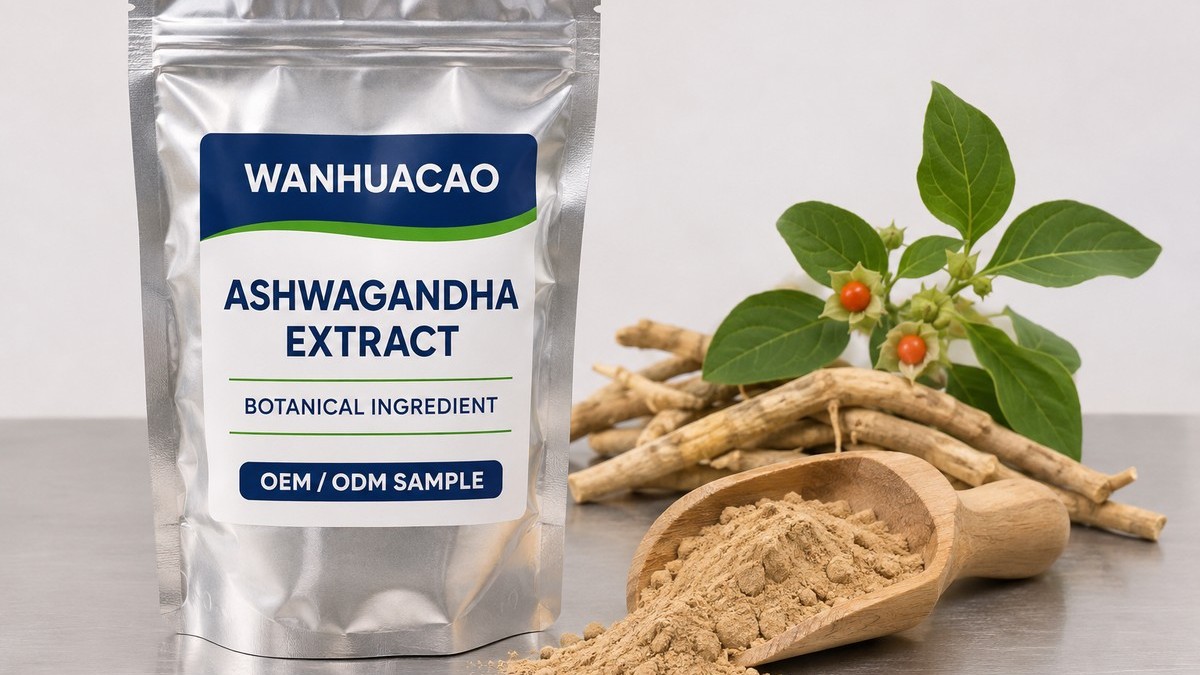
The compound that will not dissolve
Withaferin A and the other withanolides are steroids in chemical terms, and steroids travel in fat rather than in water. Traditional Ayurvedic preparation reflects that: the root is decocted in milk or with ghee, not steeped in water. The fat is the carrier, and the milk is not there for taste.
A tea bag has no fat. What it has is hot water at 90 to 95 °C, a mesh, and five minutes. Extraction of withanolides under those conditions is low, and no amount of extra root in the bag changes the chemistry. Doubling the root doubles the starch and the earthiness in the cup more than it doubles the withanolides.
This is the central awkwardness of the adaptogen tea category. The format that sells best, a sachet with a ritual, is the format that carries the active worst.
What the bag actually delivers
A 2 g sachet of ashwagandha root, in a blend, gives the drinker a warm earthy cup and a small quantity of water-soluble material: sugars, some amino acids, a little of the alkaloids. The withanolide content of that cup is not what the marketing implies and is rarely measured, because measuring it in an infusion is a different assay from measuring it in a root.
That does not make the product dishonest. It makes it a tea. The brand that understands this sells the occasion and the taste, and keeps the label clear of the sentence that would turn it into a claim.
Instagram and TikTok carry this category on #adaptogens and #ashwagandha, where the content is a routine rather than a result: a spoon, a mug, a morning. A brand selling into that feed is selling the habit, and the habit is what a sachet is genuinely good at.
On a European food label, stress is a health claim and it is not authorised for ashwagandha. The European Medicines Agency does hold a traditional-use monograph for ashwagandha root, for temporary feelings of stress, which is the door to a traditional herbal medicinal product and not to a tea. In the United States the same root is a dietary ingredient, and a structure or function statement with the disclaimer is available while a disease claim is not.
Root powder, extract, or a milk decoction
There are three ways to put ashwagandha in a cup, and they are three products.
Root powder in a sachet is the cheapest and the most authentic-tasting. The cup is cloudy, the mouthfeel is starchy, and the withanolides stay largely in the bag. It works for a chai-style blend where the spices carry the flavour and the root is a background note.
A water-soluble extract is the second. The withanolide content is standardised and stated, the powder dissolves clear or nearly clear, and the cost per sachet is several times the root. The carrier matters as much as the extract: a spray-dried extract on maltodextrin can be half carrier by weight, so a 5% withanolide extract becomes 2.5% in the blend.
The third is not a tea bag. A milk-based ready-to-drink or a latte powder carries the fat that the decoction needs, which is why the ashwagandha latte is a better vehicle for the chemistry than the sachet. It is also a different production line, a different shelf life and a different regulatory conversation.
The taste costs fill weight
Ashwagandha root is bitter and earthy, and the bitterness sits at the back of the mouth and stays. Blends hide it with cinnamon, cocoa, ginger, cardamom or licorice, which is why most ashwagandha teas taste like chai with something underneath.
Every gram of masking agent is a gram not spent on root or extract. A blend that starts at 50% ashwagandha and adds enough spice to be drinkable typically lands nearer 30%, and the label still reads ashwagandha first if the root is the largest single ingredient. This is normal formulation arithmetic and worth understanding before comparing two quotes per sachet.
What a certificate can tell you
A withanolide specification on a root is usually a total, and totals hide ratios. Withaferin A is the most studied and the most expensive to standardise, and a root that meets a total withanolide figure can be low in it.
On an extract, ask for the assay method, the carrier and the carrier share. A 10:1 ratio extract has no defined withanolide content at all; the ratio describes how much raw material went in, not what came out. Extract specifications that do not state a percentage are not specifications.
Heat is the second question. Withanolides tolerate drying better than essential oils do, which is why ashwagandha survives a tea process that would ruin lavender. Long dwell times at high temperature still degrade them, and a sterilisation step that is right for microbial load can be wrong for the assay.
One lot, three price lists
The practical advantage of ashwagandha for a factory that runs more than one dosage form is that the same root serves all of them. The lot that goes into a capsule can go into a gummy and into a tea blend, with the same certificate and the same supplier audit behind it.
That changes the commercial conversation. A brand that starts with an ashwagandha tea and later adds a gummy is not starting over on raw material; it is adding a format. A supplier that runs both lines can quote the pair, and the second product is cheaper to develop than the first.
It also changes what to ask. A custom tea blend manufacturer will quote the blend. A factory that also runs capsules and gummies can tell you what the root costs across the three, and whether the extract you chose for the tea is the same one worth putting in a capsule.
For the bag format, see pyramid tea bag manufacturer. The extract side, including carrier and testing questions, is covered in botanical extract specifications, and the range sits on the herbal tea page.
Ding Shaohua, Foreign Trade Manager at WANHUACAO, works with brands on adaptogen blends and functional herbal teas from brief to first shipment. Blending and bagging run in the same plant, under SGS CN23/00007035 covering herbal tea among other categories and SC11434160205012 covering eight dosage forms. Reach him on WhatsApp, TikTok, LinkedIn and Facebook.
FAQ
Does ashwagandha dissolve in tea?
The withanolides largely do not. They are lipophilic, and hot water extracts little of them. Traditional preparation uses milk or ghee as the carrier. A tea bag delivers the taste, the colour and the water-soluble fraction, and leaves most of the active in the spent material.
Is root powder or extract better in a sachet?
They answer different briefs. Root powder is cheaper and tastes traditional, with a cloudy cup and low withanolide delivery. A water-soluble extract is standardised and clears in the cup, at several times the cost, and its carrier share has to be counted when the blend is calculated.
Can an ashwagandha tea claim stress relief?
Not as a food in the EU. Stress is a health claim under Regulation 1924/2006 and is not authorised for ashwagandha. The EMA traditional-use monograph for the root supports a traditional herbal medicinal product, which is a different route with a pharmaceutical licence behind it.
What should an extract specification state?
The withanolide percentage with the assay method, the carrier and the carrier share. A ratio extract such as 10:1 has no defined withanolide content, because the ratio describes input rather than output.