A brand owner brought one pyramid bag to the sampling room in Bozhou, folded flat inside a business card, and asked whether we could make a hundred thousand of them empty so his own team could fill them at home.
The bag was empty. All four edges were sealed. There was no opening on any side, and no way to make one without cutting the bag.
Every other tea bag on a shelf leaves one side open so it can be filled and then closed. A pyramid has no such side. Its four seams are made in the same movement, on the same machine, around tea that is already inside. The bag does not exist before the seam does.
That single fact decides the machine, the material, the fill weight and the order size, and it is usually discovered after the artwork is approved.
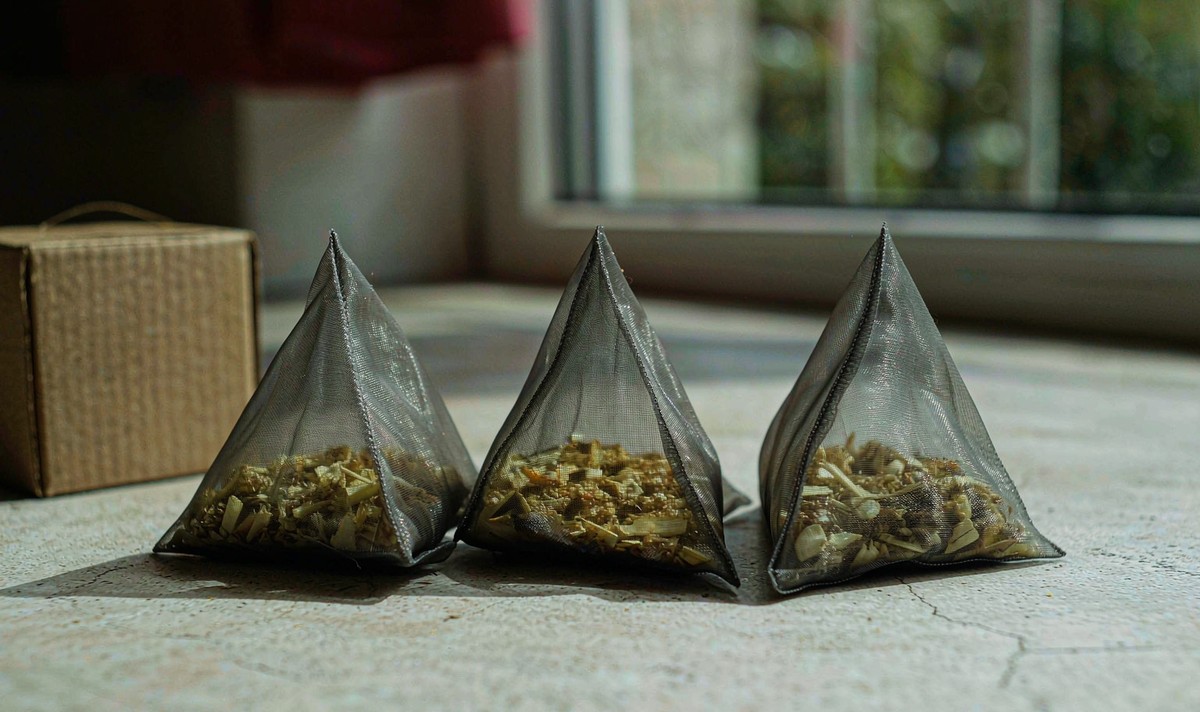
Four edges, one closing movement
A flat bag runs through a machine that forms a tube, seals the bottom, drops a measured dose, seals the top, and cuts. Three seams, the last one made after filling. The pre-made flat bags sold for hand packing are the same geometry with that last seam left open.
A pyramid is formed differently. The web is drawn over a forming shoulder that turns it into a cone, the dose falls through the open cone, and four sealing jaws close on the four faces at once. Depending on the material, those jaws are heated bars or ultrasonic horns, and the seam sets in a fraction of a second while the bag is still supported by the cone.
There is no stage in that sequence where the bag is finished and open, so the format is only ever made inline, on a continuous machine, and never as a pre-made version.
The pyramid bags sold empty by some suppliers are, almost always, flat bags with the top seam twisted into a point. They photograph acceptably. They pour badly: the twist narrows the throat, the leaf collects in one corner, and the seam that was twisted is the seam that opens first.
Why a leaf herb needs the volume
Chamomile, linden flower, lemongrass, rose bud, osmanthus: the material is mostly air. A dried petal keeps its shape, and the shape is doing work. The cell structure that holds a flower open is also where the aromatic fraction sits. Grind it to a broken-leaf particle and you gain density while losing the top note that the blend was built around.
A flat bag forces that material into a flat volume. The leaf presses against the paper, the paper presses against the cup wall, and the water path through the bed is short and uneven, with one channel wet and one corner dry.
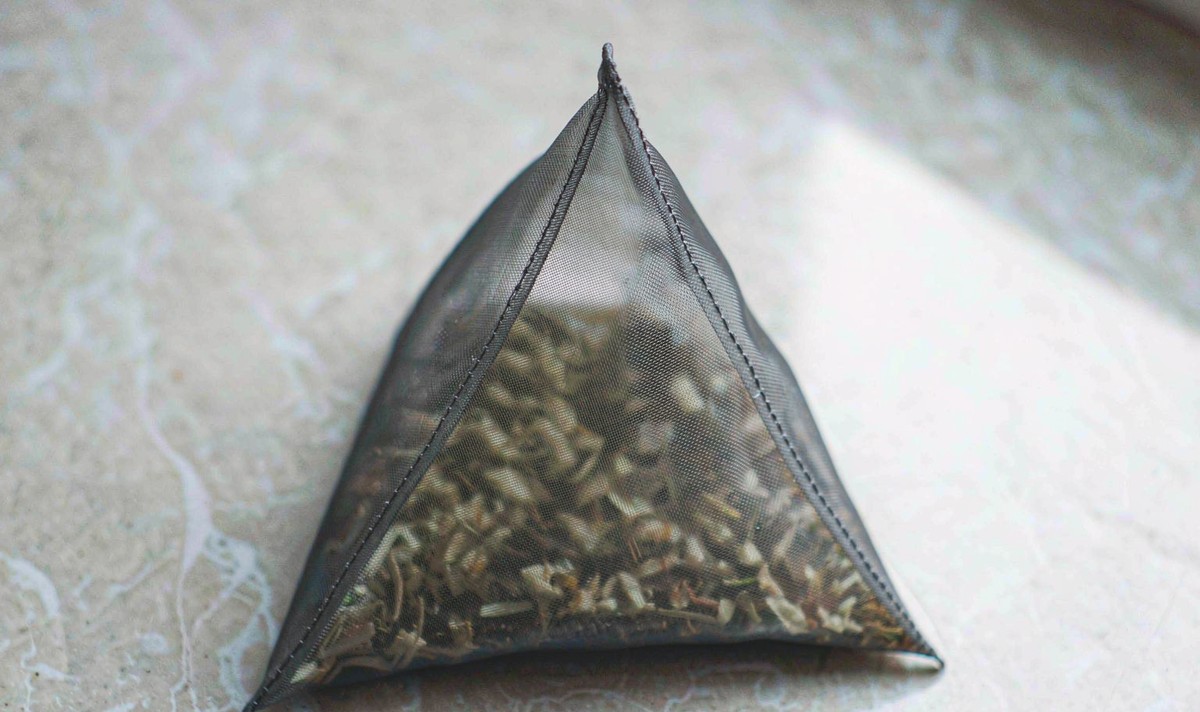
A pyramid holds the same weight in a taller volume. The leaf sits loose, water enters at the top face and has to travel through the whole bed before it leaves at the bottom point, and the petals have room to rehydrate and unfold.
The argument for the format that survives a blind tasting sits in the cup. Two grams of whole-leaf herb behaves differently in a cone than in a pillow, and no photograph carries that difference.
Three materials, and what each one does at the seam
The material decides the sealer, not the other way round. Each of the three families on this line behaves differently at the jaw.
- Nylon 6 and PET mesh —— the clearest window and the strongest seam, and the most forgiving on a high-speed line. They also yellow with age, and the yellowing moves faster once the bag holds tea rather than air, because the volatile fraction of the leaf migrates into the polymer.
- PLA, spun from corn or sugarcane starch —— most of the clarity and none of the fossil feedstock. It does not take a heat seal well: the sealing window is narrow, the seam crystallises under the jaw, and a bag sealed just outside that window opens in the cup rather than in the hand.
- Food-grade non-woven and filter paper —— opaque, inexpensive, the easiest of the three to seal and the easiest to run at speed. What it costs is the transparency the pyramid was bought for.
A brand that specifies a compostable mesh and a heat-sealing line has specified two things that do not fit. The fix is either a different material or a different sealer, and the second one is a capital decision that is better made before the first sample than after the first pallet.
The microplastic finding, read precisely
Most citations of the McGill study compress it into a headline. The paper itself, published in *Environmental Science & Technology* in 2019, took four commercial tea bags of the plastic mesh type, emptied and rinsed them, and steeped the empty bags in water at 95 °C for five minutes. Each bag released roughly 11.6 billion microplastic particles and a further 3.1 billion nanoplastics in the smaller size range, with the nylon bags releasing the most and the fastest.
Three details matter to a buyer. The bags tested were mesh, not paper. The dose was measured from an emptied bag, so the leaf was not the source. And the water was at brewing temperature, which is the only temperature a tea bag ever really meets.
The finding leaves most tea bags alone. What it closes off is one sentence that used to be safe to say: that a mesh bag is inert because it is food-contact grade. Being approved for contact and staying unchanged through a five-minute steep at 95 °C are two separate tests, and for mesh bags the second one had not been run.
What the mesh does to the leaf
Two numbers sit behind the window: the aperture and the mesh count. A coarse aperture lets the fine fraction through, which is the dust that clouds the cup, and a very fine one slows the infusion until the second cup is weaker than the first.
Whole-leaf herb wants an aperture that holds the dust and passes the water, which usually means a finer mesh than the one used for a broken-leaf black tea in the same format.
Dust is also the enemy of the seam. A particle caught in the seal zone while the jaws close is a leak waiting for a cup, and it is invisible in the sample room because the leak opens under heat and pressure rather than on the table. A whole-leaf herb with a high dust fraction is therefore sifted before it goes near the machine, which puts the sieve specification in the purchase order and not in the sample notes.
Fill weight is a machine range, not a wish
The format has nominal ranges. A size M pyramid is built around 2 to 4 grams of a special-cut black tea; a size L around 4 to 6 grams, which is the two- or three-cup brew a café pours. Both figures are volume expressed as the weight of one particular material.
Substitute a whole-leaf chamomile for that special-cut black tea and the same cavity fills at a lower weight, because the material is less dense and each petal occupies space that a broken leaf would have filled with itself.
A brand that specifies 2.5 grams of whole-leaf chamomile in a size M bag is specifying a bag that sits loose and brews thin. A brand that specifies 3.5 grams is specifying one that presses against the mesh, cannot expand when wetted, and has no room for the leaf to move. The number has to be settled with the actual blend, the actual cut and the actual cavity, and it is the one figure in a tea brief that cannot be carried over from another project.
The overwrap is where the aroma goes
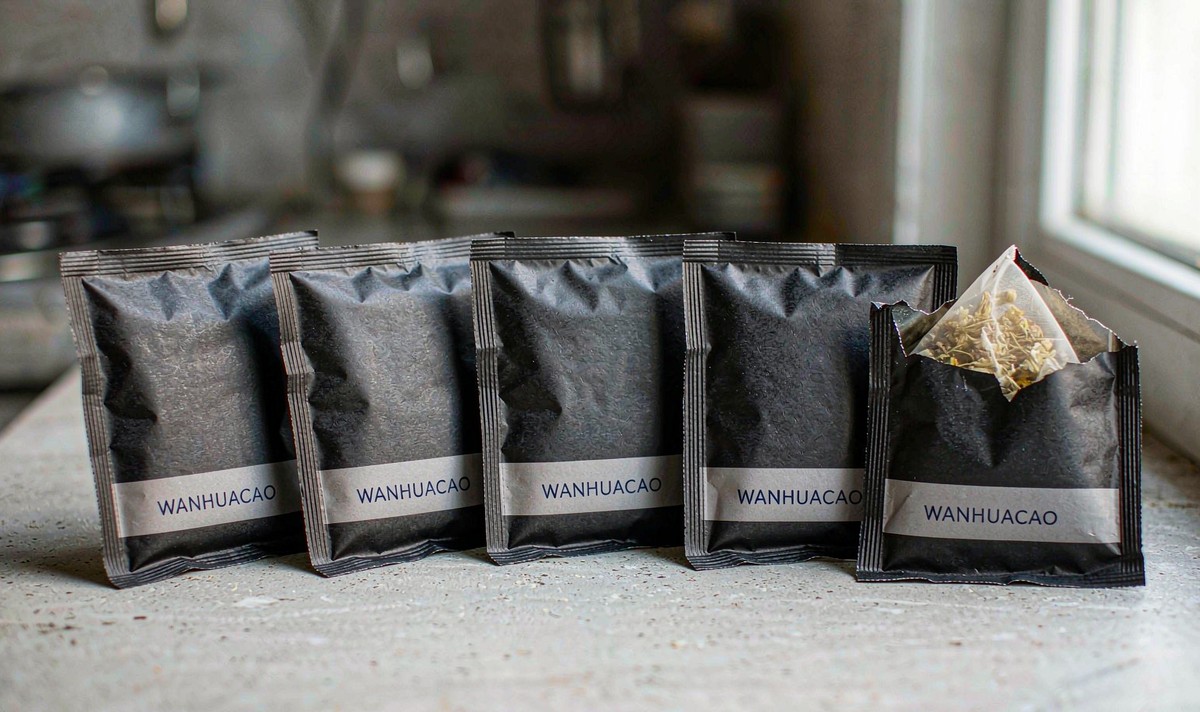
A pyramid bag with no overwrap perfumes its own carton. The volatile fraction of a floral herb is small, mobile, and it crosses a paperboard wall in weeks rather than months.
- Aluminium-laminated film —— the strongest barrier to aroma and moisture, and the hardest of the three to place in a recycling stream, which matters in a market that now assesses packaging by material.
- Paper or PLA-based overwrap —— the compostable path, with a weaker barrier and a shorter shelf life on the floral blends that need it most.
- No overwrap, with a barrier pouch inside the carton —— viable where the carton is the retail unit and the pouch does the protecting. Cheaper per bag, less premium on opening.
One setting decides more than the material: whether the overwrap is flushed with nitrogen before sealing. A floral blend packed in air oxidises inside the film; the same blend flushed and sealed keeps its top note. The flush is a line setting, paid for on the machine and not on the film, and it is the cheapest aroma protection in the project.
Ten thousand bags is a machine slot
Order minimums on this line start at 10,000 bags. That figure is a production slot, sized to cover the fixed part of one run: the roll change, the seal-temperature ramp, the dose calibration, and the rejection of the first bags until the seam holds.
Which is why the cost of a bag falls steeply between 10,000 and 50,000 and very little after that. A brand planning a gift range of six blends at 10,000 bags each is buying six machine slots. The same 60,000 bags in one format and one blend is one slot and a materially cheaper bag.
Lead time for this line is 15 to 30 days after deposit, and sampling is free. What a sample cannot tell you is how the bag behaves on a filling line you have not chosen yet. For that, the format, the overwrap and the carton have to be settled together, before the artwork rather than after it.
What our certificate covers
Two documents are in play, and they answer different questions.
- SGS CN23/00007035 —— issued to Anhui Wanhuacao Biological Technology Co., Ltd. against the Codex Alimentarius code of practice CXC 1-1969 as revised in 2020. The stated scope covers substitute tea, solid drinks, instant cereal powder and gel candy. Substitute tea is the relevant line for a bagged herbal blend; the gel candy in the same document is a different product made in a different hall.
- Production licence SC11434160205012 —— covers eight dosage forms, among them tea in bag, hard capsules, soft capsules and sports nutrition. Bagged tea sits under this licence as a manufacturing category, not under the SGS document.
- What neither document certifies —— a bag material, a compostability claim, or a retail carton. Those documents travel with the converter and with the market the product is sold into, and a factory certificate is not a substitute for either.
A supplier who presents one certificate as the answer to all three has not read the document. The useful questions are which legal entity holds it, what the scope says word for word, and whether the bag material has its own paperwork from the converter named on the invoice.
What to send before the first sample
Four things shorten this project more than any others:
- The destination market —— because the material that is compliant in one place is a claim risk in another, and from February 2028 the European rule on tea bag material leaves no choice at all.
- The blend with its cut —— whole leaf, broken leaf or powder, and the dust fraction if it has been measured.
- The format and the fill weight in grams, with the outer pack and whether an overwrap is intended.
- The carton wording —— because a compostability claim printed on a box constrains the bag inside it, and that constraint is easier to design around than to print over.
If the blend, the bag and the carton are being decided together, send the brief with the market and the format. The herbal tea OEM page sets out the formats, the minimums and the certificate scope for this line, and the guide to private label herbal tea manufacturers covers how to compare two quotations that look the same. When the deciding question is the material rather than the shape, the companion piece on eco-friendly tea bag materials goes through the three claims and the 2028 deadline.
Ding Shaohua, Foreign Trade Manager, takes enquiries for this line. The same person answers on WhatsApp, TikTok, LinkedIn and Facebook.
FAQ
Can I buy empty pyramid bags and fill them myself?
No, and it is a property of the shape rather than a policy of any one supplier. A flat bag is sealed on three sides and left open on the fourth, which is what allows hand filling. A pyramid seals all four faces in the same jaw movement, so it leaves no open side at all. The pre-made pyramid bags on the market are flat bags with a twisted top seam, which narrows the throat and concentrates the leaf in one corner.
Is a pyramid bag better than a flat bag for herbal tea?
It is different, and the difference shows on whole-leaf material. A petal or a leaf piece keeps its shape and takes up volume that a flat bag does not offer, so a pillow compresses it against the paper and shortens the water path. A broken-leaf or powdered blend gains much less from the format, and the extra cost of the bag buys a shape rather than a cup. The honest comparison is on the same blend in two formats, not on a photograph.
Which material should I choose if I want a compostable claim?
Start from the claim and work backwards, because the claim is the constrained part. PLA mesh is the usual route for a compostable pyramid, and it needs an ultrasonic sealer rather than a heated jaw, since a heat-sealed PLA seam crystallises and cracks. Paper is not automatically the safe answer: a heat-sealed filter web carries thermoplastic fibre through the sheet, which is why the bag can seal at all. The tag, the string and the overwrap are part of the same claim and are usually left out of it.
Why does the fill weight differ from the specification sheet?
Because a specification sheet records a volume in the units of one material. The 2 to 4 gram range for a size M pyramid was established on a special-cut black tea, which is dense. Whole-leaf chamomile in the same cavity fills at a lower weight and sits loose; pushed to the black tea figure it presses against the mesh and cannot expand. The number has to be confirmed on the blend, the cut and the cavity together.