A carton proof came across the table with a leaf mark on the back panel and, under it, the words 100% biodegradable tea bag. The German version of the same panel was waiting for approval. The question on the table was narrower and more awkward: could that sentence be printed in Germany at all?
The answer depends on three words that are routinely used as if they meant the same thing, and on a date in the European packaging regulation that most tea brands have not yet put in their launch calendar. Neither is a marketing problem. A bag material is chosen by a sealer, a claim is limited by a standard, and from February 2028 one of those limits stops being voluntary.
Three words that are not one word
The European Commission's 2022 policy framework on bio-based, biodegradable and compostable plastics exists because these three terms are confused in the market and, in its own wording, may mislead. The framework separates them:
- Bio-based —— made wholly or partly from biological resources rather than fossil feedstock. Says nothing about what happens after use. A bio-based bag can be as permanent as a PET bottle.
- Biodegradable —— breaks down under stated conditions, in a stated time, in a stated environment. Leave any of the three out and the word describes an intention, with nothing behind it you can test.
- Compostable —— a subset of biodegradable, and in EU practice it means industrially compostable, at a facility, with the material collected and delivered there first.
The same framework takes a position that matters to a brand writing carton copy. Generic, unsubstantiated claims such as bioplastics, bio-based or biodegradable should be banned, and a bio-based claim should state the measurable share of bio-based content. A sentence like the one on the proof is exactly the type the framework is aimed at.
The first move is to decide which of the three words the bag is entitled to, and to write that word alone.
The paper bag is about a quarter plastic
Paper is the material most buyers assume is the safe answer, and it usually is not.
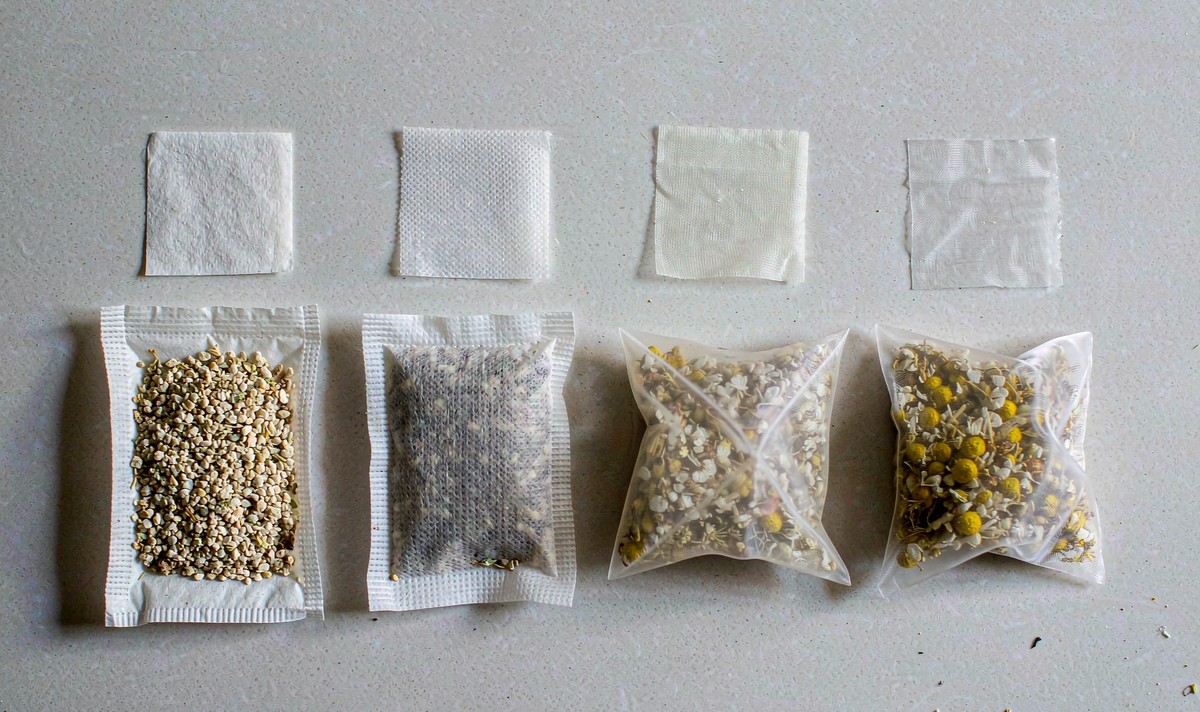
A heat-sealed filter bag holds its shape because thermoplastic fibre is blended into the paper web, and the hot jaw melts that fibre to bond the sheet to itself. Patent literature covering heat-sealable filter material puts the thermoplastic content at roughly 20 to 25 per cent of the web by weight. It is invisible, spread through the whole sheet instead of sitting at the seam, and it does not compost.
Which leaves a narrow exception. A bag closed by stitching or by a staple, with no thermoplastic in the web, is paper in the full sense and will break down with the leaf. It also tears more easily, softens in a long steep, and cannot be run at the same speed as a heat-sealed web. The compromise shows up in the cup: the bag that composts cleanly behaves like wet paper.
A brand that wants paper and a compostable claim is specifying a construction, so the purchase order has to carry the sealing method.
What the 2028 deadline says
The Packaging and Packaging Waste Regulation, Regulation (EU) 2025/40, applies from 12 August 2026. Article 9 sets out what has to be compostable and when, and the tea bag is one of the few products named directly.
- From 12 February 2028, permeable bags and soft single-serve units containing tea, coffee or another beverage, used and disposed of together with the product, must be industrially compostable. The tea bag is on the mandatory list, and that list is much shorter than the opt-in one.
- A Member State may additionally require home compostability for the same items. That is a national layer on top of the EU one, and it is checked per market rather than once for Europe.
- Sticky labels on fruit and vegetables are in the same article, which is a useful signal of the logic: small, unavoidable, food-contaminated items go to biowaste rather than to a recycling stream they would contaminate.
- Hard capsules are treated differently. A rigid coffee capsule has to be compostable only where a Member State requires it, and never where it is metal. The soft pod and the tea bag are the items with the unconditional deadline.
- Labelling follows on 12 August 2028, at the earliest, with the harmonised mark and the disposal statements, including that the item is not suitable for home composting and must not be left in the environment.
A second change is definitional, which is why it gets missed. From 12 August 2026, a tea bag, a coffee pod and a capsule that is thrown away with the product count as packaging. Under the previous directive they did not. A brand that has treated the bag as part of the product now has an EPR registration and a labelling obligation it did not have before.
PLA composts in a plant, not in a garden
PLA is the material most compostable tea bags are made from, spun from corn or sugarcane starch into a mesh fine enough to hold leaf. It is genuinely compostable, provided the word is read the way the standard reads it.
Industrial composting holds the material at a controlled temperature for a controlled period, with managed moisture and regular turning, and it is tested to a standard. EN 13432 is the harmonised European standard for packaging recoverable through industrial composting, and it is what a converter's certificate should be issued against. A home bin reaches neither the temperature nor the consistency, which is why the EU framework treats home composting of plastics as a separate case requiring specific local conditions rather than as a default.
This is why a bag marked compostable and dropped in a garden heap can still be found intact a year later, and why the 2028 labelling rules require the pack to say which kind of composting it means. Nothing about the material failed; the heap never reached the conditions it was designed for.
Nylon is being written out
Nylon 6 and PET give the clearest window of any mesh, the strongest seam, and the best run speed. They are also the materials the regulation has just removed from this application.
Two things arrived at once. The McGill study in 2019 steeped four commercial plastic mesh tea bags in water at 95 °C for five minutes and measured roughly 11.6 billion microplastics and 3.1 billion nanoplastics released per bag, with nylon releasing the most and the fastest. Then Article 9 made industrial compostability a condition of selling a tea bag in the European Union from 2028. A fossil-based mesh satisfies neither.
For a brand already selling a clear pyramid the bag is lawful today, and the format still has a redesign attached to it, one that takes longer than the artwork. The material change forces a sealer change, which forces a run-speed review, which is the sequence described in the next section.
The parts nobody puts in the claim
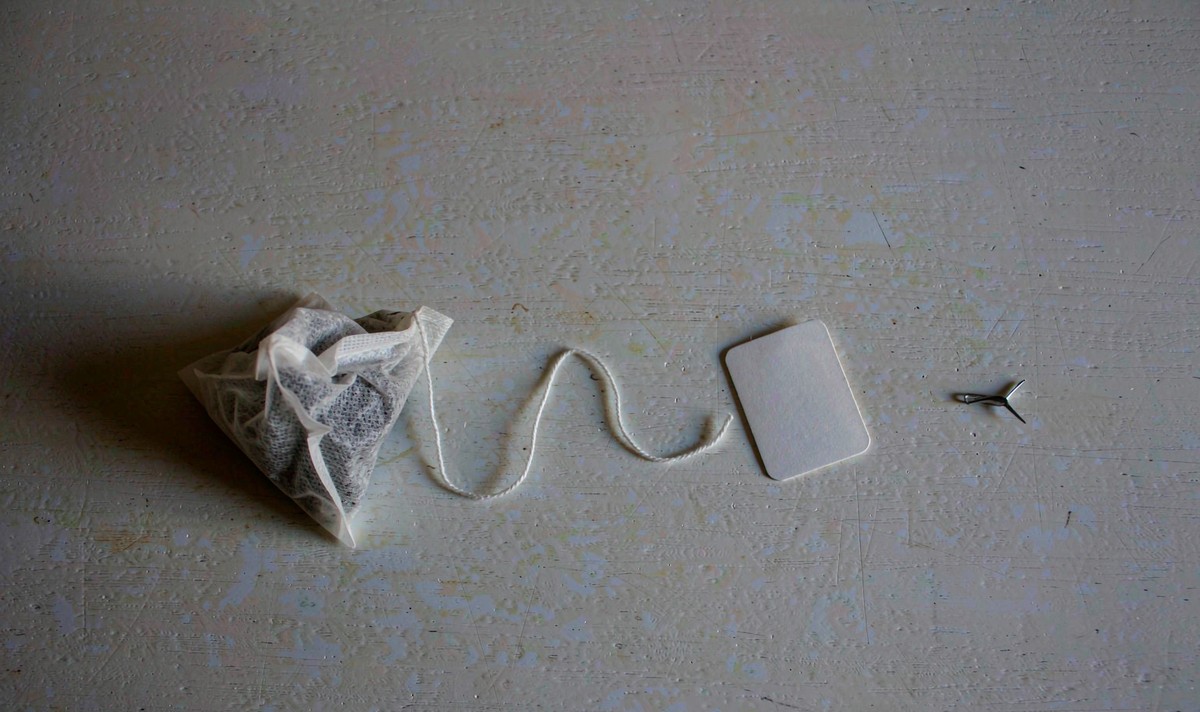
A tea bag is a bag, a string, a tag and a staple, and the claim on the carton covers the unit rather than the mesh.
- The string —— cotton composts; polyester does not, and polyester string is common because it runs better on the tagging machine.
- The tag —— paperboard with printing ink and often a thin coating. Compostable in principle, and only if the ink and coating are, which is a question for the printer rather than the tea packer.
- The staple —— steel, and a metal detector's problem rather than a compost one. It is also the reason some plastic-free constructions still fail a home compost test on the "no non-compostable residue" clause.
- The overwrap —— aluminium-laminated film is the strongest barrier and the least compostable component in the pack. A compostable bag inside an aluminium overwrap is a compostable bag in a landfill.
- The carton —— usually paperboard, often with a polyethylene coating on the inside face, and almost never mentioned in the claim.
The rule that sorts this out is simple to state and tedious to apply: the claim is only as true as its least compliant component. A brand that changes the mesh and keeps the polyester string has bought a new bag and kept the old problem.
The cost moves to the sealer
PLA does not take a heat seal the way nylon does. The sealing window is narrow, and a seam made outside it crystallises and cracks rather than failing visibly, which means the defect appears in the cup instead of at the machine.
Ultrasonic sealing is the method that suits it: the energy is delivered into the material rather than through a hot bar, the seam forms without a wide heat-affected zone. On a line set up for heat sealing, moving to PLA is not a roll change. It is a sealer change, and a sealer change brings a speed review with it, because the two processes do not run at the same rate.
This is where a compostable brief usually meets its budget. The material costs more per kilogram, and the machine that runs it costs more per hour. Both are real, and both are cheaper to absorb in the format decision than in a relaunch eighteen months later.
What we can and cannot document
The boundary matters, because it is where most supplier conversations go soft.
What this factory holds is a manufacturing scope. SGS certificate CN23/00007035, held by Anhui Wanhuacao Biological Technology Co., Ltd., is issued against the Codex Alimentarius code of practice CXC 1-1969 as revised in 2020, and its stated scope covers substitute tea, solid drinks, instant cereal powder and gel candy. Substitute tea is the item for a bagged herbal blend. Production licence SC11434160205012 covers eight dosage forms including tea in bag.
What the factory does not hold, and cannot issue, is a compostability certificate for a bag material. That document belongs to the converter who makes the mesh, and it names a standard, a test laboratory and a scope. A compostability claim on a retail carton rests on that document plus the market's own rules, not on a food manufacturing certificate of any kind.
A brand asking for the paperwork should therefore ask two separate questions and expect two separate documents. A supplier who answers both with one certificate has not understood either.
Four questions to put in writing
- Which of the three words does the bag earn, and against which standard? The answer should name the standard and the issuing body, not a logo.
- What is the sealing method, and does the line running it use the same method? A compostable mesh specified onto a heat-sealing line is a specification error that surfaces at the seam.
- What are the string, the tag, the staple and the overwrap made of? Each one is inside the claim, and any one of them can invalidate it.
- Which market, and does it add a national requirement on top of the EU one? Home compostability is a Member State layer, and it is cheaper to check before the print run.
If a bag material, a carton claim and a destination market are being decided together, send the brief with all three. The herbal tea OEM page sets out the formats this line runs and the certificate scope behind it, and the guide to private label herbal tea manufacturers covers how to compare suppliers who all claim the same thing. For the geometry that constrains the material in the first place, the companion piece on pyramid tea bag manufacturing explains why the four edges are sealed in one pass.
Ding Shaohua, Foreign Trade Manager, takes enquiries for this line. The same person answers on WhatsApp, TikTok, LinkedIn and Facebook.
FAQ
Is a paper tea bag biodegradable?
Usually only partly. A heat-sealed filter bag contains thermoplastic fibre blended through the web, around 20 to 25 per cent by weight in the published patent literature, because that fibre is what the hot jaw melts to seal the paper to itself. It does not compost, and it is spread through the sheet rather than confined to the seam. A bag closed by stitching or stapling, with no thermoplastic in the web, is the version that breaks down with the leaf, and it behaves like wet paper in a long steep.
Does PLA break down in a home compost bin?
Generally not to the standard a compostable claim implies. PLA is designed for industrial composting, where temperature, moisture and turning are controlled and the material is tested against a harmonised standard such as EN 13432. A home heap is cooler and less consistent, which is why the EU framework treats home composting of plastics as a separate case, and why the 2028 labelling rules require the pack to state which kind of composting is meant.
What changes for a tea brand selling into the EU in 2028?
From 12 February 2028 a permeable tea bag that is used and disposed of with the product must be industrially compostable, under Article 9 of Regulation (EU) 2025/40. From 12 August 2026 the bag also counts as packaging, which brings EPR registration and labelling obligations that did not apply before. From 12 August 2028 the harmonised labels apply, including the statement that the item is not suitable for home composting.
Can we keep the plastic string and just change the mesh?
The string sits inside the same claim, so changing the mesh alone usually leaves the claim untrue. Polyester string, a coated tag, a staple and an aluminium-laminated overwrap each sit between the product and the sentence printed on the carton. Work backwards from the claim to the components rather than forward from the mesh, and confirm the ink and coating with the printer, who is the party that actually controls them.