A 21-day detox kit looks like a simple product: one carton, 21 sachets, a number printed on each envelope. Then the first production question arrives. Which lot is day 21, and is it the same blend as day 1? Most of the decisions that make or break this product are taken at that point, long before anyone writes the carton copy.
Dandelion is a good place to see it, because the two parts of the plant used in tea are not variations of one ingredient. They are two materials with different harvest windows, different processes and different reasons to be in the bag.
Two harvests, one sachet
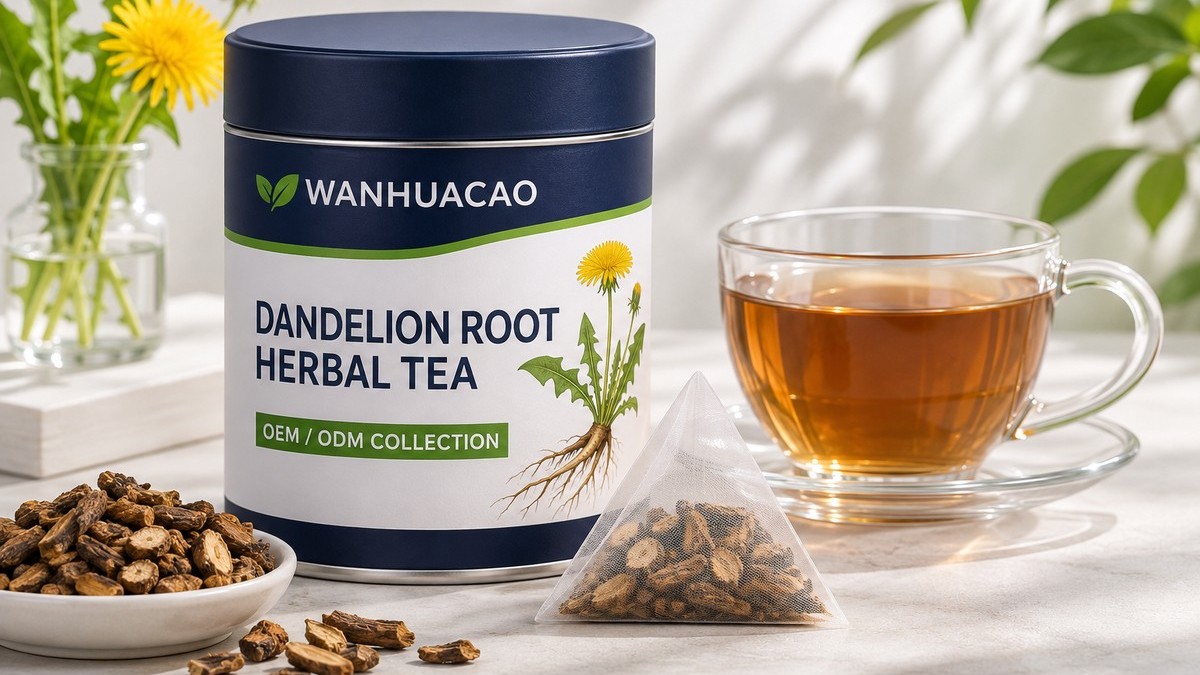
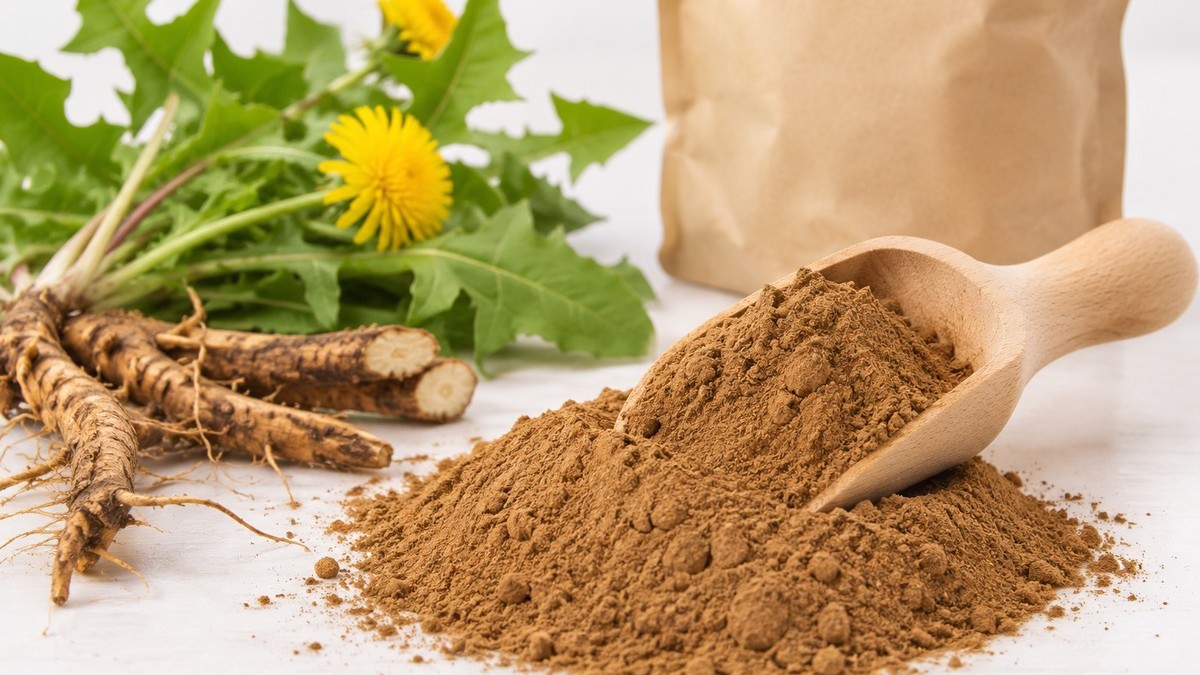
The leaf is cut in spring, before the plant flowers, when it is least bitter. The root is lifted in autumn, usually from a second-year plant, when it has spent the season storing carbohydrate underground. One is a leaf dried like any other leaf. The other is a root that will be washed, sliced, dried and, in most products sold as dandelion root tea, roasted.
That difference reaches the filling line. Leaf is bulky and light. Root is dense, and a diced root fills a sachet by weight without using much volume at all. A 50/50 blend by weight is therefore nowhere near 50/50 by volume, and the sachet looks uneven through the mesh, which is the only part of the product a consumer can inspect before buying.
The roast decides what the root is selling
Roasting is where the root earns its place. Heat drives Maillard reactions and generates pyrazines, which is where the coffee-like, nutty note comes from, and it darkens the material to the colour buyers associate with a roasted root.
The same heat works against inulin. Inulin is the storage carbohydrate that makes autumn root worth lifting, and it is heat-labile: a long roast at high temperature breaks the chains down and caramelises part of what is left. A product can be roasted for flavour or specified for inulin, and it cannot easily be both at the same intensity.
That is a brief decision with a number attached. Ask for the inulin figure on the roasted material rather than on the raw root, because the raw figure is the one that survives the sales conversation and not the process.
What the leaf brings that the root cannot
Leaf is where the minerals are, potassium among them, and it is where the bitterness is. Both matter for how the product is positioned: a leaf-forward blend tastes like a herb tea, and a root-forward blend tastes like a coffee substitute.
The leaf also decides the colour of the cup. Leaf gives a green-gold infusion; roasted root gives amber to brown. A blend that looks like one and tastes like the other is usually a blend where the ratios were set by weight and the appearance was never checked.
A 21-day kit is a lot-numbering problem
Once sachets are printed with day numbers, the kit stops being 21 units and becomes one unit with 21 positions. Three consequences follow.
All 21 sachets have to come from a single blend lot, or the kit carries a mixed lot and the day 1 to day 21 experience drifts. A blend run that does not cover the kit quantity forces either a larger batch or a documented split.
The printed envelope fixes the packing sequence. Day numbers cannot be sorted out afterwards, and a sachet with the wrong number cannot be reworked into another kit, so waste on a mis-sequenced run is total rather than partial.
The outer carton then has to carry a lot number that means something. One lot code covering 21 sub-lots of printed film is a traceability claim that will not survive an audit, and the fix is a coding scheme agreed before the film is ordered.
Detox has no definition, and no authorised claim
A detox tea is usually the same blend with a different frame around it, and the words on that frame are the part of the product with the least evidence behind them. Detoxification claims were reviewed by EFSA in 2011 and the evidence was found insufficient, so no such claim is authorised for a food in the European Union. Liver and kidney are organs, and a claim about supporting an organ is not on the authorised list either.
In the United States the same copy is judged as a structure or function statement if it stays general, and as a disease claim if it promises to remove toxins, treat a condition or produce a measurable health outcome. The standard disclaimer does not convert a disease claim into a permitted one.
None of this stops a product being sold as a 21-day programme. A programme is a format, and formats are allowed. The sentence that says what the programme does is where the exposure sits, and that sentence is usually written by whoever writes the carton, not by the formulator.
One note on the plant family
Dandelion is in the Asteraceae family, alongside ragweed, chrysanthemum and chamomile. People with an allergy to that family sometimes react to its members, and a brand selling into a market where allergen labelling is taken seriously should decide in advance whether the pack carries a note. It is a small line on a carton and a large problem in a complaint.
What to lock in the brief
- The leaf to root ratio, stated by weight and checked by volume, since the two do not agree.
- The roast specification for the root, with the inulin figure measured after roasting.
- The cut for each component, because a leaf cut and a root dice are two different specifications on one line.
- The kit structure: single lot or documented split, and the coding scheme for the printed film.
- The claim route, decided before the copy is written rather than after.
A custom tea blend manufacturer will build the blend to those numbers. An organic herbal tea manufacturer will also need the certificate chain for both components, since leaf and root are usually bought from different growers and certified separately.
Where the cost actually sits
Dandelion is not an expensive herb, and the material cost is a small share of a kit's price. The cost sits in the film, the printing and the packing sequence. A 21-day kit with a number on every envelope is a print job before it is a tea product, and a brand that budgets for tea and not for print will be surprised by the quote in a way that has nothing to do with the herb.
A detox tea private label project therefore tends to begin with the carton rather than with the blend, which is the right order here and the wrong one almost everywhere else.
That is also why the format question comes first. A single 100 g loose leaf pouch and a 21-sachet numbered kit can carry the same blend and have almost nothing else in common commercially. The pouch lives on a shelf and in short video under #herbaltea and #teatok. The kit lives in a subscription funnel, where the carton is the product.
For the packing side of a numbered kit, see individually wrapped tea bags. The audit questions that apply to a blended, dual-component product are in herbal tea private label manufacturers. The range sits on the herbal tea page.
Ding Shaohua, Foreign Trade Manager at WANHUACAO, works with brands on herbal tea programmes from blend brief to first shipment, including numbered kits and multi-component blends. Blending, bagging and overwrapping run in the same plant, under SGS CN23/00007035 covering herbal tea among other categories and SC11434160205012 covering eight dosage forms. Reach him on WhatsApp, TikTok, LinkedIn and Facebook.
FAQ
Is dandelion root tea the same as dandelion leaf tea?
No. The leaf is cut in spring and dried, and it gives a green-gold cup with the bitterness and most of the minerals. The root is lifted in autumn and usually roasted, which produces the amber colour and the coffee-like note. They are separate materials with separate specifications.
Does roasting destroy the inulin in dandelion root?
It reduces it. Inulin is heat-labile, so a long roast at high temperature breaks the chains down and caramelises part of what remains. Ask for the inulin figure measured on the roasted material, not on the raw root.
Why is a 21-day detox kit harder to produce than 21 tea bags?
Because the numbered envelope turns 21 units into one unit. All sachets have to come from a single blend lot or the kit carries a mixed lot, the packing sequence is fixed by the print, and a sachet with the wrong number cannot be reworked into another kit.
Can a dandelion tea claim to detox the liver?
Not as a food in the EU. Detoxification claims were reviewed by EFSA in 2011 and found insufficient, and organ claims are not authorised either. In the US the same wording is a disease claim if it promises to remove toxins or treat a condition.