
Three quotations landed in one inbox in the same week, all for "a 60-count bottle of multivitamin gummies, 500 mg of the blend". The lowest came in at a third of the highest.
None of the three suppliers was misrepresenting anything. The documents described three different products. One was 2.2 g a piece, one 3.5 g, one had a liquid centre. One was packed in a 250 ml PET bottle with a printed label, one in a 300 ml HDPE bottle inside a folding carton. One was quoted at a tonne, one at twenty tonnes, one at four hundred kilos "to start".
A gummy price is not a figure the factory picks. It is the arithmetic of a specification, and most of that specification is written by the buyer without anyone calling it a specification.
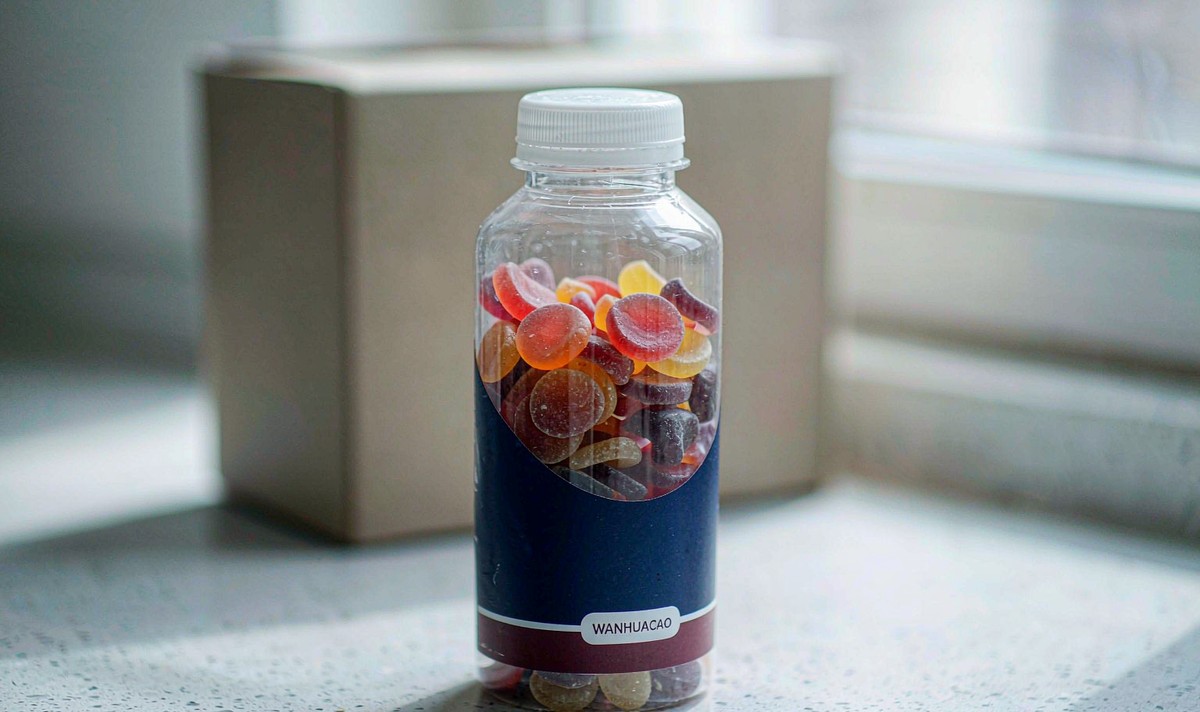
Three quotes, three products
Suppliers price in kilograms. Buyers buy in bottles. Everything that goes wrong in a commercial comparison happens in the gap between those two units.
A depositing line is costed as a mass of cooked syrup per hour, so the factory's own number is a price per kilogram of finished gummy. Converting that to a bottle price takes four multiplications: grams per piece, pieces per bottle, bottles per carton, cartons per pallet. Change any one and the bottle price moves while the kilogram price stays where it was.
This is why a buyer who asks "what is your price for gummies" gets an answer that cannot be compared to anything. The question has no unit. The useful version is a sentence with five numbers in it, and the rest of this page is about which five.
The six lines inside an ex-works price
Every quotation is the sum of the same six blocks. What varies is how each block behaves when the order size changes.
- Raw materials —— the sugar body, the gelling agent, the actives, the acid, flavour and colour. Priced per kilogram and almost entirely independent of order size.
- Packaging —— bottle, closure, label, carton, shipper. Priced per unit and also largely independent of order size, until the print run changes.
- Labour —— operators, line supervision, packing. Priced per hour, so it falls per piece as the run gets longer.
- Energy —— cooking, cooling, drying rooms, compressed air, air conditioning. Priced per hour, and heavier than most buyers expect in a drying climate.
- Overhead and quality —— QA staff, laboratory, documentation, licences, maintenance, depreciation. A fixed annual cost spread over whatever the year produces.
- Margin —— the smallest of the six in most quotes, which is why a supplier cutting price by a third is usually cutting something else.
The first two blocks do not fall with volume. The last four do, because they are paid for in time rather than in material.
Raw material: the body first, then the actives
Two very different cost behaviours sit inside one line item.
The body is sugar, glucose syrup and the gelling agent. It is bought by the tonne, priced against commodity markets, and it is the part of the gummy that has a floor price nobody can negotiate away. Pectin grade, gelatin Bloom strength and starch selection all move the number a few per cent in either direction.
The actives are bought by the kilogram and dosed by the milligram. A piece weighing three grams might carry five milligrams of an active, which is one part in six hundred. Change that active from a commodity vitamin to a trademarked branded ingredient and the cost of the whole piece can double without the gummy changing shape, colour or weight.
The third cost that never appears on a quotation is the overage. A label that promises a dose at the end of an eighteen-month shelf life requires more than that dose at the moment of depositing, because potency decays. The gap between the label and the kettle is a real cost, it belongs to the buyer, and a supplier who does not show it as a line is either absorbing it or not adding it. Both are worth knowing before the first invoice.
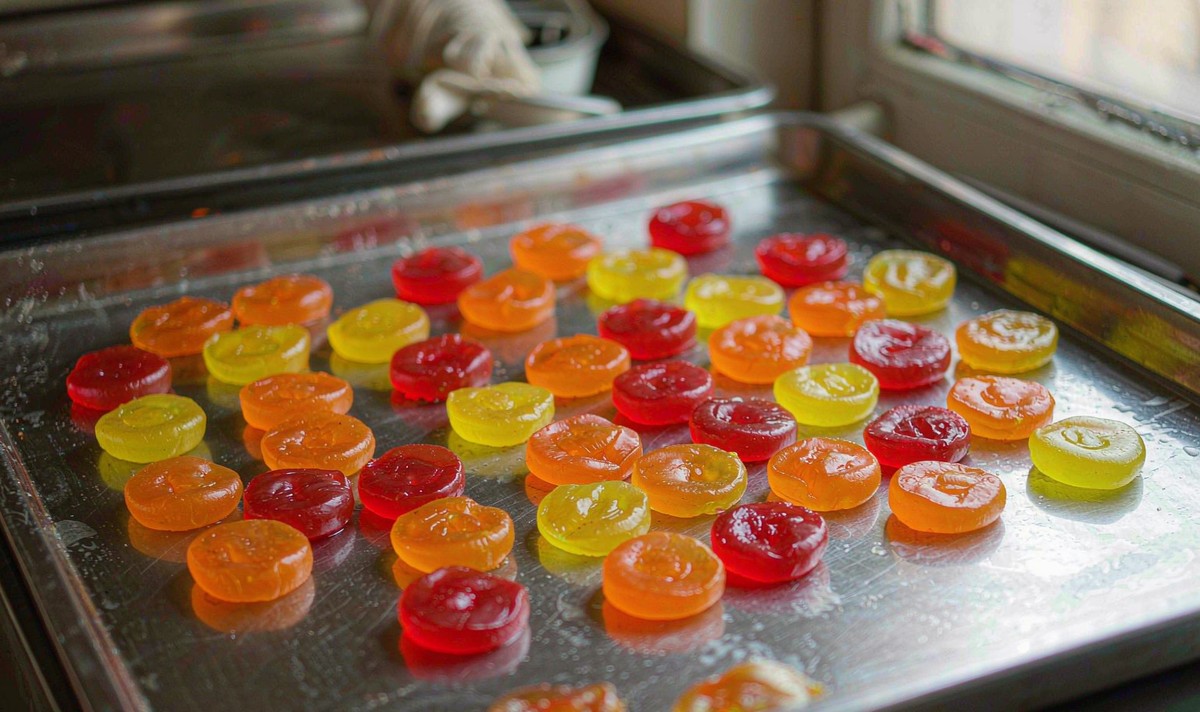
Loss belongs here too. Cooking, depositing, demoulding and coating all lose material, and a bill of materials that assumes perfect yield is a quotation that will be revised. Ask whether the assumed yield is stated, and what happens to the price when the second batch comes in below it.
Packaging is where quotes quietly diverge
Two suppliers can quote the same gummy and differ by forty per cent on the pack alone, and both can be honest.
A 60-count bottle of 2.2 g pieces and a 60-count bottle of 3.5 g pieces are not the same bottle. The second needs more volume, more resin, a larger carton and a bigger shipper, and it pays more freight for the same count. "Sixty count" describes a habit of counting, not a shipping unit.
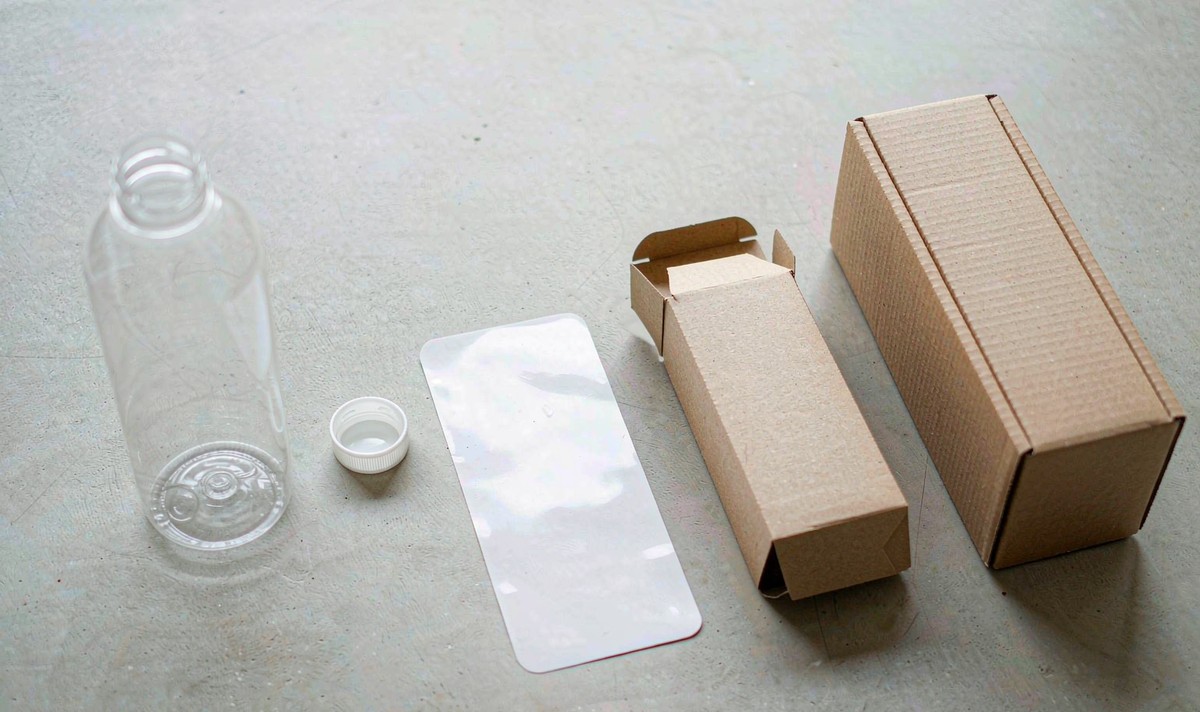
Then there is the closure. A plain screw cap, a cap with an induction seal, a cap with a desiccant compartment and a child-resistant closure are four different purchases at four different prices. The label matters as much: paper with a varnish, clear BOPP with a reverse print, or a shrink sleeve each carry a different unit cost and a different minimum print run.
The last packaging cost is invisible on a quotation and obvious on the freight invoice. Light, bulky goods are charged by volume, not by weight, so the bottle that saves a gram of resin can cost more to ship than it saves. A buyer comparing two delivered prices is comparing volume as much as material.
Volume does not discount the gummy, it dilutes the fixed part
A production slot carries costs that exist whether the run is one tonne or ten: cleaning and changeover, the temperature ramp at the start until the seal and the deposit weight are stable, the first pieces rejected until they are, the release testing, the line time itself.
Spreading those over one tonne is expensive per piece. Spreading them over five tonnes costs a fifth as much per piece, and the material inside each piece has not changed at all.
This produces the shape of every gummy price curve: steep between the minimum and a few multiples of it, then almost flat. A brand that expects the curve to keep falling will spend a year negotiating a discount that the material cannot fund.
The same logic applies to flavours. Three flavours at one tonne each occupy three slots and pay the fixed cost three times. Three flavours at three tonnes each occupy three slots and pay it three times on a better base. Six flavours at one tonne each is a decision about six machine slots, and it is usually made by a marketing calendar rather than by a cost sheet.
What certification and testing add
Certification is paid for by the facility rather than by the order. It is bought once, renewed on a cycle, and shows up inside overhead rather than on the line for your batch.
Testing is the opposite. It is per batch or per shipment, and its price depends entirely on which tests are named. A certificate of analysis carrying microbial counts, moisture and appearance costs a fraction of one carrying potency by HPLC, uniformity across sampling points, heavy metals by ICP-MS and a full microbiological panel.
The limits are set by the destination market, not by the factory. In the European Union, Regulation (EU) 2023/915 caps lead in food supplements at 3.0 mg/kg, cadmium at 1.0 mg/kg and mercury at 0.10 mg/kg. Testing against a limit means choosing a method with a detection limit below it, and that method costs more than a screen.
A quote that says "COA included" has told you nothing. The question is which tests, on how many samples, at which laboratory, and whether the report is issued for the batch or for the shipment.
Five numbers to ask for before comparing
A quotation becomes comparable once these five are on the page:
- Grams per piece and pieces per bottle, because that fixes the mass the factory is pricing.
- Milligrams per piece of every active, plus the overage, because that is where the swing is.
- The pack, itemised —— bottle material and volume, closure type, label stock, carton, shipper.
- Batch size and the number of SKUs sharing it, because that is the fixed cost denominator.
- What the price includes —— ex-works or delivered, testing, artwork and plates, tooling, and the currency and validity of the offer.
Two quotes that agree on all five are comparable and the difference is real. Two quotes that disagree on any one of them are not quotes for the same product, and the cheaper one is usually cheaper because it is smaller.
Our terms on this line
Gummy orders start at one metric ton. Sampling is free, and lead time is 15 to 30 days after the deposit is received. A quotation covers the product and the pack together, so the fastest route to a number that holds is to send the formula requirements, the estimated quantity and the packaging in one message rather than three.
If the brief is still moving, the functional gummies page sets out the formats, the minimums and the certificate scope, and the dietary supplement contract manufacturer piece covers how a factory reads the same brief from its own side. Where the formula is the open question rather than the price, the sugar-free manufacturing guide and the comparison of pectin and gelatin bases both change the material line before they change anything else. Send the five numbers to start a quote.
Ding Shaohua, Foreign Trade Manager, handles quotations for this line. The same person answers on WhatsApp, TikTok, LinkedIn and Facebook.
FAQ
Why is the same 60-count bottle quoted at three different prices?
Because the three bottles are not the same product. Piece weight, active dose, overage, bottle size, closure and batch size all sit inside the price, and a 2.2 g piece in a 250 ml bottle at one tonne is a different object from a 3.5 g piece in a 300 ml carton at twenty tonnes. The prices are consistent with the specifications, which is why the specifications have to be compared first.
Does a larger order always mean a lower price per gummy?
No. It lowers the fixed part, which is the labour, energy, changeover and quality cost per piece, and that part stops shrinking once the run is long enough to amortise a slot. The material inside the gummy is bought at market price whatever the volume, so beyond a few multiples of the minimum the curve flattens. A buyer negotiating hard at ten times the minimum is negotiating over a smaller remainder than expected.
Should I compare ex-works or delivered prices?
Delivered, if the goods are travelling far, because freight is charged on volume and a bulky pack moves the answer. Ex-works is the cleaner comparison for the product itself, and the honest approach is to get both: ex-works to compare manufacturing, delivered to compare what actually lands. Ask which Incoterm the number is quoted on before anything else.
Why does the same formula cost more in a second flavour?
Because a second flavour is usually a second production slot, and a slot carries the cleaning, the temperature ramp and the first-piece rejection whatever its size. Colour and flavour also have their own minimum purchase quantities, and a small flavour run pays for a full container of flavour. The lever is combining flavours into longer runs. The flavour price itself has very little room in it.