
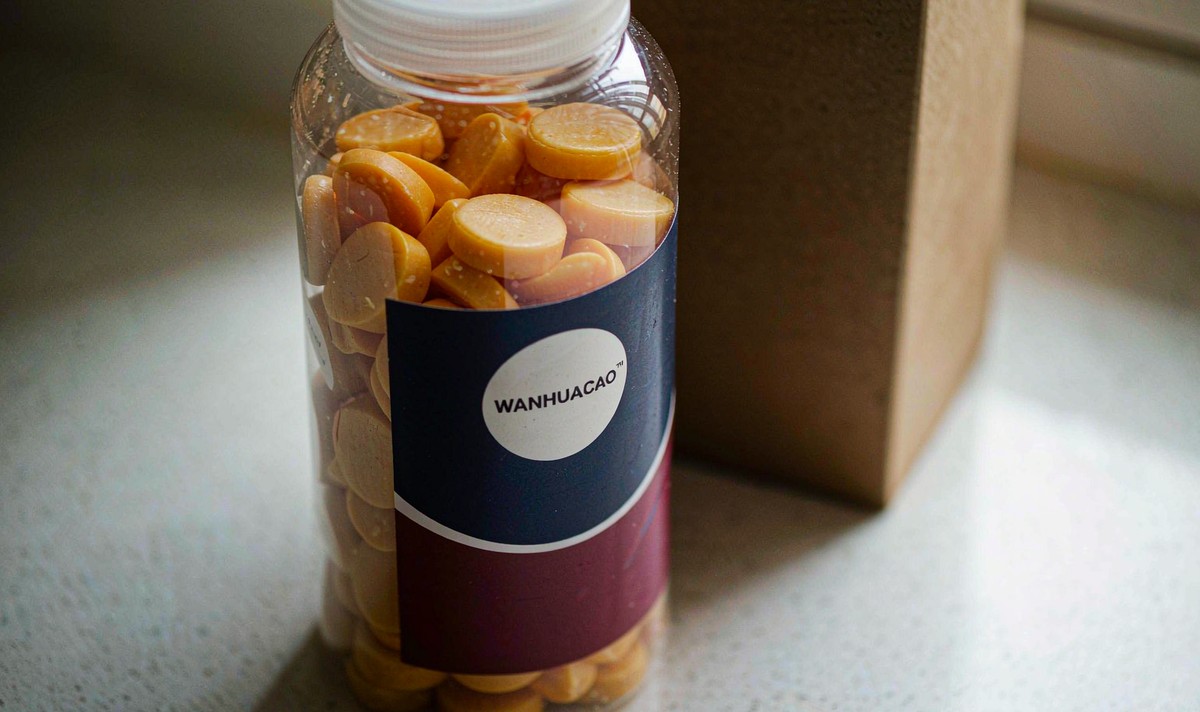
Three messages arrived from one customer in one month. The gummies were sticking together in the bottle. The surface looked wet. By month nine they were hard enough to crack a tooth.
Three different words for one mechanism. Water was moving, and the pack had not stopped it.
Three complaints, one mechanism
A gummy is a gel holding water at a water activity somewhere between about 0.50 and 0.65. The pack holds an atmosphere with its own humidity. Nothing separates the two except a wall with a permeability, and water moves across that wall until the two sides agree.
Which way it moves decides which complaint you get.
If the piece gains water, the surface layer of sugar and polyol dissolves into a film, and the pieces stick to each other and to the bottle. If the piece loses water, the gel network tightens, the bite goes from elastic to tough, and by the end of the shelf life the product is a different food. If the water moves unevenly inside the piece, sugar crystallises at the surface and the gummy develops a white bloom that looks like mould and is not.
All three are the same physics with different signs. Fixing them one at a time means fixing none of them.
Water activity sets the direction
The single most useful number in a gummy specification is not moisture content. It is water activity, because that is the number the atmosphere negotiates with.
A piece at 0.55 sitting in an ambient 60 per cent relative humidity has a driving force pushing water inward, and it will gain weight until it equilibrates. A piece at 0.55 in a dry winter warehouse at 30 per cent has the force pointing the other way. The same product, the same pack, two failure modes, depending on where it is stored and when.
This is why a water activity specification needs a range and a target rather than a maximum. A product set at the top of the range has no headroom in a humid market. A product set at the bottom has no headroom in a dry one.
Sticky is also a temperature story
Water activity explains the direction; temperature explains the timing.
The sugar and polyol phase in a gummy is an amorphous glass, and an amorphous glass has a glass transition temperature. Below it, the matrix is hard and the surface is dry to the touch. Above it, the matrix softens, molecular mobility rises, and the surface becomes tacky even at constant water content.
A gummy shipped in a container across a tropical summer spends weeks near or above that transition. The pack may be perfect and the product may still arrive fused into a block, because the failure was thermal rather than osmotic. This is the reason "do not exceed 25 °C" appears on so many gummy cartons, and the reason it is ignored by so many distributors.
The pack is a rate, not a barrier
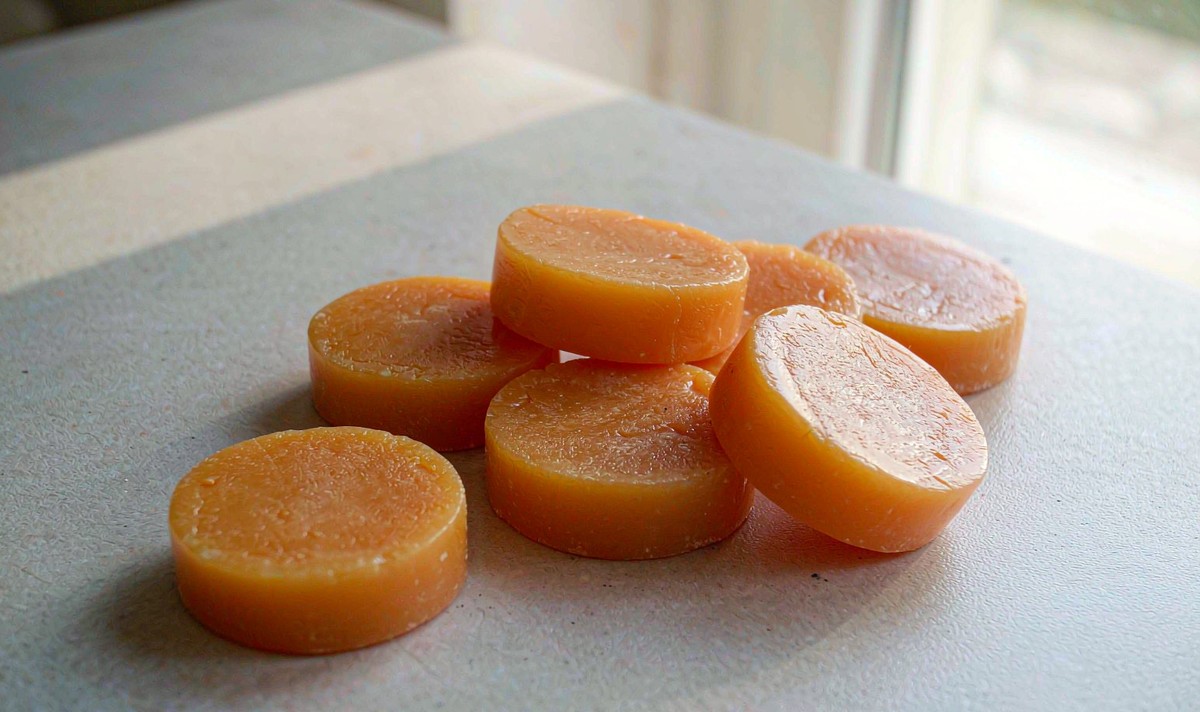
No flexible pack is a wall. Every one of them is a rate, and the specification is how many grams of water cross a square metre per day under stated conditions.
The materials sort themselves clearly. An aluminium foil laminate is close to absolute, a metallised polyester is good, a clear PET or OPP film is a compromise, and a paper-based structure is a decision to accept moisture. For bottles, PET and HDPE both transmit water vapour, and the wall thickness, the closure and the liner do more work than the resin choice.
Geometry matters as much as material. A stick pack has a high surface area per gram and a thin seal, so it lives or dies on the film. A bottle has a low surface area per gram and a large headspace, so it lives or dies on the closure and on the volume of air sealed inside.
Seals fail before films do
In practice, the film is rarely the part that lets water in. The seal is.
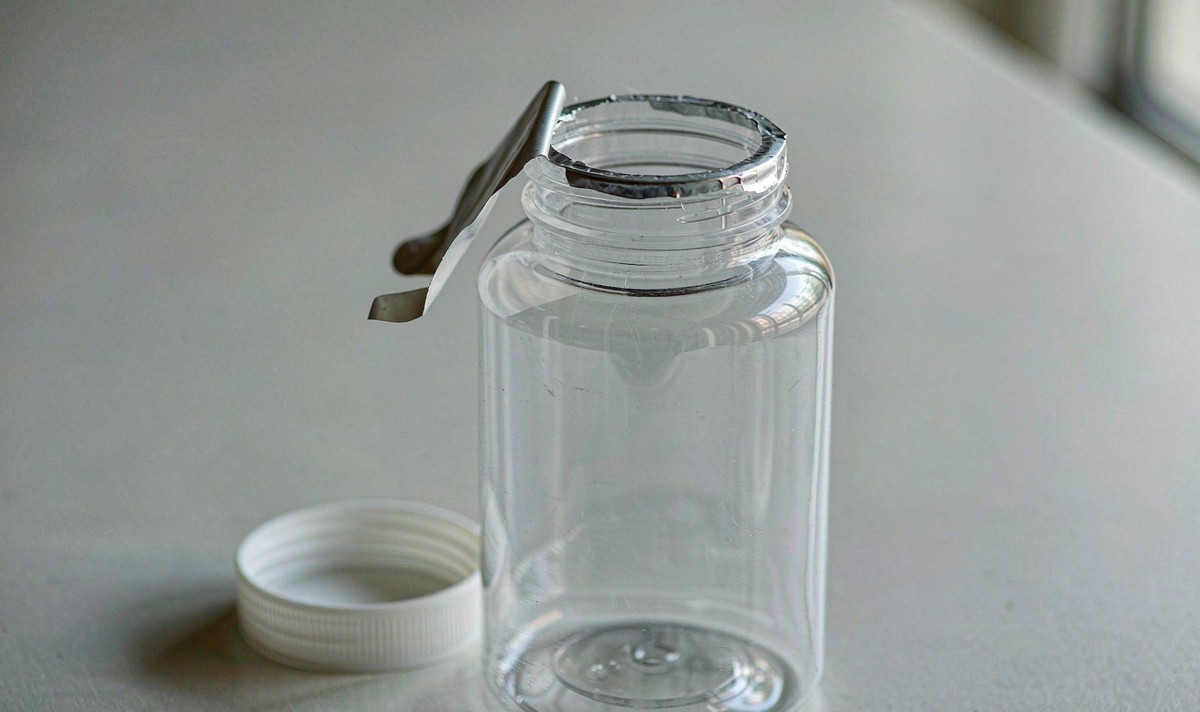
On a bottle, the induction seal has to be bonded across the whole landing area, and a seal that is complete on three quarters of the circumference is a leak with a good appearance. Cap torque has to be inside a window: too low and the liner does not compress, too high and the liner deforms and takes a set. Both are measurable, and neither is measured unless somebody writes it into the specification.
On a sachet or stick, the seal strength and the seal integrity are separate tests. Strength is a peel number. Integrity is a dye penetration or a burst test that finds the channel a peel test cannot see. A pack can pass a strength test and fail integrity on the same day.
What the regulation adds, for iron
Packaging is a quality topic until the formula contains iron, and then it becomes a legal one.
Under the Poison Prevention Packaging Act, 16 CFR 1700.14(a)(13) requires child-resistant packaging for dietary supplements containing 250 mg or more of elemental iron in a single package at a concentration of 0.05 per cent or more by weight for non-liquids. The rule has exemptions, including iron present solely as a colorant and powdered preparations below 0.12 per cent iron by weight, and those exemptions are narrower than they look.
Separately, 21 CFR 101.17(e) requires a label warning on iron-containing dietary supplements in solid oral dosage form about the risk to young children. A gummy is a solid oral dosage form, which makes both provisions apply to a product that most people would describe as a sweet.
Desiccants help, and they also mislead
A desiccant in the bottle is a real tool and a common misunderstanding.
It works by holding the headspace humidity low, which reduces the gradient across the bottle wall and slows the ingress. What it cannot do is hold that humidity for the whole shelf life unless it is sized against the transmission rate, and almost nothing on a specification sheet says whether it was.
A sachet sized for three months in a bottle that will sit for eighteen is a sachet that saturates in month four and then behaves like a small wet object. The number to ask for is the calculated capacity against the measured ingress over the declared shelf life, and the answer is a calculation rather than a material name.
Two practical rules sit alongside. The desiccant must never be in direct contact with the product, and it must be food grade and declared. A customer who finds an unlabelled sachet in a supplement bottle has found a complaint, not a feature.
Four numbers on a packaging specification
A packaging specification that can be argued with has four numbers and a test method on it.
- Water activity of the piece, with a target and a range, measured at release.
- Water vapour transmission rate of the pack, in grams per square metre per day, with the test condition stated, since the number means nothing without it.
- Headspace and closure, meaning the bottle volume, the air sealed inside it, the liner type and the torque window.
- Seal integrity method and acceptance, by dye penetration or burst rather than by peel strength alone.
Add the storage condition the shelf life is claimed at, and you have a specification that predicts the three complaints rather than responding to them.
Where this sits on our line
Gel candy is inside the scope of SGS certificate CN23/00007035, held by Anhui Wanhuacao Biological Technology Co., Ltd., against Codex Alimentarius CXC 1-1969 as revised in 2020. The certificate covers the product. It does not cover a pack, and a pack is a separate purchase with its own supplier and its own paperwork.
The functional gummies page sets out the bottle, pouch and custom formats we run, and gummy shelf life and stability covers the storage programme that decides which failure arrives first. Where the base system is still open, pectin versus gelatin explains why the two gels let go of water at different rates. Send the pack concept and the market to start the discussion.
Ding Shaohua, Foreign Trade Manager, handles packaging and specification questions for this line. The same person answers on WhatsApp, TikTok, LinkedIn and Facebook.
FAQ
Why do my gummies stick together in the bottle?
Almost always because the piece gained water and the surface sugars dissolved. That happens when the water activity of the gummy sits below the humidity of the storage environment, or when the closure lets vapour through. The fix is either a lower water activity target, a better moisture barrier, or a shorter ambient exposure, and the specification should be able to tell you which of the three failed.
Does a foil pouch solve the problem completely?
It solves the moisture part almost completely, which is why high-barrier laminates are used for long shelf lives. It does not solve temperature, so a pouch that crosses a tropical summer can still arrive with the product fused. It also moves the cost, because a laminate is more expensive per unit and usually needs a different filling line.
Do I need child-resistant packaging for a gummy?
Only if the formula triggers it. Under 16 CFR 1700.14(a)(13), dietary supplements with 250 mg or more of elemental iron in a single package, at 0.05 per cent or more iron by weight, require child-resistant packaging in the United States. Most gummies are nowhere near that threshold, and an iron gummy sold at a meaningful dose can cross it.
Is a desiccant sachet enough on its own?
Only if it is sized against the moisture that will enter the pack over the whole shelf life, which is a calculation rather than a standard sachet. A one-gram silica sachet in an eighteen-month bottle saturates early and then stops helping, and the product behaves as though it were never there.