
A four gram gummy will hold 250 mg of milk thistle extract standardised to 80 per cent silymarin, and that is 200 mg of silymarin in a single piece. The lower end of the dose used in European herbal medicine is 200 mg a day. So this is one of the few botanicals where the confectionery format is not the limiting factor: one chew can carry the whole daily figure, and a second piece takes it to the top of the range.
What limits the product is somewhere else. It is in the extract grade behind the front panel, in the method behind the silymarin number, and in the fact that the word liver cannot be printed by the ingredient the pack is named after.
What the extract grade decides
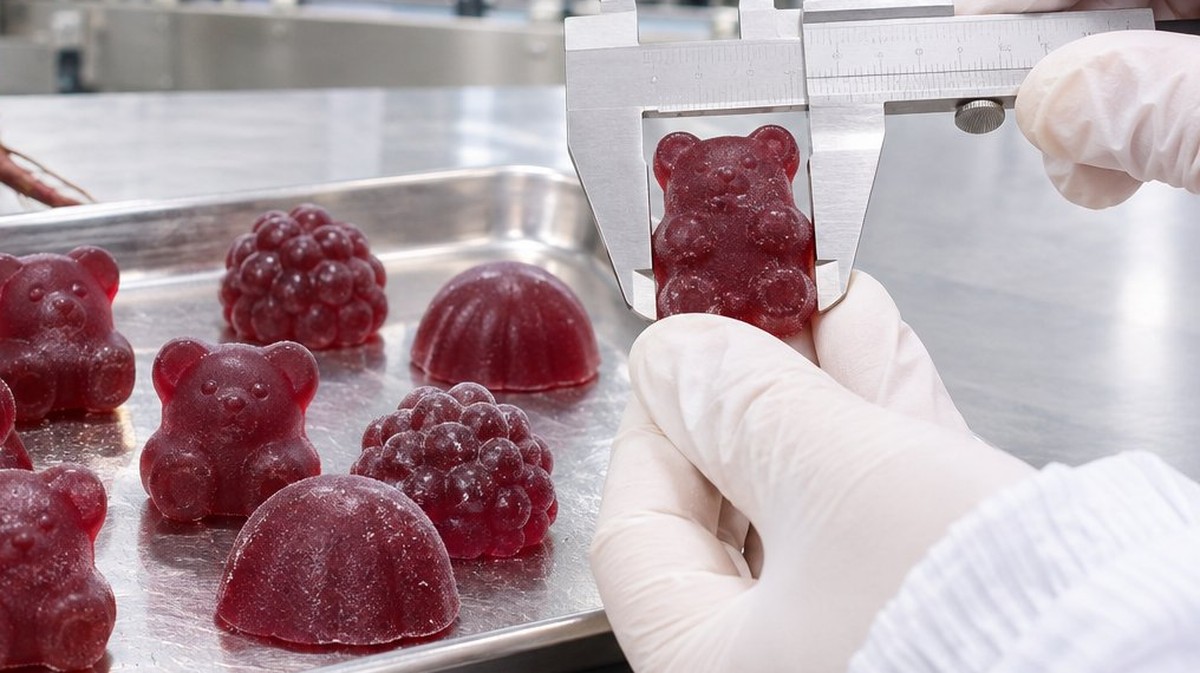
Milk thistle fruit contains between 1.3 and 3 per cent silymarin, expressed as silibinin, according to the assessment report the European Medicines Agency published for the herbal monograph. The fruit is mostly fatty oil, protein and starch. Silymarin is what the solvent pulls out of it.
That ratio is the whole argument about front panels. A 4:1 extract means four kilograms of fruit went into one kilogram of powder, so at full yield the powder carries four times the fruit's silymarin, somewhere around 5 to 12 per cent. Real extraction yields are below 100 per cent, which puts the practical figure lower. A gummy advertising 1,000 mg of milk thistle made from a 4:1 extract is therefore a gummy carrying on the order of 50 to 120 mg of silymarin, and if the 1,000 mg is an "equivalent" figure standing for 250 mg of extract, the silymarin lands between 12 and 30 mg.
None of that is visible on the front. Two bottles can both read 1,000 mg, one made from 4:1 fruit extract and one from a standardised extract at 45 per cent, and the difference in delivered silymarin is a factor of five to ten.
The standardised grade is defined. The European Pharmacopoeia monograph for refined and standardised milk thistle dry extract sets the nominal silymarin content between 30 and 65 per cent by mass, with the batch required to fall between 90 and 110 per cent of the declared figure. It also fixes the composition inside that number: silibinin A and B together make up 40 to 65 per cent of the total silymarin, silicristin and silidianin 20 to 45 per cent, and the two isosilibins 10 to 20 per cent. A supplier who quotes a percentage without saying which of those ranges the batch sits in is quoting a number, not a material. The same discipline is set out under botanical extract specifications.
The silymarin number depends on the method
The pharmacopoeial assay separates six flavonolignans on a C18 column and reads them at 288 nm, then sums the peak areas and expresses the total as silibinin against a reference extract. Six peaks, one expression. Any method that sums a different set of peaks, or reads a different wavelength, produces a different number from the same kilogram of powder.
The EMA assessment report for milk thistle fruit contains the comparison in its own table of licensed preparations. One extract is described as corresponding to 70 mg of silymarin by spectrophotometry and 60 mg by HPLC. Another reads 140 mg by spectrophotometry and 108.2 mg by HPLC. That is a 14 per cent gap on the first and a 23 per cent gap on the second, between two methods applied to the same material.
A specification written as "80 per cent silymarin" therefore does not describe a substance. The one that does names the method, the detection wavelength, the reference standard, the six peaks included in the sum, and the acceptance range for each of the three groups inside the total. Goods inwards can check that specification. It cannot check a marketing percentage. Identity testing on the incoming material covers the other half of the problem, and is described under botanical extract identity testing.
Where the liver claim comes from
In the European Union there is no authorised health claim for milk thistle. The botanical claims on the Article 13.1 list were put on hold pending assessment and never came off it, and nothing has been authorised for silymarin or for the fruit since.
There is, however, a document that uses exactly the wording a brand wants. The HMPC monograph for milk thistle fruit lists a traditional use: relief of symptoms of digestive disorders, a sensation of fullness and indigestion, and support of liver function, after serious conditions have been excluded by a doctor, in adults. That is a monograph for a traditional herbal medicinal product. It exists to register a medicine. A food supplement that puts "supports liver function" on the pack because the monograph says so is borrowing a medicinal claim, and the borrowing is what a competent authority looks at when it decides which side of the line the product sits on.
The only food claim in this category that contains the word liver belongs to choline. Commission Regulation 432/2012 authorises three function claims for it, and one of them is the maintenance of normal liver function. The condition of use is 82.5 mg of choline per 100 g or 100 ml, which in a supplement is read against the portion. That is the claim carrier in a liver support gummy, and it is rarely the ingredient on the front of the bottle.
What 82.5 mg of choline does to a four gram piece
Choline bitartrate is 41.1 per cent choline by mass, so a piece delivering 82.5 mg of choline carries 200 mg of the salt. In a four gram gummy that is five per cent of the piece, roughly the same order as the herb it sits next to.
The salt brings two things the formula did not budget for. The first is water. Choline bitartrate is hygroscopic, sour, and carries a faint trimethylamine note, which is why the bitartrate is preferred over the chloride in supplements at all: the chloride is worse on both counts. A hygroscopic powder at five per cent loading pulls moisture in the pre-weigh room and again in the bottle, and the water activity that decides shelf life is set by everything in the piece, not only by the syrup.
The second is acid. The bitartrate counter-ion is 58.9 per cent of the salt by mass, so 200 mg of choline bitartrate brings about 118 mg of tartrate into a four gram piece, close to three per cent of the mass. A gummy normally carries its acidulant at a fraction of one per cent. A five per cent solution of the salt sits at pH 3.2 to 3.6 on its own. Adding it to a pectin gel that already sets at pH 3.0 to 3.5 moves the system toward the edge of its setting window, and in a gelatin base it moves the pH toward the isoelectric point, where gel strength is weakest.
So the ingredient that carries the claim is also an acidulant and a moisture source, and it arrives at ten times the dose of the acidulant the formula was built around. That is a reformulation, not an addition.
Two actives pulling water in opposite directions
Silymarin and choline bitartrate want opposite things from the same gel.
Silymarin is sparingly soluble in water. Absolute bioavailability of silibinin is under one per cent, which is why the phospholipid complex forms exist and why trial results vary between formulations. In a gummy, an ingredient that does not dissolve does not disappear: it stays as suspended particles, and the piece becomes a suspension rather than a solution. Particles that are not wetted out before the cook stay as particles, and a hydrophobic powder dropped into a hot syrup tends to float and clump rather than disperse.
Choline bitartrate goes the other way. It dissolves freely and then keeps pulling water toward itself, so the piece it sits in has a wetter interior at the same cure time.
A line running both has to pre-disperse the silymarin against part of the sugar or polyol to wet it out, add the choline as a solution so it does not clump, and then cure to a water activity that satisfies the least tolerant of the two. Every 0.05 of water activity is worth roughly a doubling of some degradation rates in a gel, and the same water keeps the chew soft. There is a workable window, and it is narrower than the window for a vitamin gummy. Cure behaviour is covered further under gummy shelf life and stability.
What the published work supports
The clinical record for oral silymarin is mixed, and the honest version of it belongs in the brief and not in the marketing deck.
The Cochrane review of milk thistle for alcoholic and hepatitis B or C liver disease found no significant effect on mortality when only the higher-quality trials were counted, with liver enzyme improvements confined to the trials of lower methodological quality. A randomised trial in chronic hepatitis C published in 2012 used silymarin at 420 mg and at 700 mg three times daily and found no difference from placebo on the primary outcome. The European herbal tradition, by contrast, rests on decades of use, which is why the EMA monograph is a traditional-use monograph and not a well-established-use one.
What that leaves a product with is an amount and a description. A pack can say how much extract, how much silymarin and how much choline it contains, and in the United States it can carry a structure or function statement with the DSHEA disclaimer. It cannot say the product treats, prevents or improves a liver condition in either market, and the number on the front does not change that.
What a bulk order specifies
A bulk supplement manufacturer receives a purchase order that names a mass, not a claim, and the difference decides what the factory can quote.
A 500 kg slurry at 250 mg of extract per four gram piece takes 31.25 kg of extract. That is one and a quarter 25 kg drums, so a batch consumes a drum and leaves a part drum behind, and the part drum is where the moisture problem starts. Extract that has taken up water in storage weighs the same and carries fewer dry solids, which arrives at the depositor as a heavier piece with a lower silymarin content. Recording the assay at receipt and again at use gives two numbers and one spread, and the spread is the storage answer.
The second thing the order has to specify is which claim architecture the batch is being built for. That is the difference between a bulk order and a contract manufacturing project. On a bulk order, loose gummies leave in lined cases, the buyer owns the pack and the stability study, and the plant's job ends at the drum. On a contract manufacturing or CDMO project, the plant signs the stability study that supports the expiry date, holds the colour and flavour standards, and has to know before the first batch whether the front panel will rely on choline or on nothing at all, because that decides whether 200 mg of a hygroscopic salt is in the formula.
The tags that bring these enquiries, #contractmanufacturing and #CDMO, describe the second kind of order, and the question behind them is usually the same: who signs what. Three signatures matter here. The silymarin specification is signed by whoever writes the method. The stability study is signed by whoever ran it in the pack being sold. The claim is signed by whoever is willing to defend it in the target market. A quotation that does not say which of the three the plant is taking on is not yet a quotation.
Ding Shaohua, Foreign Trade Manager at WANHUACAO, works with brands and distributors on functional gummy programmes from brief to first shipment, in bulk and in private label, including botanical extracts and nutrient salts. The plant operates under SGS CN23/00007035 for gel confectionery and SC11434160205012 covering eight dosage forms, sports nutrition supplements among them. Reach him on WhatsApp, TikTok, LinkedIn and Facebook.
FAQ
Does a gummy hold a real dose of milk thistle?
Yes, and that is unusual for a botanical. A four gram piece at 250 mg of extract standardised to 80 per cent carries 200 mg of silymarin, which is the lower end of the 200 to 400 mg daily range used in European herbal medicine. Two pieces cover the whole range. The constraint on this product is not the mass of the piece.
Why is there no liver claim on the pack?
Because no health claim for milk thistle has been authorised in the European Union. The wording "supports liver function" does exist in the HMPC monograph for milk thistle fruit, but as an indication for a traditional herbal medicinal product, not as a food claim. The only liver claim available to a food supplement in the EU belongs to choline, at 82.5 mg per portion.
Does the silymarin percentage tell me the dose?
Only if it comes with the method. The pharmacopoeial assay sums six flavonolignans and expresses them as silibinin, and the EMA's own table records one extract as 70 mg by spectrophotometry and 60 mg by HPLC, and another as 140 mg against 108.2 mg. A percentage without the method, the wavelength and the reference standard cannot be converted into a dose and cannot be checked at goods inwards.
Can the same formula be sold in the United States and the European Union?
The formula can travel. The claim cannot. In the United States, milk thistle is a dietary ingredient and a structure or function statement is available with the DSHEA disclaimer. In the European Union the same pack cannot carry a liver claim for the herb at all, so a brand selling both markets usually ends up with two artworks from one batch, and the batch has to be designed around the stricter label from the start.