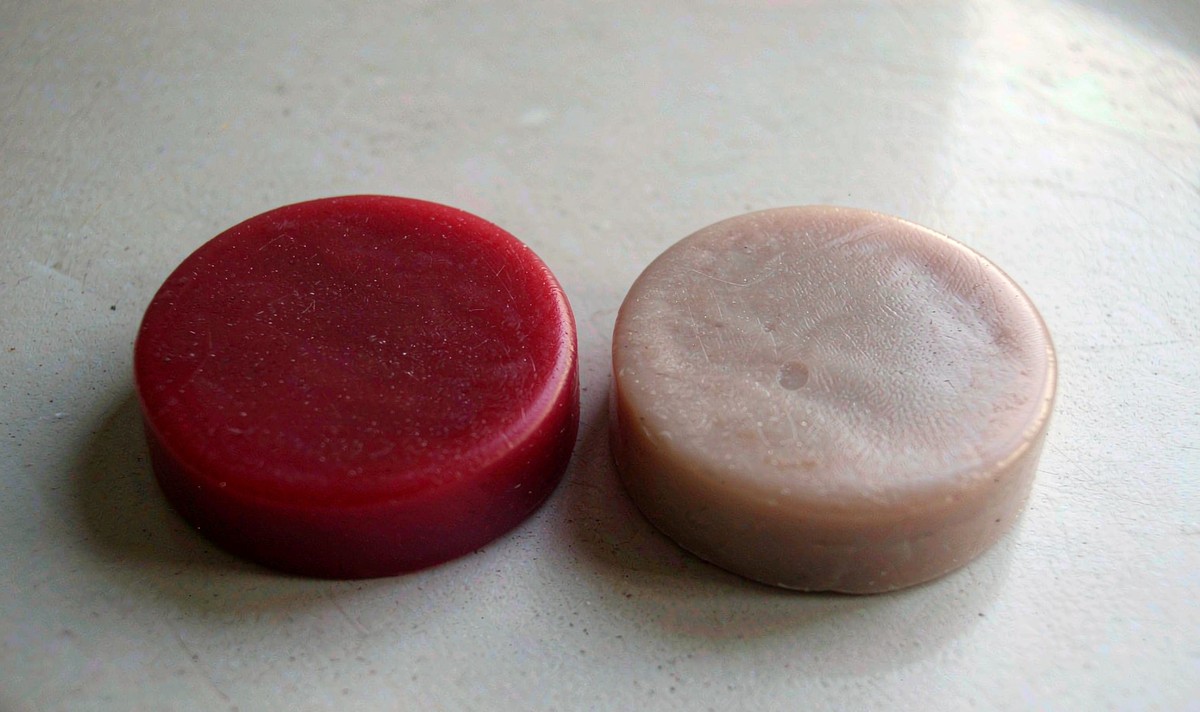
A jar of raspberry gummies sat in a shop window through July. By August the top layer had gone from deep red to a dull pink-beige. The bottom of the jar was unchanged.
Nothing had bleached. The colour had migrated, because the light and the heat reached the top layer and the anthocyanin in it was busy doing what anthocyanins do. Two hundred grams of the same batch, ten centimetres apart, were now two different products.
That is the real cost of moving a gummy from synthetic to natural colour. Not that the shade is weaker, but that the shade keeps moving after the pack is closed.
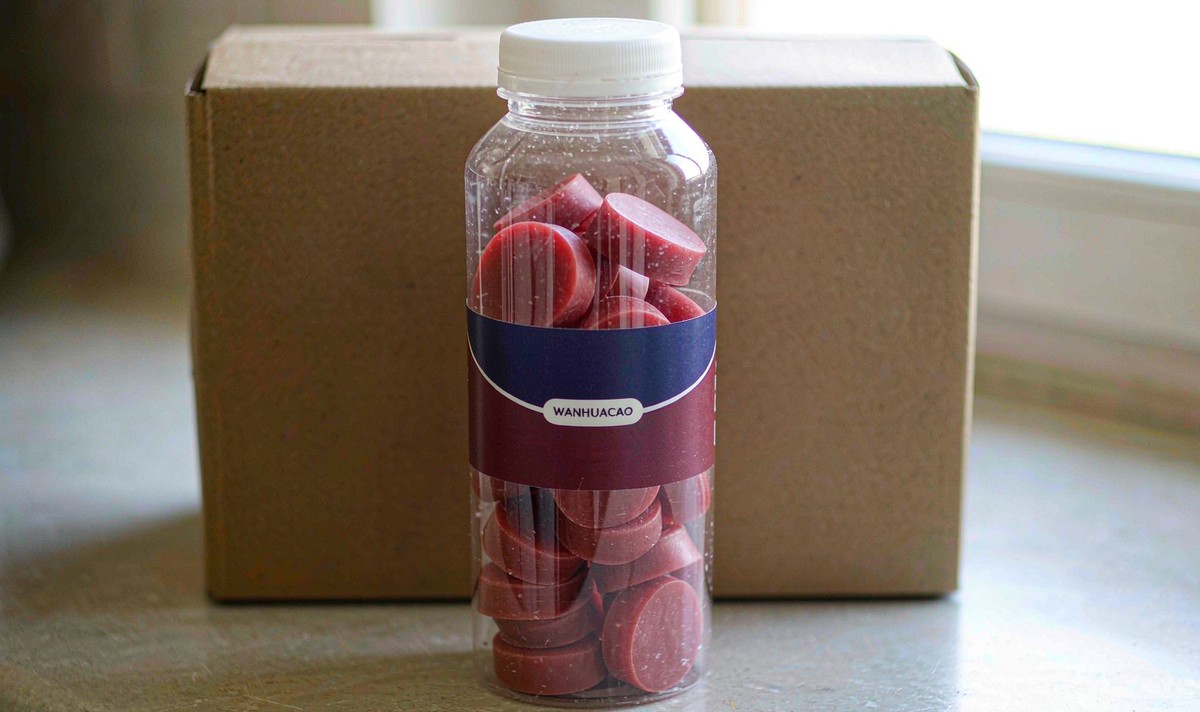
Three colours that behave like three different materials
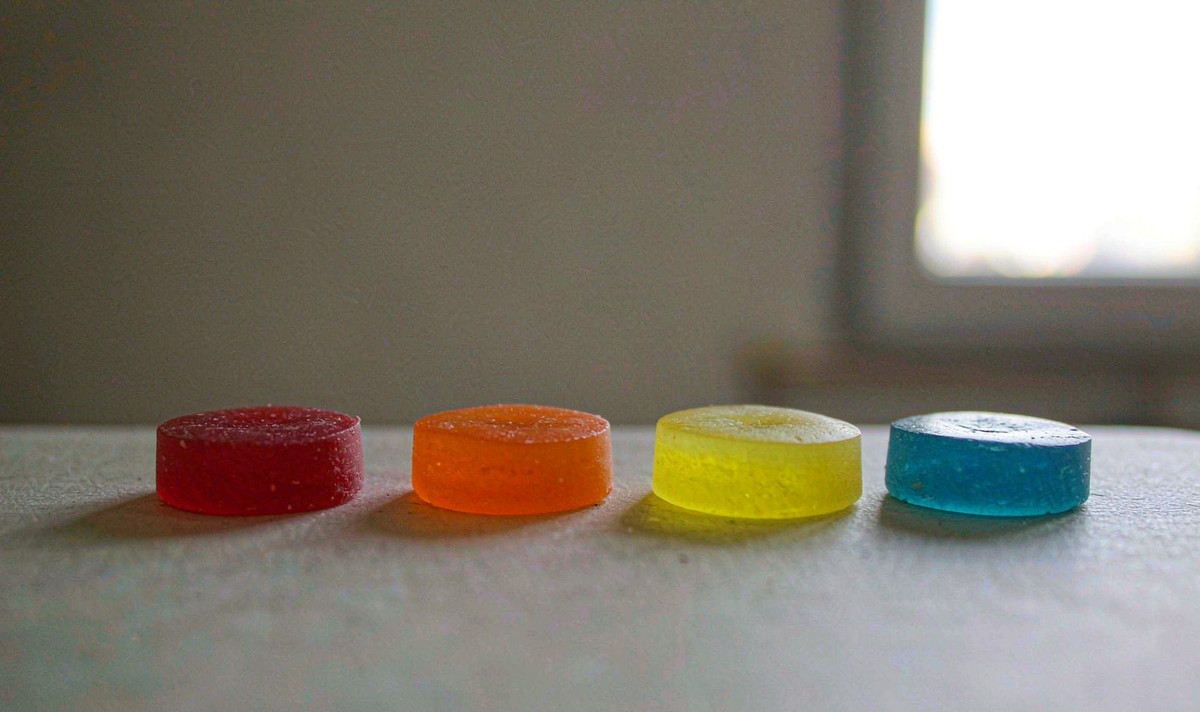
"Natural colour" is a purchasing category, not a chemistry. Four families do most of the work in gummies, and each fails in its own way.
Anthocyanins come from black carrot, purple sweet potato, grape skin, elderberry and red cabbage. Their colour is a function of pH: red in acid, purple near neutral, blue in alkaline conditions, and dull grey-green when the pH drifts far enough. A gummy is an acidic product so anthocyanins usually read red to magenta, but the shade at pH 3.2 and the shade at pH 3.6 are visibly different, which means the acid dose is part of the colour specification.
Carotenoids cover beta-carotene, lycopene, lutein and astaxanthin. They are fat-soluble, so they need an emulsion or a beadlet to disperse in a water-based gel, and they oxidise. Beta-carotene in an oxidising matrix drifts toward a paler, flatter orange over months.
Phycocyanin, from spirulina, is the only practical natural blue. It is also the most fragile thing on this list: heat-labile, pH-sensitive, and it fades in light. A natural blue gummy is a formulation problem before it is a colour problem.
Curcumin from turmeric gives a strong yellow with excellent stability in the dark and poor stability in light, and it stains everything it touches, including the inside of the bottle.
Caramel colour deserves a separate line because it is the one natural colour with a regulatory tail. Classes III and IV are made with ammonia and sulfite-ammonia respectively and contain 4-methylimidazole, which is why caramel is the colour most often discussed in Proposition 65 terms rather than in clean-label terms.
White is the one that has already left
The colour that changed most recently is the one nobody thinks of as a colour.
Titanium dioxide, E171, was the standard opacifier for white and pastel gummies. In 2021 EFSA concluded it could no longer be considered safe as a food additive, having been unable to rule out a genotoxicity concern and therefore unable to set an acceptable daily intake. The Commission withdrew the authorisation in Regulation (EU) 2022/63, with a transition that ended on 7 August 2022.
So a white or pastel gummy sold in the EU now relies on calcium carbonate, rice starch or a similar opacifier, each of which changes the texture and the mouthfeel a little. A brief that specifies "opaque white" without specifying the opacifier is a brief written for a product that no longer exists in that market.
The red that is on a clock
FD&C Red No. 3, erythrosine, is being removed from the US food supply on a published schedule.
The FDA revoked the authorisation for its use in food, including dietary supplements, on 15 January 2025, under the Delaney Clause, after data showed it causes cancer in male rats at high exposure. Manufacturers have until 15 January 2027 to reformulate foods, and until 18 January 2028 for ingested drugs. California went further and faster: AB 418, the California Food Safety Act, prohibits Red 3 along with brominated vegetable oil, potassium bromate and propylparaben in food from 1 January 2027.
The practical consequence is that a cherry-red gummy formulated in 2026 for a 2028 launch has to be reformulated before it is ever made, or it has to use a colour whose stability and shade are both different from what the artwork shows.
The six colours that carry a sentence
In the European Union, six synthetic colours trigger a mandatory warning, and a gummy is exactly the product where it appears.
Regulation (EC) No 1333/2008, Annex V, lists Sunset yellow (E110), Quinoline yellow (E104), Carmoisine (E122), Allura red (E129), Tartrazine (E102) and Ponceau 4R (E124). Any food containing one of them must carry the words, in the ingredient list, that the colour "may have an adverse effect on activity and attention in children". The requirement has applied since 20 July 2010.
This is the argument that actually moves brands, and it is a label argument rather than a safety argument. A parent reading a gummy pack is the most sensitive reader of that sentence in the entire food category, and the sentence sits in the ingredient list where the customer is already looking.
The cost is per shade, not per kilogram
Natural colours are usually discussed as more expensive per kilogram, which is true and is not the interesting part.
The interesting part is that a natural colour often needs more mass to reach the same visual intensity, and that its batch-to-batch variation is wider, so the dosing has to be adjusted against a standard rather than set once. Then there is the fade: a colour that loses a third of its intensity over the shelf life has to start a third stronger, which consumes more colour and pushes the shade outside the range the brand approved on the proof.
The result is a cost that appears in three places at once: more colour per batch, more QC per batch, and a shorter approved shade list.
The order of the decisions
Colour is the last decision in a gummy project and it has to be treated as one.
The sequence that works runs from the constraint backwards. The base system sets the pH, because a pectin gel needs its acid window and a gelatin gel tolerates a wider one. The pH sets which anthocyanin shade is even available. The pack sets how much light reaches the piece, which decides whether curcumin or phycocyanin is viable at all. The shelf life sets how much fade has to be absorbed before the pack is opened.
A colour chosen before the pH is a colour that will be chosen twice, and the second time is after the artwork is approved.
Why the approved shade list gets shorter
A synthetic colour is a single molecule with a specification and a certificate. A natural colour is an agricultural material with a crop year.
Black carrot from one harvest and black carrot from the next are not identical, and the difference shows up in a gummy at the intensity a brand has already approved. Pigment concentration moves with the growing season, the variety and the extraction, so the same dose produces a shade that is close and not the same.
The industry answer is to set a colour standard and adjust the dose to hit it, which works and costs a step on every batch. The consequence is that a brand which used to specify one shade now specifies a tolerance around it, and the tolerance is what a customer sees when two bottles from different months stand side by side.
The other consequence is the length of the approved list. A range that carried six colours on synthetic pigments often carries four on natural ones, because the two that were reaching for a shade the natural palette does not have are the two that get cut. Choosing which four survives is a commercial decision that belongs at the brief rather than at the fourth round of sampling.
How the label reads
Two packs can carry the same shade and read completely differently.
"Colour: anthocyanins (E163)" is an additive declaration. "Colour: black carrot juice concentrate" is a declaration of a food used for colour, which reads as cleaner and carries a different regulatory basis. "Fruit and vegetable juice (for color)" is the form most brands want and the form that requires the source materials to be juices or concentrates rather than purified pigments.
None of these differences is chemical. All of them are label decisions that have to be made before the formula is fixed, because the source material determines which of the three sentences is legally available.
Where this sits on our line
Gel candy is inside the scope of our SGS certificate CN23/00007035, held by Anhui Wanhuacao Biological Technology Co., Ltd., against Codex Alimentarius CXC 1-1969 as revised in 2020. A colour and its declaration are project decisions made against the destination market, and the market has to be in the brief, because the same shade is compliant in one place and a warning sentence in another.
The functional gummies page sets out what the line runs, and gummy coating technologies covers the surface finish that changes how a colour reads under light. Where the base system is the open question, pectin versus gelatin explains which acid window the formula is working inside. Send the target shade and the market to start the discussion.
Ding Shaohua, Foreign Trade Manager, handles colour and declaration questions for this line. The same person answers on WhatsApp, TikTok, LinkedIn and Facebook.
FAQ
Do natural colours fade faster than synthetic ones?
They change differently. Synthetic colours are generally more stable to light, heat and pH, and their failure mode is a slow uniform loss. Natural colours move: anthocyanins shift hue with pH, phycocyanin loses intensity with heat, curcumin bleaches in light. A natural gummy has to be formulated with the movement in mind, which usually means starting deeper and controlling the pH more tightly.
Can I still use titanium dioxide for a white gummy?
Not in the European Union. Regulation (EU) 2022/63 withdrew the authorisation with a transition ending on 7 August 2022, after EFSA concluded the additive could no longer be considered safe. Elsewhere the position varies, so the market decides. Calcium carbonate and rice starch are the usual replacements, and both change texture slightly.
Is Red 3 still allowed?
It is being removed. The FDA revoked the authorisation for food including dietary supplements on 15 January 2025, with a reformulation deadline of 15 January 2027, and California's AB 418 prohibits it in food from 1 January 2027. A product designed for a launch after those dates needs a different red, and the replacement will not match the original shade exactly.
What does the warning sentence on EU packs actually apply to?
Six colours listed in Annex V of Regulation (EC) No 1333/2008: E102, E104, E110, E122, E124 and E129. Any food containing one of them must state in the ingredient list that it may have an adverse effect on activity and attention in children. The requirement has applied since 20 July 2010 and it is the single most commercially significant labelling rule in the gummy category.