
Cut open a mushroom tea bag and the material inside tells you most of what the label does not. Whole or sliced fruiting body looks like cork with a lacquered edge. Mycelium grown on grain looks like brown flour. Both are sold as mushroom tea, and one of them can be more than half grain by weight.
The bag is the only format in this category where the buyer sees the raw material. A capsule hides it, a powder blend hides it, and a gummy has no relationship to it at all. Through a mesh, at least, you can see whether somebody put a mushroom in your tea.
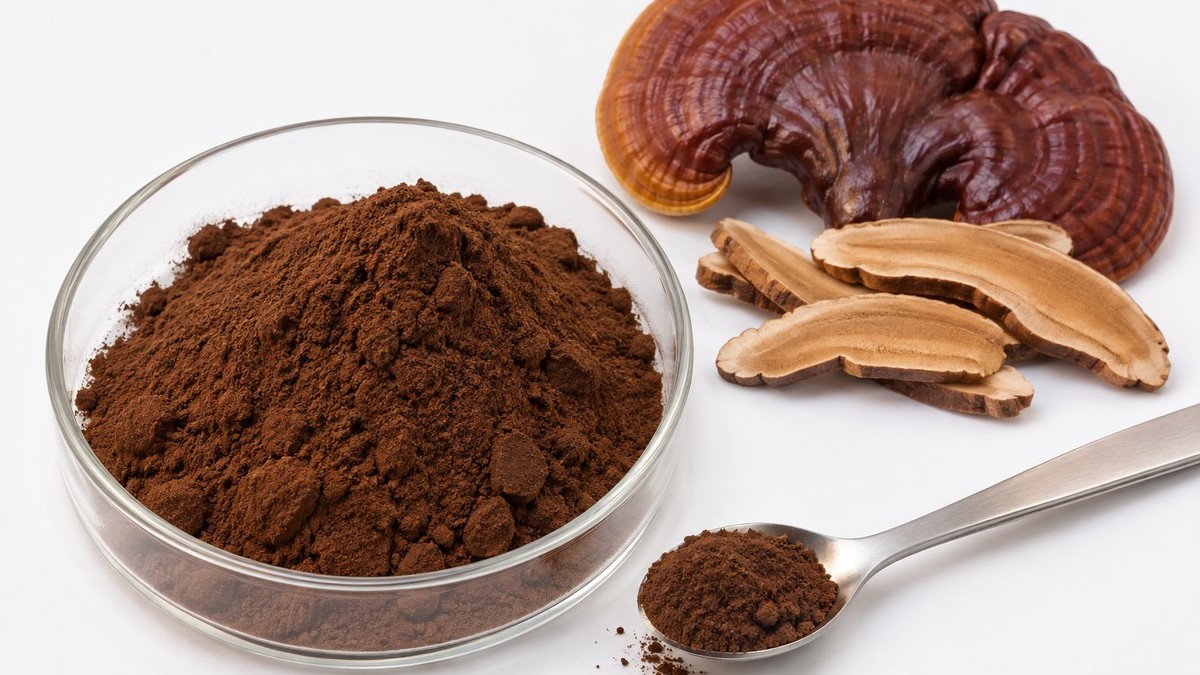
Three materials sold under one word
Fruiting body is the mushroom itself, cultivated on logs or on blocks and dried whole. It is mostly chitin and beta-glucan, it is woody, and it is expensive per kilo.
Mycelium is the fungus grown on a substrate, usually grain. The biomass is harvested with the substrate still in it, because the two cannot be separated. A product labelled mushroom mycelium can therefore carry a large share of residual grain, and the grain is starch.
Spore powder is a third product. The spores have to be cracked to be digestible, cracking is a separate process, and cracked spore powder behaves like a powder rather than like a mushroom.
The word mushroom covers all three in most markets. A brand that has not decided which one it is selling has not decided what the product costs, because the three differ by a factor of several.
The test that separates them
Beta-glucan is the fraction the category is sold on, and alpha-glucan is the marker of grain. A mycelium-on-grain product carries both: the fungal beta-glucan and the cereal starch that came with it.
Two numbers on a certificate settle the question. Total beta-glucan says how much fungal carbohydrate is present. The ratio of beta-glucan to alpha-glucan says how much of the material is actually fungus. A high beta-glucan figure on a product with a matching alpha-glucan figure is a product diluted with its own substrate.
Polysaccharide specifications written as a percentage without naming the method tell you very little. The same sample can read differently under different assays, and a supplier who cannot say which method was used is quoting a number rather than a specification.
Reishi is wood, and the filler notices
Reishi fruiting body is corky and hard. Milling it generates heat, and heat is what the triterpenes tolerate least. A mill that runs too fast gives a fine powder with less of the compounds the specification is about.
In a sachet, the material also behaves unlike leaf. Slices are dense and settle; the powder that comes off them is fine enough to pass a mesh and cloud the cup. Neither fills like a cut leaf, so a 2 g reishi sachet looks and feels different from a 2 g chamomile sachet at the same weight.
That matters for the brief, because brands often specify a weight they copied from a leaf blend. A reishi sachet at that weight is either half empty or overwhelmingly bitter, depending on the cut.
A slice has edges, and edges pierce mesh
A reishi slice is hard and it has corners. In a pyramid bag the web is drawn tight around the fill, and a corner that lands against the mesh during forming can push through it. The hole is a few tenths of a millimetre, invisible at the end of the line, and it shows up as powder in the carton three weeks later.
The fix is usually the cut rather than the mesh. A coarse crush instead of a slice, or a slice that has been through a light flake mill, removes the sharp point and fills better. A heavier mesh also works, and it costs clarity in the cup, because water moves more slowly through a denser web.
Fill speed is the third lever. Slower filling drops the material instead of throwing it, and the same material stops piercing. A line run at leaf speed will make holes, so the speed belongs in the process specification next to the cut.
Bitterness is the marker you can taste
Reishi is bitter from ganoderic acids, and the bitterness is the sensory signature of the fruiting body. It is also the reason blends in this category lean on cocoa, cinnamon, vanilla or licorice.
Hot water extracts the polysaccharides well and the triterpenes poorly, since the triterpenes prefer alcohol. A tea therefore delivers the beta-glucan side of reishi more than the ganoderic acid side, and the bitterness in the cup comes from what does come through.
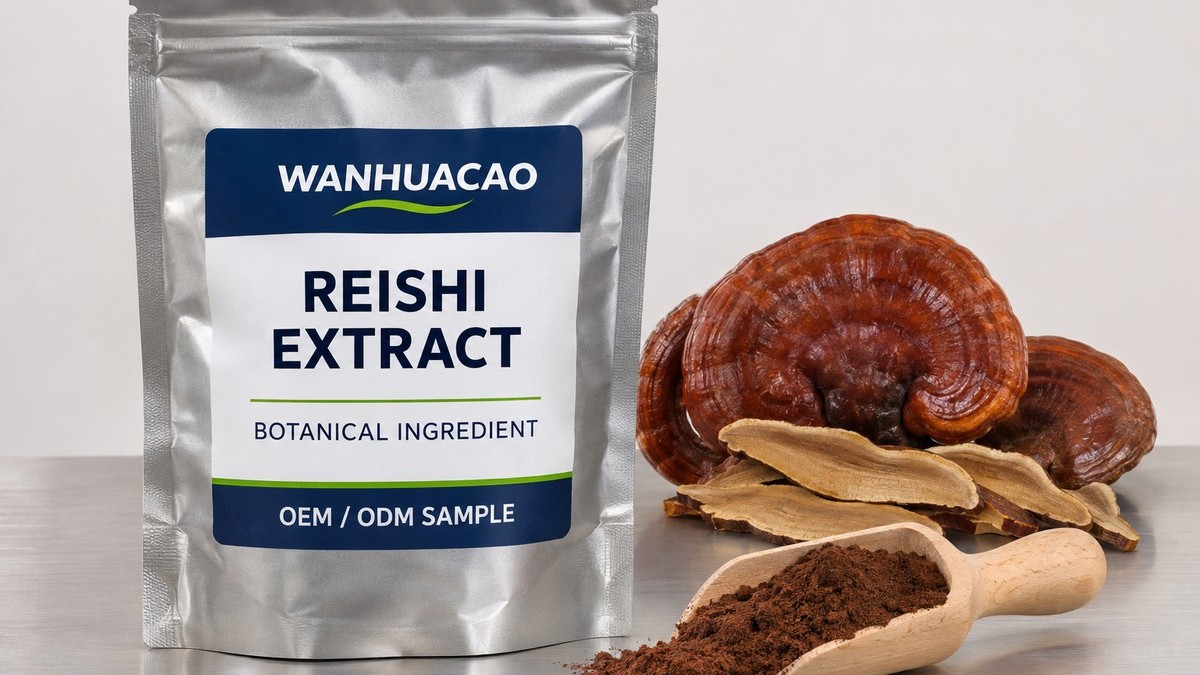
That is a useful thing to know when comparing an extract with a powder. A water extract concentrates polysaccharides and leaves much of the bitterness behind, which is how a brand gets a drinkable evening cup. A ground fruiting body gives the full taste and the full bitterness.
Evening is an occasion, not an effect
Reishi is not a sedative. It is positioned in the evening because the ritual fits, and because the coffee-replacement conversation that runs under #mushroomcoffee and #lionsmane created an after-dinner slot that a bitter, earthy drink can fill.
That framing is also the compliant one. In the European Union, no health claim for reishi is authorised, and sleep, calm and immune are all out of reach on a food label. The product can be an evening drink; it cannot be a product that does something to the evening.
Where the positioning does real work is in the blend. A cup that has to be drunk after dinner needs the bitterness balanced and the colour to look like something other than mud. Cocoa does both, which is why reishi and cacao appear together so often.
What to ask before the first run
Four questions separate a supplier who sells mushrooms from one who sells a label. Is the material fruiting body, mycelium or spore, and in what proportion if it is a blend. What is the beta-glucan figure and by which method. What is the alpha-glucan figure, which is the question that reveals the substrate. And what cut, since the cut decides whether the sachet is full and whether the cup is cloudy.
A tea bag co-packer will also ask about the mesh, because a reishi powder that passes through it will colour the water before the bag is even lifted out. A private label tea bags programme that has run this material before will already know which mesh holds it.
For the extract side, see reishi triterpene testing. The bag format is covered in pyramid tea bag manufacturer, and the range sits on the herbal tea page.
Ding Shaohua, Foreign Trade Manager at WANHUACAO, works with brands on mushroom and botanical blends from brief to first shipment. Blending and bagging run in the same plant, under SGS CN23/00007035 covering herbal tea among other categories and SC11434160205012 covering eight dosage forms. Reach him on WhatsApp, TikTok, LinkedIn and Facebook.
FAQ
What is the difference between mushroom and mycelium?
Mushroom usually means the fruiting body, the part that grows above ground. Mycelium is the fungus grown on a substrate, normally grain, and the grain is harvested with it. A mycelium product can carry a large share of cereal starch by weight.
How can a buyer tell them apart?
By two figures on the certificate: total beta-glucan and alpha-glucan. Beta-glucan is the fungal fraction and alpha-glucan indicates grain. A high beta-glucan figure alongside a matching alpha-glucan figure means the material is diluted with its own substrate.
Why is reishi tea so bitter?
The bitterness comes from ganoderic acids in the fruiting body. Hot water extracts them poorly compared with alcohol, so a tea carries the polysaccharide side more than the triterpene side. A water extract concentrates polysaccharides and leaves much of the bitterness behind.
Can a reishi tea claim immune or sleep benefits?
Not as a food in the EU. No health claim for reishi is authorised, and sleep, calm and immune are all unavailable on a food label. The product can be positioned as an evening drink, which is an occasion rather than an effect.